Welcome to ScapeCrunch

We are ScapeCrunch, the place where planted aquarium hobbyists come to build relationships and support each other. When you're tired of doom scrolling, you've found your home here.

Horizontal CO2 Reactor - Yugang 鱼缸 Reactor

  • Thread starter Thread starter Yugang
  • Start date Start date
  • Tagged users Tagged users None
I thought it would be a good idea to build an improved prototype of the Reactor Version 2, 1 inch for full FX4 flow with internal bypass, and use that for testing in the tank.
Test done, some good news and some more work to do.

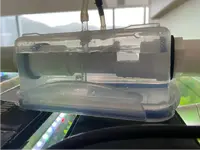
The good news is that the internal bypass for the water flow works perfectly. The open part in below picture gives a gentle flow inside the box, as I could see from some small particles moving around and a small ripple on the water surface. This means that we don't need an external bypass anymore, and this small reactor can easily handle the full flow (2650 l/hr) from my FX4. The unobstructed 1 inch pipe limits flow reduction on my FX4 to a minimum.

1709017333038.png

This means that users who want to push around 1.2 pH drop on a 50 gallon tank, using a CO2 regulator or controller for stable CO2, are good with this 500 ml reactor, 7 inch long, without external bypass, and 6 USD costs for buying the parts.

Unfortunately I have not been successful using the reactor in overflow mode, not entirely unexpected. The high water flow pushes water out from the small strip on top of the pipe, rather than gas being sucked into the pipe as we need for overflow mode. When the gas pocket reaches low enough, about half of the pipe height gas starts being sucked in, but this is not good enough for our purpose and does not give a reproducible CO2 injection rate from the reactor.

I am a fan of overflow mode, as I don't want to depend on my regulator stability, so I will try to get that right as well. I tried the below mini gas pump for overflow mode, but unfortunately the water flow is not enough to create the necessary under pressure for it to work well enough.

1709017966512.png

It remains an open question how I can make overflow mode work with this internal bypass, But it's too early to give up and I may try a couple of other ideas.
 
Last edited:
Yugang, you are well on your way to becoming the Tom Barr of CO2! 💯💯👍👍👏👏🏆🏆😎😎😎

I was also around on various bulletin boards, listservs, mail groups and forums, waaaay back 25 years ago, when almost nobody was having success, and thread after thread after thread would pop up with people eager to lecture Tom about how wrong he had to be about just about everything related to keeping and maintaining planted tanks. All of them always confident and smug in their certainty that he could not possibly know what he was talking about either.. And we all know where all those people are now.

Thank you so much for staying with this, and for keeping us in the loop with your imagination and your progress! Painless, stable, livestock-safe CO2 injection is the last great hurdle to making fantastic algae free planted tanks accessible to everyone. It is the Gordian knot and you have just about cut it! I am so grateful to have you here participating.

I know how hurtful it is to have self-appointed gatekeepers parked in the role of moderators on the biggest planted forum. It doesn't give much comfort to know, but this kind of thing is part of the life cycle of all of these forums, and they all go through it. Being targeted in this way is actually perversely a badge of honor, If you ever talk to Tom Barr directly you will understand that his surliness has been very well earned, and you can be proud to be in such company.

Keep going!
 
Yugang, you are well on your way to becoming the Tom Barr of CO2! 💯💯👍👍👏👏🏆🏆😎😎😎

I was also around on various bulletin boards, listservs, mail groups and forums, waaaay back 25 years ago, when almost nobody was having success, and thread after thread after thread would pop up with people eager to lecture Tom about how wrong he had to be about just about everything related to keeping and maintaining planted tanks. All of them always confident and smug in their certainty that he could not possibly know what he was talking about either.. And we all know where all those people are now.

Thank you so much for staying with this, and for keeping us in the loop with your imagination and your progress! Painless, stable, livestock-safe CO2 injection is the last great hurdle to making fantastic algae free planted tanks accessible to everyone. It is the Gordian knot and you have just about cut it! I am so grateful to have you here participating.

I know how hurtful it is to have self-appointed gatekeepers parked in the role of moderators on the biggest planted forum. It doesn't give much comfort to know, but this kind of thing is part of the life cycle of all of these forums, and they all go through it. Being targeted in this way is actually perversely a badge of honor, If you ever talk to Tom Barr directly you will understand that his surliness has been very well earned, and you can be proud to be in such company.

Keep going!
Well said, well said!
 
Birth certificate Yugang reactor version 2

1709600278825.png

1709600316253.png

Finally I got also overflow mode to work, and the solution is really simple to replicate for other users.

In summary
  • This reactor pushes around 1.2 pH drop on a 50 gallon tank
  • Can be used with precision regulator, pH controller, or in overflow mode for which the reactor geometry stabilises CO2.
  • Can easily handle the flow of FX4 (2650 l/hour), no external bypass needed.
  • Costs of parts about 6 USD altogether, and with some experience can be built in 30 minutes.
  • 500 ml box, 7 inches long. As all pipework are connected, mechanically very stable.
I may do some small fine-tuning, but am very happy with this version and this is the way to go. I may try to find an even smaller box, as this Reactor Version 2 is stronger than the reactor I have been using for the past months, below, and I am not planning to increase CO2 on my tank again.

1709600844223.jpeg
 
Birth certificate Yugang reactor version 2

View attachment 4488

View attachment 4489

Finally I got also overflow mode to work, and the solution is really simple to replicate for other users.

In summary
  • This reactor pushes around 1.2 pH drop on a 50 gallon tank
  • Can be used with precision regulator, pH controller, or in overflow mode for which the reactor geometry stabilises CO2.
  • Can easily handle the flow of FX4 (2650 l/hour), no external bypass needed.
  • Costs of parts about 6 USD altogether, and with some experience can be built in 30 minutes.
  • 500 ml box, 7 inches long. As all pipework are connected, mechanically very stable.
I may do some small fine-tuning, but am very happy with this version and this is the way to go. I may try to find an even smaller box, as this Reactor Version 2 is stronger than the reactor I have been using for the past months, below, and I am not planning to increase CO2 on my tank again.

View attachment 4490
GREAT WORK!!

I’m building this new version for my 40 when I rescape it this spring. I love the new design and it’s compactness. When I get closer I am sure I will have questions for you.
 
When I get closer I am sure I will have questions for you.
I will prepare another post showing the tools I use, and detailed pictures of the build process.

For reducing the power of my reactor, if I can't find a smaller box I may use my old "styrofoam idea"
Note: anyone who likes to finetune the reactors power and CO2 ppm, without cutting or changing the tube, may consider to let a piece of styrofoam float in the reactor. The foam will reduce the effective reactor CO2/water surface area and therefore the reactor injection rate. I am personally not a fan of this, but some may like the idea. Obviously this only applies to overflow mode.
I may take a piece of filterfoam, drill a hole in it with same size as the white pipe, and place that vertically on the left side in the reactor. This foam will reduce the absorption surface area between flowing water and the CO2 gas pocket above, and thus the reactor power and injection rate in overflow mode. As I can easily open and close my box, I may use different sizes of foam for adjusting my reactor injection rate in overflow mode.
 
I know how hurtful it is to have self-appointed gatekeepers parked in the role of moderators on the biggest planted forum. It doesn't give much comfort to know, but this kind of thing is part of the life cycle of all of these forums, and they all go through it. Being targeted in this way is actually perversely a badge of honor, If you ever talk to Tom Barr directly you will understand that his surliness has been very well earned, and you can be proud to be in such company.
LOL when I got banned from a site that's exactly what Tom told me. Welcome to the club and it's a badge of honor. Amazing how discussions about a hobby can lead to such divisive fights.
 
I will prepare another post showing the tools I use, and detailed pictures of the build process.
Please do. Im wating in anticipation. I have a few Huskey water proof cases that will work great for this.

Nervous Marc E Bassy GIF by Yung Bae

Screenshot at 2024-03-05 21-08-50.webp
 
Huskey water proof cases
looks very sturdy, but where is some unobstructed space to drill a hole for the water inlet and outlet pipes?

Are you planning using a precision regulator, pH controller or perhaps overflow mode?

If I can help you @BigWave , please shoot me a PM and will be happy to discuss further.

-----------------------------

I am adding now some criticism that I have on my latest build, that only applies when using overflow mode and can be ignored when using a precision regulator or pH controller.

For overflow mode, we need to have a critical look at the shape of the box and what's inside. Remember that the reactor's power is proportional to its internal unobstructed water surface area. We start with a very small volume of gas that only fills the very top of the reactor. When more gas builds up and the water/CO2 interface slowly comes down, you ideally do not want the reactor power to decrease, ie not want the surface area to decrease for overflow mode. This is a criticism I still have on my latest build, as the internal pipe connectors start breaking through the water surface, with that reduce the reactors' strength when it gets into overflow mode. When you really think it through, I will explain later in detail, we may turn a problem into an opportunity, but in any case we don't want to lose too much power due to internal pipework. I need to visit my shop again, buy some plastic for hopefully my last build and explain all the fotos I make.

To illustrate, we see here the reactor in overflow mode. Some of the pipes left and right break through the water surface, and limit the reactors power. If the water surface would be 5 mm higher, the reactor would perhaps be 10% stronger than in its current overflow mode position. This is workable, but when you think it through it means we may loose a bit too much CO2 through the overflow, and I'd like to limit that to less than 10% as explained in an earlier posting. Horizontal CO2 Reactor - Yugang 鱼缸 Reactor
1709708213824.png

So what we want to do, is make sure when the reactor is approaching overflow mode, its power, ie surface area, is equal or ideally smaller than in the overflow mode steady state. A really easy solution is following:

1709710747854.png
The pieces of foam limit the water surface, so that the reactor surface area is at it maximum when in overflow mode. We can then apply the procedure as described in post #156.

This solution works, but I don't find it the most elegant. My new build will mostly eliminate this issue, and look cleaner.
 
Last edited:
LOL when I got banned from a site that's exactly what Tom told me. Welcome to the club and it's a badge of honor. Amazing how discussions about a hobby can lead to such divisive fights.

Flame wars 🙄🙄 all the way back to ancient Babylon:

"“I am not getting water for my sesame field. The sesame will die. Don’t tell me later, ‘You did not write to me.’ The sesame is visibly dying. Ibbi-Ilabrat saw it. That sesame will die, and I have warned you.”


1000028874.png
e113f14a-00d2-4796-ab04-b16979f6d3c0(1).jpg

😂
 
After a few more tries, I got overflow mode to work flawlessly.

In this post I will summarise the build process, as well as what I've learned from building and testing nearly 10 versions. I apologise for perhaps too much detail, but I try to bring over as much of my experience as I can for interested readers.

The tools are pretty standard, perhaps the only one that is not part of a standard toolbox is a drill for cutting two 1 inch holes in the plastic box. I use silicon for glueing the CO2 and gas purge pipes, and PVC glue for the white piping.

On the right all materials for one reactor, altogether bought for 6 USD.

1709791122332.png

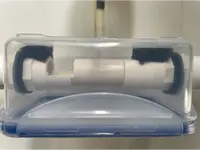
First I would drill the holes in the box, and glue the gas pipes with silicon and let that cure overnight. Then, pictures below, on the left the machining I did on the PVC, on the right the assembly as seen from below.

Optimising the pipe for overflow mode I started cutting open the top. This has two objectives. First, the top of the pipe is not longer obstructing the water/CO2 interface and we have a more constant and predictable reactor power in overflow mode. Second, the flow of water in the pipe will agitate the water surface, make it move, create some turbulence that will from time to time suck small 1 mm bubbles of gas into the overflow for making overflow mode work. In one of my attempts I made this top opening broader, about half of the pipe, but that gave too much turbulence in the reactor. The opening could be a bit narrower than in the picture, but not too much as it will then not have enough interaction with the water surface and stop sucking gas as necessary for the overflow function.

In the bottom of the pipe I drilled three large holes, so that there is always a good interaction between the water flow in the pipe and the water in the box. I also want to be sure, based on what I've seen, that we don't create a modern version of a Roman aqueduct, where water flows through the pipe and has no longer interaction with the water in the box.

The end pieces I adapted so the I could insert them first through the drilled holes in the box, and after that have the pipe fit in from the top. Also, I want the top as skinny as possible, as I don't want any plastic to change the water/CO2 surface area.

In the right picture below I use plastic tie wraps to hold the pipe in its position. This is not yet mechanically as strong as a glued connection, but makes it easier to do small adjustments until tests are fully successful. The final version will be glued, so that the pipe work gives mechanical stability.

1709791139561.png

Below is the reactor seen in overflow operation. No plastic parts are sticking through the water surface, so reactor power around overflow stable position is pretty constant. A few times per minute I see some <1 mm bubbles blown into my tank, that's how we like it and as per my post #156 the optimum for stability with less than 10-15% efficiency loss on CO2 consumption.

My reactor in overflow mode has now 11.400 mm2, this ratio of 38 to my 431.000 mm2 tank surface. My drop checker is a bit beyond lime green, with clearly some hints of yellow, so I expect to be around 1.2 - 1.3 pH drop. And of course the whole purpose of overflow mode is that my CO2 is stabilised by the reactor and I don't depend anymore on CO2 regulator stability, CO2/pH controller and water chemistry.

1709791156265.png

Overall this reactor now works perfectly. What we need to discover is how easy it will be for new users to get overflow mode right, as I needed nearly 10 tries before I got fully successful. There are many many different ways to cut holes in the pipe, it is not so easy to predict what the water will do, and it is quite likely that someone finds smarter solutions than I did, perhaps more robust or easier to machine.
 
Last edited:
After a few more tries, I got overflow mode to work flawlessly.

In this post I will summarise the build process, as well as what I've learned from building and testing nearly 10 versions. I apologise for perhaps too much detail, but I try to bring over as much of my experience as I can for interested readers.

The tools are pretty standard, perhaps the only one that is not part of a standard toolbox is a drill for cutting two 1 inch holes in the plastic box. I use silicon for glueing the CO2 and gas purge pipes, and PVC glue for the white piping.

On the right all materials for one reactor, altogether bought for 6 USD.

View attachment 4529

First I would drill the holes in the box, and glue the gas pipes with silicon and let that cure overnight. Then, pictures below, on the left the machining I did on the PVC, on the right the assembly as seen from below.

Optimising the pipe for overflow mode I started cutting open the top. This has two objectives. First, the top of the pipe is not longer obstructing the water/CO2 interface and we have a more constant and predictable reactor power in overflow mode. Second, the flow of water in the pipe will agitate the water surface, make it move, create some turbulence that will from time to time suck small 1 mm bubbles of gas into the overflow for making overflow mode work. In one of my attempts I made this top opening broader, about half of the pipe, but that gave too much turbulence in the reactor. The opening could be a bit narrower than in the picture, but not too much as it will then not have enough interaction with the water surface and stop sucking gas as necessary for the overflow function.

In the bottom of the pipe I drilled three large holes, so that there is always a good interaction between the water flow in the pipe and the water in the box. I also want to be sure, based on what I've seen, that we don't create a modern version of a Roman aqueduct, where water flows through the pipe and has no longer interaction with the water in the box.

The end pieces I adapted so the I could insert them first through the drilled holes in the box, and after that have the pipe fit in from the top. Also, I want the top as skinny as possible, as I don't want any plastic to change the water/CO2 surface area.

In the right picture below I use plastic tie wraps to hold the pipe in its position. This is not yet mechanically as strong as a glued connection, but makes it easier to do small adjustments until tests are fully successful. The final version will be glued, so that the pipe work gives mechanical stability.

View attachment 4530

Below is the reactor seen in overflow operation. No plastic parts are sticking through the water surface, so reactor power around overflow stable position is pretty constant. A few times per minute I see some <1 mm bubbles blown into my tank, that's how we like it and as per my post #156 the optimum for stability with less than 10-15% efficiency loss on CO2 consumption.

My reactor in overflow mode has now 11.400 mm2, this ratio of 38 to my 431.000 mm2 tank surface. My drop checker is a bit beyond lime green, with clearly some hints of yellow, so I expect to be around 1.2 - 1.3 pH drop. And of course the whole purpose of overflow mode is that my CO2 is stabilised by the reactor and I don't depend anymore on CO2 regulator stability, CO2/pH controller and water chemistry.

View attachment 4531

Overall this reactor now works perfectly. What we need to discover is how easy it will be for new users to get overflow mode right, as I needed nearly 10 tries before I got fully successful. There are many many different ways to cut holes in the pipe, it is not so easy to predict what the water will do, and it is quite likely that someone finds smarter solutions than I did, perhaps more robust or easier to machine.

Outstanding 🏅🏅🏅

However I think I missed something somewhere. Tell me why there are two injection tubes for the co2?

Also for those of us in the audience were not engineers 😁 can you explain what you mean by ".. there are many many different ways to cut holes.. is not so easy to predict what the water will do" ?
 
Tell me why there are two injection tubes for the co2?
One is a CO2 injection tube, the other is a manual gas purge. The purge is not strictly necessary as the reactor can purge itself, but it is definitely a nice to have and time saver.

you explain what you mean by ".. there are many many different ways to cut holes.. is not so easy to predict what the water will do" ?
Making a reactor with internal bypass that works with a precision regulator or CO2/pH controller is not a problem. In this case we don't need a mechanism that sucks small bubbles and stabilises the CO2 by the reactor's geometry -- we depend on the regulator / controller for CO2 stability.

However it proved challenging for me to get overflow mode to work perfectly, without compromise, for a high flow internal bypass.
  • We want a solution that can easily be made with standard plumbing and cheap of-the-shelf components and tools, not a 3D-printer.
  • Then, it needs to have a predictable reactor power, ie surface area, and we don't like therefore plastic parts obstructing a significant part of the water/CO2 interface. When you think it through (and probably not helpful to explain now), this is about saving CO2 while still having good stability in overflow mode
  • Finally, because we have a high flow of water in the pipe, most designs (patterns of holes cut from the pipe) will result in the pipe wanting to spit out water, rather than slowly sucking in small bubbles from the gas pocket.
I am not lying if I say that solving this problem cost me some sleep, 5-10 experiments and a lot of time. Now that we have one solution presented, and also more and more people who understand and think through the principles of overflow mode, it is not unlikely that someone, or perhaps I, in the future comes up with an even better solution than what I presented here. But, as I've learned the hard way, what works in ones imagination does sometimes not work when tested with real water and real gas, so we need to test it in practice to verify.
 
Last edited:
I've been very interested in your overflow design ever since you first introduced the spray bar. In fact, I did build a sort of mock-up spray bar using a plastic bottle cut in half through the length for a "not for the public" experimentation tank where I use a yeast DIY system. It is a huge eye-sore, but that doesn't matter for this tank. I don't remember the area ratios, but it was maybe half of what you suggested at first. Back then I thought that a self regulating reactor would be great with the inherent imprecise nature of the yeast bottles. It didn't work as well as intended, but it is good enough that I still use it after all this time... In essence, I think that the yeast bottle doesn't generate enough gas, so it takes too long for it to reach steady state (days, actually) and the diffusion of other gases into the bottle becomes significant. In any case, I believe that, even without reaching a steady state, the diffusion rate must be nearly constant, as the gas pocket increases so very slowly. When the pocket increases and the diffusion area increases, the gas becomes less concentrated and things balance out. Or at least that is what I think happens.

Anyways, I'm now considering upgrading my vertical reactor in the main tank. My hardware is all cheap and unreliable, so the self regulating horizontal reactor sounds perfect. The tank is 130 x 50 x 50 cm, and I would aim at a lower CO2 concentration, maybe even less than a 1 pH drop. At first I was considering the tube mode. For petty reasons, it worried me that the large gas pocket would be wasted once a day. At some point you told me that I could just stop the injection earlier and let the gas pocket be used during the end of the photoperiod. It actually sounds like a great way to match CO2 and light with the lights fading off at night.

Anyways, even though it may be possible to not waste the gas pocket during the daily cycle, and even though it is a very small waste regardless, I still thought that having multiple thinner tubes in parallel would be better than a single large tube. This would have reduced gas and water volumes in the reactor, with the same contact area. Cost wise I couldn't tell, but it seems like small connections are much cheaper than large connections. And it could be set in a way that I could close or open one or two tubes and change the reactor capacity. I also liked the idea of having eccentric inlets and outlets, so that I could angle the tubes and change the height of the overflow, allowing to reduce the water-gas contact area.

In practice, one of the main reasons why I didn't start the project yet is that I couldn't find an affordable clear tube. Also I didn't know of this forum, so without the original references I thought I would have to do some testing.

But now that you made the version 2 work, It is hard to justify building an elaborate design. I have a dedicated pump for the CO2 reactor, but now even that may be obsolete! In practice, for my 6500 cm² area, with the 1/40 ratio I would need only a 162 cm² plastic box. That's a 16 x 10 cm box only. I keep a particularly intense surface agitation, but I'm aiming low for the CO2 concentration, so I think the 1/40 ratio should work. The plan now is to pay a visit to the kitchenware section of the supermarket the next time I go and see if there are boxes with the right size... And I really like the way the gas pocket is kept small in your pictures. It is a shame that with the square cross section it doesn't get that nice effect of increasing the area as the gas pocket increases, but with the overflow mode, that becomes less important. And I can always use the styrofoam method to do some fine tuning.
 
Also I didn't know of this forum
Welcome to ScapeCrunch @LMuhlen . I am really happy to see you here, as I always liked your contributions on the other forum, in particular on the horizontal reactor.

a self regulating reactor would be great with the inherent imprecise nature of the yeast bottles
I have been looking into this as well, but abandoned that project. My thinking was to build a yeast reactor that produces a lot of CO2, and use the horizontal reactor overflow mode to have a stable 24 hrs injection in the tank. I gave up after calculating the sugar consumption, and quite to my surprise when using a 24hrs process the cost of sugar was not far off from the cost of pressurised CO2 10 hrs a day.

it worried me that the large gas pocket would be wasted once a day
I understand the concern, but it is mitigated by the fact that the gas pocket in a tube is worth perhaps 30 minutes (or less) injection in the tank. So if you turn off CO2 30 minutes earlier before lights off, then the gas pocket will be used without any losses.

I couldn't find an affordable clear tube
I believe most who built the reactor actually don't use clear tube. When using regulator mode the working of the reactor is so obvious and robust that I would personally also not see a benefit of a clear tube, but indeed for overflow mode I do prefer to have a visual check to see what happens inside the reactor. This is also because I use the remaining volume of gas after lights of as a visual check if I have set up overflow mode correctly.

It is a shame that with the square cross section it doesn't get that nice effect of increasing the area as the gas pocket increases, but with the overflow mode, that becomes less important.
This is a valid point, but square boxes will do both for regulator mode and overflow mode. I may have developed a questionable reputation in HK kitchenware shops with my frequent visits and unusual interest in various food storage containers. They may have noticed that I am particularly attracted to small sturdy and transparent boxes, but while the more curved boxes may have the advantage that you refer to, it is harder to construct water tight in and outlets.
 
Last edited:
I may have developed a questionable reputation in HK kitchenware shops with my frequent visits and unusual interest in various food storage containers. They may have noticed that I am particularly attracted to small sturdy and transparent boxes, but while the more curved boxes may have the advantage that you refer to, it is harder to construct water tight in and outlets.

:LOL: for this . Have you acquaintences who set aside recommendations for you yet?
 
It occurred to me that it is probably a bad idea to use this reactor inline with my oase canister. It spits air bubbles every now and then, and also when I clean the pre-filter and have to start it again. Since I already have a dedicated circuit for my reactor, I'll just keep using it.
 
It occurred to me that it is probably a bad idea to use this reactor inline with my oase canister. It spits air bubbles every now and then, and also when I clean the pre-filter and have to start it again. Since I already have a dedicated circuit for my reactor, I'll just keep using it.
Unlike any other reactor, this reactor will purge itself automatically. So you may do a quick air purge if your Oase released some air, but otherwise given some more time the reactor will deal with this automatically.

So how does automatic self purging work? (unfortunately post with test results deleted in other forum **)

Let's assume we don't use overflow mode but run the reactor more traditional and set the injection rate with a precision needle valve. When there is some air blown into the gas pocket in the reactor, the mixture will no longer be perfectly clean CO2 and the absorption efficiency will decrease a bit. As CO2 has nowhere to go, other than being absorbed in water, the gas pocket in the reactor will grow and with that the interface area between gas and water will increase leading to a new equilibrium where CO2 injection from CO2 regulator equals absorption rate in water. So the reactor keeps injecting CO2 in the water as planned, and we haven't even mentioned purging yet. Now if the canister continues to spit some air in the reactor, the gas pocket will ultimately reach the overflow, and release gas through the exit. This gas contains CO2 and air, so the air will be released in the purging action until all is stable again and the reactor does it's job as intended.

**) I tested pH curves on CO2 Spray Bar, which works with the same principles as the reactor. I filled the CO2 Spray Bar 100% with air, before starting to inject CO2 early in the morning, and took the pH curve in the tank for the day. When comparing this pH curve with the previous day when I started to inject CO2 in an empty CO2 Spray Bar I saw that the curves approached each other, the self purging of the CO2 Spray Bar, and overlapped after about 2-3 hours when the self purging had cleared out all air from the early morning.
 
Last edited:

Top 10 Trending Threads

Back
Top