Hi all, first post. Thought it'd be fine to start a new thread specifically about yugang reactors for smaller tanks, under surface area 3000cm^2 (for the most part). Guess this could be a journal to some degree, but I think this thread is more for info than sharing my tank. I know people are generally using pvc pipes and fittings to DIY their reactors and to keep the cost down. I wanted something that looked super nice and was already "prebuilt". After scouring the internet for the longest time, I found that these PC water cooling reservoirs should serve that purpose.

Maybe someone's tested this already and found out that it doesn't work, but I wanted to put this out there since I haven't seen anything on it. I don't want to gatekeep this and I hope that this gives people another option since not everyone may have tools readily available. Since this is considered a PC component, there are a number of options available for fittings that I'll get into in a bit that make this great.
There are a few downsides though:
1. Limited diameters. I've only seen options for 50 or 60mm diameters. The 50mm ones have 40mm inner diameter, and 60mm ones I assume have 50mm inner.
2. Limited lengths. I've seen them as small as 6cm long all the way to 40cm long. The caps/lids range from 6-10mm thick.
Largest I've seen is 50mm and 400mm long. Useable diameter and length, let's say are 40mm and 380mm respectively. If you want a pH drop of 1.5, largest your surface area can be is 2690cm^2. Obviously you can stretch this if you don't need that large of a pH drop.


3. Standardized G 1/4" thread. This isn't as common a fitting (in the US at least). This thread size can be good or bad.
4. Some others mentioned later.
As for the upsides:
1. Clean look, no DIY necessary, no PVC glue, certain listings come with brackets and screws.
2. Inexpensive, I got a 210mm variant for ~$15USD
3. Outlet is offset to the side. You can rotate as necessary to control in overflow mode.
4. Others mentioned later.
Again, this is for PC water cooling. 95% of the parts I've seen are made of brass. They are however either chrome or nickel plated.
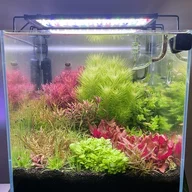
As of right now, I have my ADA 60P freshly cycling on a dark start. I was able to test the co2 functionality (not measure co2 levels). I am able to get a co2 bubble to develop inside and work with overflow. My "reactor" is 210mm long and has 50mm diameter. Calculating with the inner diameter (40mm on mine) and the useable length (190mm if you take away cap length), I should theoretically be able to get a ~1.4ph drop.
The filter I'm using is the Biomaster 350 thermo. Tubing is 5/8" for this, and this is one of the downsides I want to get into. This is for PC cooling like I mentioned and they generally don't use tubing that large. If you're running a filter that uses 12/16mm tubing instead of 5/8" (16/22mm) then you might have a much easier time finding fittings to work. G 1/4" thread is roughly a 1/2" opening. I'm not actually getting less flow with this because I realized the 16/22 quick tap valves I use actually have a 1/2" opening on the inside as well. This G 1/4" thread shouldn't be an issue then. FYI, G 1/4" is the same as 1/4" BSPP. (british standard pipe parallel)

I tried making my setup as NEATLY and good looking as possible. Above is my final work (as of now). I have some tube trimming to do though to make it nicer. Another thing I want to mention, the first time I tried this, I connected my outlet straight to the yugang reactor . I saw this thread reply (below) saying that their 2" pvc (~50mm) had no issue with the flow speed after adjusting their tap valve. That was not true in my experience. My reactor should be about the same size as this one, but the water rushes through very turbently:

It slowed the flow so much that almost all water was going through bypass even though valve was fully open. (Don't get cheap Y or T splitters either...)
Here's a video of the flow WITHOUT a bypass. Video starts with tap valve already slightly shut 25% of the way and slowly getting shut more as you can see:
View attachment IMG_7536.mov
It doesn't matter where you put the valve but I think it makes more sense to put it on the reactor side. You can control how slow the flow is that way. Ff you place it on bypass side, you can never slow down water through reactor that way - only more going to it.
You might ask, where's the co2 supposed to go if you don't have the inline accessory that I have? Well there's a threaded acrylic pipe that comes with this reactor if you look at listings. All you need to do is get a 4/6mm push connect to g1/4" male thread fitting for a few bucks and your issue is solved. The threaded acrylic pipe can also be screwed off and there are more extender fittings and such to replace that if you search them online. Options like the 60mm length reservoir I posted above may only have 2 outlets, but the larger 400mm example I gave has 4 holes with different hole positions too. You can place a purge valve that slightly works (there's literally a fitting for that too). The main outlet hole is still offset as well. (another example shown below) Any hole you don't want to use? Just buy a g1/4 plug. The benefit of using this PC cooling reservoir is the amount of fittings they have that can work for your needs.

For my setup, I ended up using a $3 dollar plastic garden hose splitter that has 3/4" GHT (garden hose thread) that was two valves on it (best of both worlds). I also bought the appropriate barbs to fit into it (so hosing can attach). Because I wanted to put this is my AquaForestAquarium Archaea cabinet, everything is packed really tight. Would be nicer if tubing had more room to move and didn't kink as easily. Just a tradeoff so you see I had to use elbow barbs and keep some tubing real short.
My fittings right now are brass but I found one seller on ebay (shipped from China) that has G 1/4" male thread to 5/8" barb in STAINLESS STEEL. However, it is BSPT (british standard pipe thread) so this one tapers inwards and will probably need teflon/very tight twist to seal with the o-ring. BSPT fitting can go into a BSPP threaded hole, but BSPP cannot go into BSPT. Someone correct me if I'm wrong about that, but I'm fairly certain that is the case.
If you've read to this point, I think this should be enough to understand what you can do with this PC cooling reservoir. It has limitations size wise and a need for a bypass if you don't want to slow the flow on your tank too much (depending on your filter), but it really is a nice cheap option that we can use for our hobby.
Please correct or question me anywhere!!!
--------------------------------------------
Just links to what I bought for anyone curious. I hope links are allowed. I don't have any commission to these. Just purely for info on what I have.
You can buy these for cheaper on AliExpress. I just didn't want to wait and paid a little more for the items. They're from the same supplier, but I also recommend finding a higher quality brand. The one I have is 50mm outer diameter. I think companies like Freezemod have higher quality ones, and they might be 60mm. Do your own research on this, I didn't do enough on this side.

Some other hard to find accessories:
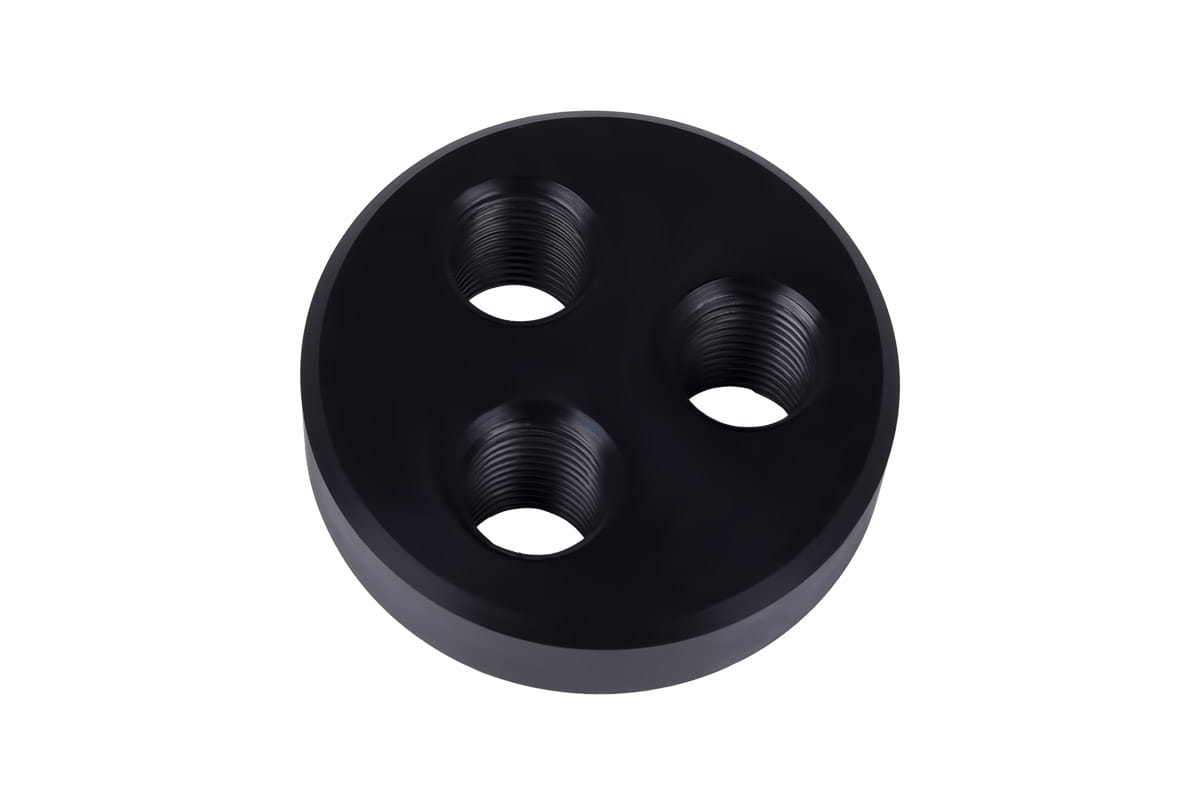
- If you're trying to replace inlet cap, make sure the cap you find works. Here's one I found for 50mm diameter:
 shop.alphacool.com
- I believe the acrylic reservoir itself is this (please check yourself!!):
shop.alphacool.com
- I believe the acrylic reservoir itself is this (please check yourself!!):
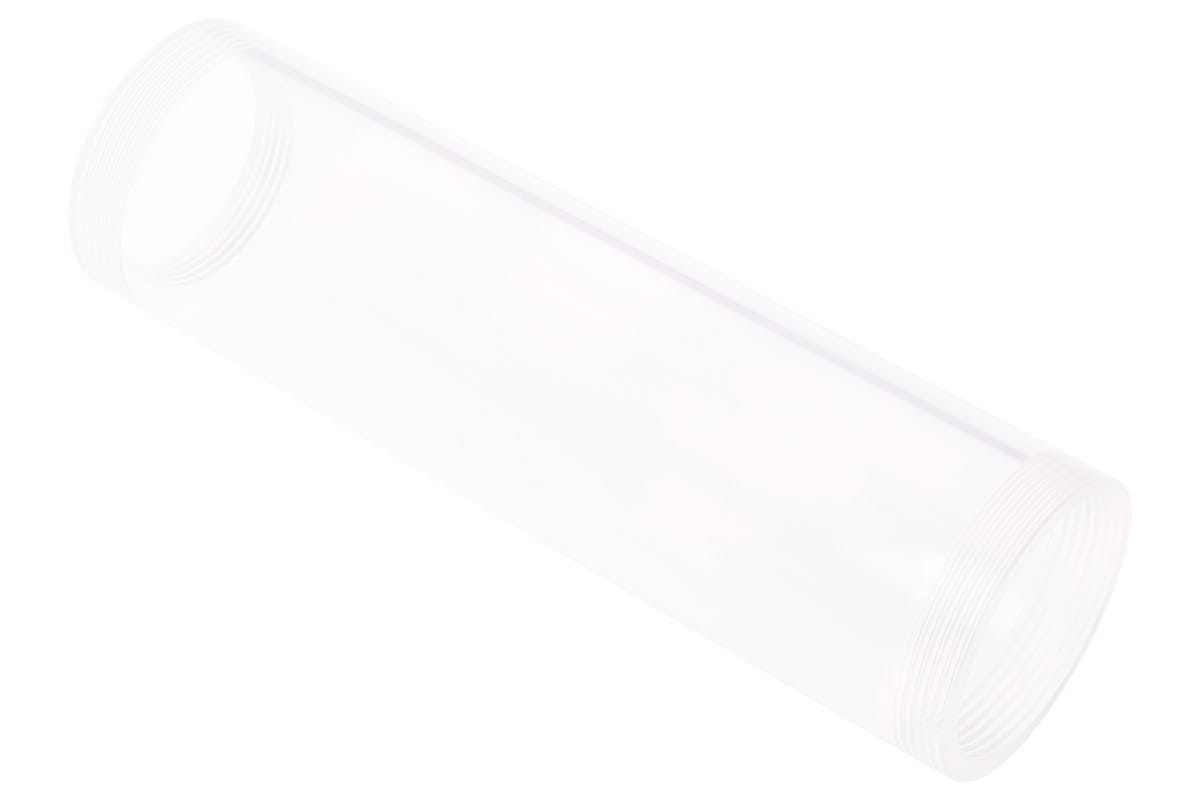 shop.alphacool.com
- This one is super nice, it's a rotatable cap replacement you can get. Set your in/outlets exactly where you want. I'm not sure if 50 or 60mm diameter though:
shop.alphacool.com
- This one is super nice, it's a rotatable cap replacement you can get. Set your in/outlets exactly where you want. I'm not sure if 50 or 60mm diameter though:
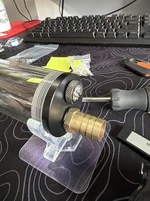
I also mentioned not wanting to have to drill anything. You might wonder how to attach those brackets without doing so. I bought adhesive stickers with screw ports from AliExpress, and used screws/washers that came with the reservoir:

Can probably get on Amazon as well. The adhesive first, then stack 3 washers next, bracket next, thread the screw through the bracket hole -> washers -> adhesive screw port.
-------------------------------
Random thought:
I found this one singular option that I've not tested. It looks so similar to the internal bypass option that yugang himself devised. (a prebuilt option at least) It's slotted but to be honest, I don't know if it would work well. If you search for aluminum pc water cooling reservoir, you will find this. Only comes in one size unfortunately. Again, I have NOT tested this.


Maybe someone's tested this already and found out that it doesn't work, but I wanted to put this out there since I haven't seen anything on it. I don't want to gatekeep this and I hope that this gives people another option since not everyone may have tools readily available. Since this is considered a PC component, there are a number of options available for fittings that I'll get into in a bit that make this great.
There are a few downsides though:
1. Limited diameters. I've only seen options for 50 or 60mm diameters. The 50mm ones have 40mm inner diameter, and 60mm ones I assume have 50mm inner.
2. Limited lengths. I've seen them as small as 6cm long all the way to 40cm long. The caps/lids range from 6-10mm thick.
Largest I've seen is 50mm and 400mm long. Useable diameter and length, let's say are 40mm and 380mm respectively. If you want a pH drop of 1.5, largest your surface area can be is 2690cm^2. Obviously you can stretch this if you don't need that large of a pH drop.
3. Standardized G 1/4" thread. This isn't as common a fitting (in the US at least). This thread size can be good or bad.
4. Some others mentioned later.
As for the upsides:
1. Clean look, no DIY necessary, no PVC glue, certain listings come with brackets and screws.
2. Inexpensive, I got a 210mm variant for ~$15USD
3. Outlet is offset to the side. You can rotate as necessary to control in overflow mode.
4. Others mentioned later.
Again, this is for PC water cooling. 95% of the parts I've seen are made of brass. They are however either chrome or nickel plated.
Not sure if this will be an issue since brass is ~60% copper. Hamfist's tank is also huge compared to my 60p and it may be dependent on water changes. Having the plating on the fittings will lower the corrosion rate since we are in acidic lower pH water. I honestly don't think this should be a problem at all. There are acrylic and stainless steel options out there if you look for them. I've heard nickel plating is best.I have not seen any adverse affects at all, and I do have low KH, low pH water. There are a few amanos living happily in the tank too.
Its a 150g tank with weekly 50% water changes though, so dissolved metals from the connectors must be minimal. You have got be thinking about changing them for nylon ones though.
As of right now, I have my ADA 60P freshly cycling on a dark start. I was able to test the co2 functionality (not measure co2 levels). I am able to get a co2 bubble to develop inside and work with overflow. My "reactor" is 210mm long and has 50mm diameter. Calculating with the inner diameter (40mm on mine) and the useable length (190mm if you take away cap length), I should theoretically be able to get a ~1.4ph drop.
The filter I'm using is the Biomaster 350 thermo. Tubing is 5/8" for this, and this is one of the downsides I want to get into. This is for PC cooling like I mentioned and they generally don't use tubing that large. If you're running a filter that uses 12/16mm tubing instead of 5/8" (16/22mm) then you might have a much easier time finding fittings to work. G 1/4" thread is roughly a 1/2" opening. I'm not actually getting less flow with this because I realized the 16/22 quick tap valves I use actually have a 1/2" opening on the inside as well. This G 1/4" thread shouldn't be an issue then. FYI, G 1/4" is the same as 1/4" BSPP. (british standard pipe parallel)
I tried making my setup as NEATLY and good looking as possible. Above is my final work (as of now). I have some tube trimming to do though to make it nicer. Another thing I want to mention, the first time I tried this, I connected my outlet straight to the yugang reactor . I saw this thread reply (below) saying that their 2" pvc (~50mm) had no issue with the flow speed after adjusting their tap valve. That was not true in my experience. My reactor should be about the same size as this one, but the water rushes through very turbently:
And so I had to resort to making a simple bypass. One lesson I learned, don't get a cheap valve on amazon for $5. I placed the valve on the bypass initially:@Yugang has been so generous and helpful to me, held my hand through the calculations and parts questions, and opened to for to the world is CO2 reactors. I wanted to say thank you and that I appreciate your help.
Here's what we came up with. This is for a 60U (24" x 14") 20 gallon tank. 2" clear schedule 40 conduit 6" in length. At first, I mounted the reactor above the canister filter with both 90° elbows pointed down like so.View attachment 5115
This worked ok, but ( I'll add that I built another reactor for my smaller tank) the other reactor has a slightly different design due to space limitations and it worked better. Both of those 90° elbows faced up. So I moved the reactor down and turned both elbows upward like soView attachment 5116
The flow is more gentle and less bubbles. I control the CO2 flow with a regulator. I did not install a bypass or overflow. I'm using double tap disconnects for maintenance and flow adjustment purposes. I'm running an Oase 350 on this tank and need to throttle it down a bit anyways. This quiets everything down and stops the gurgling and sucking in air at the skimmer. I easily hit 1 ph drop in 40 minutes. I'm using a John Guest fitting for CO2 connection, which is threaded into reactor body using 1/8 x 27 NPT tap and 21/64 drill bit.
Such a huge improvement over the inline diffuser I was using. No more micro bubbles!
It slowed the flow so much that almost all water was going through bypass even though valve was fully open. (Don't get cheap Y or T splitters either...)
Here's a video of the flow WITHOUT a bypass. Video starts with tap valve already slightly shut 25% of the way and slowly getting shut more as you can see:
View attachment IMG_7536.mov
It doesn't matter where you put the valve but I think it makes more sense to put it on the reactor side. You can control how slow the flow is that way. Ff you place it on bypass side, you can never slow down water through reactor that way - only more going to it.
You might ask, where's the co2 supposed to go if you don't have the inline accessory that I have? Well there's a threaded acrylic pipe that comes with this reactor if you look at listings. All you need to do is get a 4/6mm push connect to g1/4" male thread fitting for a few bucks and your issue is solved. The threaded acrylic pipe can also be screwed off and there are more extender fittings and such to replace that if you search them online. Options like the 60mm length reservoir I posted above may only have 2 outlets, but the larger 400mm example I gave has 4 holes with different hole positions too. You can place a purge valve that slightly works (there's literally a fitting for that too). The main outlet hole is still offset as well. (another example shown below) Any hole you don't want to use? Just buy a g1/4 plug. The benefit of using this PC cooling reservoir is the amount of fittings they have that can work for your needs.
For my setup, I ended up using a $3 dollar plastic garden hose splitter that has 3/4" GHT (garden hose thread) that was two valves on it (best of both worlds). I also bought the appropriate barbs to fit into it (so hosing can attach). Because I wanted to put this is my AquaForestAquarium Archaea cabinet, everything is packed really tight. Would be nicer if tubing had more room to move and didn't kink as easily. Just a tradeoff so you see I had to use elbow barbs and keep some tubing real short.
My fittings right now are brass but I found one seller on ebay (shipped from China) that has G 1/4" male thread to 5/8" barb in STAINLESS STEEL. However, it is BSPT (british standard pipe thread) so this one tapers inwards and will probably need teflon/very tight twist to seal with the o-ring. BSPT fitting can go into a BSPP threaded hole, but BSPP cannot go into BSPT. Someone correct me if I'm wrong about that, but I'm fairly certain that is the case.
If you've read to this point, I think this should be enough to understand what you can do with this PC cooling reservoir. It has limitations size wise and a need for a bypass if you don't want to slow the flow on your tank too much (depending on your filter), but it really is a nice cheap option that we can use for our hobby.
Please correct or question me anywhere!!!
--------------------------------------------
Just links to what I bought for anyone curious. I hope links are allowed. I don't have any commission to these. Just purely for info on what I have.
Amazon.com: uxcell G1/4 Inner Hex Head Pipe Fitting Plug, Universal 304 Stainless Steel Thread Socket Plug with Green O-Ring for Terminate Pipe Ends or Replacement Drains : Industrial & Scientific
Amazon.com: uxcell G1/4 Inner Hex Head Pipe Fitting Plug, Universal 304 Stainless Steel Thread Socket Plug with Green O-Ring for Terminate Pipe Ends or Replacement Drains : Industrial & Scientific
a.co
You can buy these for cheaper on AliExpress. I just didn't want to wait and paid a little more for the items. They're from the same supplier, but I also recommend finding a higher quality brand. The one I have is 50mm outer diameter. I think companies like Freezemod have higher quality ones, and they might be 60mm. Do your own research on this, I didn't do enough on this side.
Some other hard to find accessories:
- If you're trying to replace inlet cap, make sure the cap you find works. Here's one I found for 50mm diameter:
AGZ Alphacool Cape Coolplex Base POM 3 Bar EOL
Alphacool accessories and spare parts! The original accessories for your water cooling directly from the manufacturer!
shop.alphacool.com
AGZ Alphacool Ice Cream Cup Acrylic Tube 60x205mm
Alphacool accessories and spare parts! The original accessories for your water cooling directly from the manufacturer!
shop.alphacool.com

I also mentioned not wanting to have to drill anything. You might wonder how to attach those brackets without doing so. I bought adhesive stickers with screw ports from AliExpress, and used screws/washers that came with the reservoir:
Can probably get on Amazon as well. The adhesive first, then stack 3 washers next, bracket next, thread the screw through the bracket hole -> washers -> adhesive screw port.
-------------------------------
Random thought:
I found this one singular option that I've not tested. It looks so similar to the internal bypass option that yugang himself devised. (a prebuilt option at least) It's slotted but to be honest, I don't know if it would work well. If you search for aluminum pc water cooling reservoir, you will find this. Only comes in one size unfortunately. Again, I have NOT tested this.