Welcome to ScapeCrunch

We are ScapeCrunch, the place where planted aquarium hobbyists come to build relationships and support each other. When you're tired of doom scrolling, you've found your home here.

Help Yugang reactor with a bypass... can anyone help a newbie?

Joined
Jan 1, 2026
Messages
30
Reaction score
16
Location
England
I've been doing a hell of a lot of research on the yugang reactor and co2 reactors in general. I am looking to build my own as I have a fluval fx4 so there is no options for reactor or inline diffusion available in the UK

Is there anyone that could talk me through exact steps on setting it up? Research suggests I will need a bypass for the fx4. I have a fluval roma 240 tank and I already have co2 running by in tankdiffuser.

The main questions I have;

- I'd like a mid range level of co2, which seems to be a 1.2 ph drop. I've been told if I am using a standard 50mm pipe that the reactor will only need to be 27cm, which seems small, is that correct?

- If I need a bypass, does anyone have a parts list or are able to advise?

- the co2 connection that goes into the PVC, how do I get a connector into a circular PVC pipe without leaks?

Thank you so much in advance
 
Given your reference to mm, I assume you are not US based, correct?

Here in the US I opted to use PVC drain pipe for the body of the reactor and went 2 inch diameter.

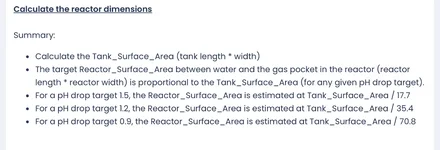
IIRC you multiply your length times front to rear widt of your tank internally and divide by 17.7 to get the area your co2 gas to water surface area you need for your reactor. From that determine the width of the interior of the reactor where the waterline will be in overflow. Divide the surface area needed by the width and that will give you the length.

I cut my 2 inch pipe the appropriate length and gluedPVC couplers on each end. I fitted PVC bushings inside the couplers and then threaded adapters were glued in the bushings. I used 3/4 inch pex afapter to threaded pipe as my filter tubing would form a nice friction fit over thepex barb. I then put stainless steel hose clamps to make a more secure fit.

IMG_1107.webp

I used pvc pipe hangers to secure the pipe to the back wall of my cabinet.
IMG_3284.webp

To inject co2 gas into the chamber I drilled an appropriate sized hole and then threaded in a standard threaded airline valve as used to set up an air loop in a fishroom for air drops to tank with central air…
IMG_1143.webp

IMG_1147.webp

An FX 4 has a fair amount of flow. Do you have more flow than you need , or do you want t to preserve as much as you can? Different plumbing options for a bypass depending if you have flow to spare.
 
Last edited:
Given your reference to mm, I assume you are not US based, correct?

Here in the US I opted to use PVC drain pipe for the body of the reactor and went 2 inch diameter.

IIRC you multiply your length times front to rear widt of your tank internally and divide by 17.7 to get the area your co2 gas to water surface area you need for your reactor. From that determine the width of the interior of the reactor where the waterline will be in overflow. Divide the surface area needed by the width and that will give you the length.

I cut my 2 inch pipe the appropriate length and gluedPVC couplers on each end. I fitted PVC bushings inside the couplers and then threaded adapters were glued in the bushings. I used 3/4 inch pex afapter to threaded pipe as my filter tubing would form a nice friction fit over thepex barb. I then put stainless steel hose clamps to make a more secure fit.


I used pvc pipe hangers to secure the pipe to the back wall of my cabinet.


To inject co2 gas into the chamber I drilled an appropriate sized hole and then threaded in a standard threaded airline valve as used to set up an air loop in a fishroom for air drops to tank with central air…


An FX 4 has a fair amount of flow. Do you have more flow than you need , or do you want t to preserve as much as you can? Different plumbing options for a bypass depending if you have flow to spare.
This is helpful thank you. I have more than enough flow I run my fx4 at around 70% right now. Do you have any pics or videos of yours working?

Correct I am from the UK, my 50mm is your 2 inch. My tank is 48 inches long by 16 inches wide. I don't need excessive co2 so was thinking a 50mm/2inch reactor that was 30cm, that sound alright?
 
don't need excessive co2 so was thinking a 50mm/2inch reactor that was 30cm, that sound alright?
Metric numbers almost never sound right to me….

IMG_4163.webp


So 48 x 16 =768

768/x=required surface area in reactor.

Depends on what your target ph drop is…. Lets figure on a conservative 1.2 ph drop.

768/35.4=21.695

Soto get a 1.2 ph drop the length times width of your reactor chamber would be 21.7 sq inches

If you wanted a 1.5 ph drop….

768/17.7=43.39

Divide square inches needed by widrh of waterline in reactor..

21.7/2=10.85 inches long

43.39/2=21.695 inches long

30 cm is right around 11.8 inches..

So depending what your target ph drop is…
 
To create a bypass, I would run ashort run of tubing off your adapter and fit in a ball valve. On the other side of the ballvalve fit a plumbing tee.. the ball valve will throttle the flow that wants to go in the reactor and hence divert some of the flow through the Tee. The third hole of the tee will bypass over the filter and reattach to a tee on the other side of the reactor. Allowing the flow to reconnect..

You could install another ball valve between the reactor and the second tee if you ever wanted to isolate the reactor completely from your flow, but personally I cant see where I would ever want to do so.
 
To create a bypass, I would run ashort run of tubing off your adapter and fit in a ball valve. On the other side of the ballvalve fit a plumbing tee.. the ball valve will throttle the flow that wants to go in the reactor and hence divert some of the flow through the Tee. The third hole of the tee will bypass over the filter and reattach to a tee on the other side of the reactor. Allowing the flow to reconnect..

You could install another ball valve between the reactor and the second tee if you ever wanted to isolate the reactor completely from your flow, but personally I cant see where I would ever want to do so.
Ok thank you. This type of design? Are you able to review my parts list and see if anything is missing other than pvc cement for a 50mm reactor with a 25mm bypass?
 

Attachments

  • 20260102_200810.webp
    20260102_200810.webp
    30.7 KB · Views: 7
  • Screenshot_20260101_185400_Chrome.webp
    Screenshot_20260101_185400_Chrome.webp
    114.9 KB · Views: 8
Personally I would have the throttling valve between the tee and the reactor as opposed to where it is in this photo.

The velocity mass of moving water will preferentially want to go straight through the tee and into the reactor as opposed to taking a right turn at the tee.

You need minimal flow through the reactor for it to work. By having the throttling valve after the tee you can have the lions share of water going through the bypass and not the reactor. As plumbed in the photo the lions share of flow will want to go through the reactor.

The list looks to be good. I will tell you a secret though…. I dont do plumbing every day. Every time I do a plumbing project I typically make more than 1 repeat trip to get things I need that I didnt think of…. I maybe do 2-3 projects a year.

Yes, it is inefficient, but it still is a lot cheaper than hiring it out…
 
Personally I would have the throttling valve between the tee and the reactor as opposed to where it is in this photo.

The velocity mass of moving water will preferentially want to go straight through the tee and into the reactor as opposed to taking a right turn at the tee.

You need minimal flow through the reactor for it to work. By having the throttling valve after the tee you can have the lions share of water going through the bypass and not the reactor. As plumbed in the photo the lions share of flow will want to go through the reactor.

The list looks to be good. I will tell you a secret though…. I dont do plumbing every day. Every time I do a plumbing project I typically make more than 1 repeat trip to get things I need that I didnt think of…. I maybe do 2-3 projects a year.

Yes, it is inefficient, but it still is a lot cheaper than hiring it out…
Makes sense. Thanks a lot. May look to get clear pvc, too, for the main big so I can monitor the flow. Thank you again for the help, really appreciate it
 
So I've managed to get my drop checker moving towards green but it's at a bps that I can't even count. Way higher than I ever had my diffuser on. Is this normal? No bubbles are escaping from the outlet

Can flow inside the reactor be too high if no bubbles are escaping? Or is flow irrelevant if there are no micro bubbles escaping from the outlets?
 
No bubbles are escaping from the outlet
Can flow inside the reactor be too high if no bubbles are escaping?
There are two kinds of "escaping" the gas in your reactor does. Remember that water that has no CO2 in it already will absorb CO2 more readily than water that is already saturated with CO2.

Type 1 (the type we want) is where the water has become so saturated with CO2 that the absorption of the gas pocket slows until it begins growing faster than it absorbs. Eventually it "purges" out the reactor. This happens when the reactor gets full with gas (usually halfway through the day, or towards the end of the CO2+photoperiod, in most cases). This purging keeps you from over-injecting CO2, and also purges any other O2 or N2 gasses that would otherwise get stuck in your reactor.

Type 2 (the type we don't want) is where the flow through the reactor is way too strong or turbulent, and it's "whisking away" good CO2 that hasn't even had a change to dissolve into your water yet. This can happen if there's too much flow, too much turbulence (by nature of the design) or if the method you're injecting CO2 places the CO2 bubbles directly into the flow of the reactor, and it's too short for the CO2 to form a pocket on the top of the reactor.
Or is flow irrelevant if there are no micro bubbles escaping from the outlets?
Flow is irrelevant AS LONG AS it's not too high. Slow flow is fine, medium flow is fine, even fast flow is fine -- as long as the CO2 bubbles you're injecting get a chance to form a pocket on the top of the reactor over time to dissolve.
 
There are two kinds of "escaping" the gas in your reactor does. Remember that water that has no CO2 in it already will absorb CO2 more readily than water that is already saturated with CO2.

Type 1 (the type we want) is where the water has become so saturated with CO2 that the absorption of the gas pocket slows until it begins growing faster than it absorbs. Eventually it "purges" out the reactor. This happens when the reactor gets full with gas (usually halfway through the day, or towards the end of the CO2+photoperiod, in most cases). This purging keeps you from over-injecting CO2, and also purges any other O2 or N2 gasses that would otherwise get stuck in your reactor.

Type 2 (the type we don't want) is where the flow through the reactor is way too strong or turbulent, and it's "whisking away" good CO2 that hasn't even had a change to dissolve into your water yet. This can happen if there's too much flow, too much turbulence (by nature of the design) or if the method you're injecting CO2 places the CO2 bubbles directly into the flow of the reactor, and it's too short for the CO2 to form a pocket on the top of the reactor.

Flow is irrelevant AS LONG AS it's not too high. Slow flow is fine, medium flow is fine, even fast flow is fine -- as long as the CO2 bubbles you're injecting get a chance to form a pocket on the top of the reactor over time to dissolve.
Bubble is formed for sure. Am I right in saying that if no visible co2 bubbles are escaping the output of my filter then the flow inside can't be too slow?

I understand bps can be high, my point is that it's way higher than when I used an in tank diffuser which I didn't think should be right
 
Bubble is formed for sure. Am I right in saying that if no visible co2 bubbles are escaping the output of my filter then the flow inside can't be too slow?
I'm confused reading this, because they're not really related. CO2 purging from a full reactor happens when the reactor is at the max power it can reach, and the water has become saturated with CO2. The "excess" CO2 is purged from the reactor because the bubble gets so big that it literally finds its way to the reactor exit hole, and into your tank. It has nothing to do with being too slow. In fact, slow is great for these reactors. As long as the water is not literally still/stagnant, you should be plenty fine. Slower = more time for the CO2 pocket to dissolve into the water passing below.

I understand bps can be high, my point is that it's way higher than when I used an in tank diffuser which I didn't think should be right
Yes, that isn't right. I personally made the switch from diffusers to reactors on the same tank with the same build, and I saw that I save at least 30% CO2 or more. Potentially a LOT more, like cutting my CO2 use in half while reaching 40ppm every day for the photoperiod. I was using Flowmeters, not bubble counters, for accurate readings. It requires far, far less CO2/min with a reactor than with diffusers.

Perhaps you have a leak, or something else is wrong. It's hard to know what could go wrong here; I hate to say it, but it's just a simple pipe that holds gas. It should just work.

One thought: drop checkers don't work properly if CO2 mist bubbles get into their little "gas pocket". A drop checker should be used to read the dissolved CO2 levels in the water, not catch CO2 mist bubbles themselves. If mist bubbles get into your drop checker, it gives a false strong reading.
Could your drop checker have been giving a false reading because of this? Could CO2 mist, when you were using a diffuser, have found its way into the drop checker? If so, it would have been lime/yellow when it should have actually been blue/green.

The reason why this might be relevant is that reactors don't have mist, so drop checkers are more accurate with a reactor than with a diffuser, since CO2 gas bubbles can't get trapped in the drop checker bell themselves. Maybe this is a thought?
 
I'm confused reading this, because they're not really related. CO2 purging from a full reactor happens when the reactor is at the max power it can reach, and the water has become saturated with CO2. The "excess" CO2 is purged from the reactor because the bubble gets so big that it literally finds its way to the reactor exit hole, and into your tank. It has nothing to do with being too slow. In fact, slow is great for these reactors. As long as the water is not literally still/stagnant, you should be plenty fine. Slower = more time for the CO2 pocket to dissolve into the water passing below.


Yes, that isn't right. I personally made the switch from diffusers to reactors on the same tank with the same build, and I saw that I save at least 30% CO2 or more. Potentially a LOT more, like cutting my CO2 use in half while reaching 40ppm every day for the photoperiod. I was using Flowmeters, not bubble counters, for accurate readings. It requires far, far less CO2/min with a reactor than with diffusers.

Perhaps you have a leak, or something else is wrong. It's hard to know what could go wrong here; I hate to say it, but it's just a simple pipe that holds gas. It should just work.

One thought: drop checkers don't work properly if CO2 mist bubbles get into their little "gas pocket". A drop checker should be used to read the dissolved CO2 levels in the water, not catch CO2 mist bubbles themselves. If mist bubbles get into your drop checker, it gives a false strong reading.
Could your drop checker have been giving a false reading because of this? Could CO2 mist, when you were using a diffuser, have found its way into the drop checker? If so, it would have been lime/yellow when it should have actually been blue/green.

The reason why this might be relevant is that reactors don't have mist, so drop checkers are more accurate with a reactor than with a diffuser, since CO2 gas bubbles can't get trapped in the drop checker bell themselves. Maybe this is a thought?
Makes sense, and that is certainly a possibility. Thank you for taking the time to explain
 
I am really suspicious of a CO2 leak somewhere. Like @Naturescapes_Rocco I also experienced roughly a 30-40% saving in CO2 switching from an inline diffuser to a Yugang, on the same tank.
I agree which is why I've sprayed everything but I see or hear no signs of leaks and the bubble in the reactor is forming nicely
 

Top 10 Trending Threads

Back
Top