
Welcome to ScapeCrunch
We are ScapeCrunch, the place where planted aquarium hobbyists come to build relationships and support each other. When you're tired of doom scrolling, you've found your home here.
Social Feed

Hypothesis Ramosior & the Droop
*This was an experiment I ran back in 2020 that I still believe has some helpful qualities to it. Especially as more and more people get their hands on plants such as Florida and Sunset. I state many times that I might not be right, this was just something that worked FOR ME. I show the pictures of the progress each plant made. It would be fun to get feed back on how you guys are taking care of this species in your own ways. I do plan on owning both of these plants eventually and have every intention to run this again. I hope you guys enjoy this!
I’d Like to first start off by simply saying that this was just an experiment that I decided to test out. At the time of this experiment I was in the hobby for about 1 year and 7 months: Take this info as you wish. I am not claiming this to be a solution of any sort, there are people that have been around a lot longer than I have that might have a better hypothesis or understanding. When I first began to put thought into this I thought to myself “No way, you’re wrong … but what if you’re right?” (Yes it was one of those kind of things) This is just my theory on what might cause the infamous droop syndrome so many have experienced.
The motivation for this small experiment was because there’s no worse feeling than looking into your tank and seeing your beloved, favorite, and typically expensive (at the time) Ramosior species with drooping leaves. I remember seeing this happen to my first round of Florida I owned, one stem had drooping leaves and I slowly watched it dwindle away. I thought “No big deal it was just an unhealthy stem” not ever expecting to lose every single stem with in the next 3 days. Yes… a total of 20+ stems GONE just like that. Not to mention I paid about $110 for 8 stem back then. haha. They stuck around for about 3 months before catching the ‘droop’.
So what am I talking about for those that aren’t familiar: With Ramosior species there seems to be a time where the plant will droop its leaves, in my case it started with one stem, then 2 more… then 3 more… then, they all melted away without a trace. literally. I woke up, checked the tank and $110 was gone before my eyes. From discussing with others that have had this issue no body can seem to put a finger on what exactly it could be. (Maybe someone today has figured it out) Is there a TIMELINE on when to expect it? No. Could certain SUBSTRATES cause it? Possibly. Co2 issues? Dosing issues? Some strange disease that develops with in the plants? Who knows. All I can say is here’s what I came up with.
7 months ago I decided to give Florida a try again. I started with 5 Stems and focused on trying to keep them as healthy as possible as long as possible, I was giving myself 3 months to see if they get the Droop:

Original 5 Stems: November 14th 2019

Here is what those 5 stems grew to in 2 months January 16th 2020

That same bunch 3 months after planting: February 21st 2020
Right around that time I started to work with Rotala Ramosior Sunset which i was told was a much more pickier plant than Florida. (As you can see in the last picture) At this point I was going on 4 months with Florida and hadn’t lost a single stem to melting or to drooping leaves. Sunset was around for about 3 weeks and as you can tell by the picture was in rough shape.
(Here is where it got interesting for me)
Not really knowing what made Florida stick around so long I started back tracking on how I was caring for the plant. Everything in my tank at this time was being Topped, I would trim the plant and toss the bottoms. This is where I stumbled on something… As I started to focus more on growing Sunset I noticed something about Sunset that was different from my Florida. Florida was being topped once a week. Sunset was never topped or trimmed, I just wanted it to grow. I decided to up root the Sunset and noticed that the bottom of the stems were black, Compared to the Florida which was whitish yellow. Unfortunately I don’t have pictures of them from this time (I know, this is why I’d be discredited in a legit lab lol) but this is where I noticed a difference. Keep this in mind. Here are pictures of the progress Sunset had when I decided to treat it just like Florida and top it once a week, sometimes even twice a week. Pay attention to the Sunset which is in the Center of the tank just to the left of Florida, then will end up to the far left.

February 22nd 2020

March 1st 2020

March 10th 2020

March 23rd 2020

March 30th 2020

April 9th 2020
At this time I decided to run a short experiment. Hoping it would show some results… Now I did only use Florida for this test, however keep in mind that I still continue to top my Sunset once a week.
So let’s dive back into the black rotting at the bottom of the Sunset before topping it. I noticed that Florida never dealt with this issue because I was always topping all of my plants at least once a week, that was just my maintenance routine. When I planted sunset I didn’t touch it for almost 3 weeks thinking it would grow but it was struggling more than anything. Pale color, Not many side shoots, and overall didn’t look healthy. As you can see from the picture above when I started topping it, it grew faster with 3–4 side shoots on each stem, had beautiful color, and looked healthy for the most part.
April 14th I set up a second tank with the exact same conditions I had in the tank pictured above. (I decided to use Millers Micro-complex instead of mixing my own micros: call it laziness) I took 3 sets of Florida, the first stems (Group 1) I didn’t top at all, second (Group 2) I would top only 3 times over the span of the experiment. Which was conducted over about a 6–7 week time frame. The last set (Group 3) I topped once a week. Here is why I think this is important for Ramosior Species.
Pay attention to how rotted the bottom of the stems are compared to the ones that were topped 3 times and the ones that were topped every week.
Below is Group 1 which was never topped through out the experiment:


Now here is the Second group. Again pay attention to the Bottoms, as well as size difference:


With group two I noticed some rotting towards the bottoms but overall they had decent growth and were much healthy than Group 1 by a long shot. Here’s a side by side comparison:

Now, Here is the growth of Group 3 which was topped every week during the length of the experiment:

Group 3 had thicker stems larger roots, and grew beautiful round leaves, better color and had no rotting at the bottom.
Here is a comparison between Group 2 and Group 3:

And finally, a picture of all groups: Left: Group 1 — Middle: Group 2 — Right: Group 3

*To also note, these were set up in a fairly new tank a the time. It was up and running for about 2 weeks before i threw the plants into the tank. There was a lot for them to adapt to for sure.
So what's the theory? Well, at the time i had Florida growing consistently for 7 months and not a single stem catching the dreaded Droop. (Nov. 14th — June 1st) Sunset had exploded for me at the time with more stems than I thought I’d be able to grow (More pic’s later) Now again, this is just a theory, so please keep that in mind. Working with Ramosior for these months I believe they enjoy rotting from the bottom up… why does that matter? Well, because they rot underneath the substrate, where you would never be able to notice it.
Ramosiors have an inner stem like core, it’s harder than the out side of the plant. If you take your finger nail and run it down the stem barely scratching the outer surface you will see this inner stem that I’m talking about… I’m honestly not sure what to call it. I believe this inner stem acts as a “membrane” for the plant… keeping it healthy. When rotting begins to occur at the bottom of the stem, these membrane like stems begin to rot as well not being able to keep the plant as healthy as possible. Avoid the Rot, Avoid the droop. So where does the droop come into play? I think where we are going wrong with these plants is trimming them and trying to propagate the tops as well as keeping the bottoms. Growing these plants out to be too tall, giving them the time to rot from the bottom.
When rotting occurs for too long, I believe the inner core becomes unhealthy and begins to rot behind the outer stem that we see. As we continue to propagate side shoots and tops from the already unhealthy bottoms, the inner core like stem continues to be unhealthy and rot… Eventually Leading to the drooping leaves which will then lead to stems melting. Now the only part I’m stuck on is why they would all decide to melt at the same time. Thinking back on when my Florida Drooped the first time, I never cut the stems, I was too afraid to. I would only cut side shoots and replant them. Which would make sense as to why they all melted at the same time. I was taking shoots off of an unhealthy plant (Think inner stem here) and planting it. All of my stems where unhealthy at that point… think of it as a disease almost. Once the main stem has it… so do the side shoots. Nothing, and I mean absolutely nothing you can do about it. This would explain why even those that took the stems out of the tank and put them into another tank were still experiencing drooping right after one stem got it. If you experience a stem that droops, it’s only a matter of time before all of the others droop.
The conclusion? I truly believe that if you are able to keep the bottoms from rotting by continuously topping the Ramosior species (Florida, Sunset, Cramer) it could give you a very good chance of preventing the Droop Syndrome. Again, I’m no expert, I’m only speaking from experience here…and 7 months with out any drooping is twice as long as I was able to keep it the first time.
By no means am I saying this is the answer to this strange event… or that I’ve even come close to figuring it out. One thing is for sure, it grows really nice stems! for 6 weeks I’ve topped sunset every week. Here’s what it produced, mind you this is just out of my “farm” tank.


Now I had mentioned something way earlier in this post about how substrate may possibly matter when it comes to The Droop. I also mentioned how this was still an on going experiment. All of these stems were grown in Black Diamond Blasting sand and theres a theory out there that Ramosior Sunset doesn't do well in Aquasoil, so to be fair, I recently switched my main tank to Landens Aquasoil to test this with Sunset as well. With about a month into it being in Aquasoil it's not doing so bad. I plan on certainly updating this post after time goes on.

Now to conclude this, I stopped running this experiment as I got busier with work during summer months and was not doing much husbandry to the tank. With fresh soil, few water changes, and little care, algae crept in and I ended up moving the sunset to the "farm tank" getting it healthy and selling it all to focus on more of a "Dutch style" tank at the time. Both of my entire groups of Florida and sunset were eventually sold off and never seen again in this tank. haha.
This was a very fun thing to perform with two amazing plants in this hobby. they are both stunning when grown healthy. This was my second time caring for Florida and my first time growing sunset. I was lucky enough to keep Florida around for almost 2 years and sunset for a solid 14 months. I had no issues trimming either plant using the "topping" method, and even moved them around frequently. Over gown farm tanks with them in it and had them survive that tank with almost 2 weeks of no water changes... I never had an issue with either.
Now, this could have certainly been luck, or maybe at the time I was too green to know that I was actually doing something simple or "standard" for these species. I never wanted to be right - I just wanted to help others keep these plants around a whole lot longer than I was able to the first time. There's nothing like getting to show off a beautiful group of Ramosior's in your aquarium!
Thank you for Reading!
I’d Like to first start off by simply saying that this was just an experiment that I decided to test out. At the time of this experiment I was in the hobby for about 1 year and 7 months: Take this info as you wish. I am not claiming this to be a solution of any sort, there are people that have been around a lot longer than I have that might have a better hypothesis or understanding. When I first began to put thought into this I thought to myself “No way, you’re wrong … but what if you’re right?” (Yes it was one of those kind of things) This is just my theory on what might cause the infamous droop syndrome so many have experienced.
The motivation for this small experiment was because there’s no worse feeling than looking into your tank and seeing your beloved, favorite, and typically expensive (at the time) Ramosior species with drooping leaves. I remember seeing this happen to my first round of Florida I owned, one stem had drooping leaves and I slowly watched it dwindle away. I thought “No big deal it was just an unhealthy stem” not ever expecting to lose every single stem with in the next 3 days. Yes… a total of 20+ stems GONE just like that. Not to mention I paid about $110 for 8 stem back then. haha. They stuck around for about 3 months before catching the ‘droop’.
So what am I talking about for those that aren’t familiar: With Ramosior species there seems to be a time where the plant will droop its leaves, in my case it started with one stem, then 2 more… then 3 more… then, they all melted away without a trace. literally. I woke up, checked the tank and $110 was gone before my eyes. From discussing with others that have had this issue no body can seem to put a finger on what exactly it could be. (Maybe someone today has figured it out) Is there a TIMELINE on when to expect it? No. Could certain SUBSTRATES cause it? Possibly. Co2 issues? Dosing issues? Some strange disease that develops with in the plants? Who knows. All I can say is here’s what I came up with.
7 months ago I decided to give Florida a try again. I started with 5 Stems and focused on trying to keep them as healthy as possible as long as possible, I was giving myself 3 months to see if they get the Droop:
Original 5 Stems: November 14th 2019
Here is what those 5 stems grew to in 2 months January 16th 2020
That same bunch 3 months after planting: February 21st 2020
Right around that time I started to work with Rotala Ramosior Sunset which i was told was a much more pickier plant than Florida. (As you can see in the last picture) At this point I was going on 4 months with Florida and hadn’t lost a single stem to melting or to drooping leaves. Sunset was around for about 3 weeks and as you can tell by the picture was in rough shape.
(Here is where it got interesting for me)
Not really knowing what made Florida stick around so long I started back tracking on how I was caring for the plant. Everything in my tank at this time was being Topped, I would trim the plant and toss the bottoms. This is where I stumbled on something… As I started to focus more on growing Sunset I noticed something about Sunset that was different from my Florida. Florida was being topped once a week. Sunset was never topped or trimmed, I just wanted it to grow. I decided to up root the Sunset and noticed that the bottom of the stems were black, Compared to the Florida which was whitish yellow. Unfortunately I don’t have pictures of them from this time (I know, this is why I’d be discredited in a legit lab lol) but this is where I noticed a difference. Keep this in mind. Here are pictures of the progress Sunset had when I decided to treat it just like Florida and top it once a week, sometimes even twice a week. Pay attention to the Sunset which is in the Center of the tank just to the left of Florida, then will end up to the far left.
February 22nd 2020
March 1st 2020
March 10th 2020
March 23rd 2020
March 30th 2020
April 9th 2020
At this time I decided to run a short experiment. Hoping it would show some results… Now I did only use Florida for this test, however keep in mind that I still continue to top my Sunset once a week.
So let’s dive back into the black rotting at the bottom of the Sunset before topping it. I noticed that Florida never dealt with this issue because I was always topping all of my plants at least once a week, that was just my maintenance routine. When I planted sunset I didn’t touch it for almost 3 weeks thinking it would grow but it was struggling more than anything. Pale color, Not many side shoots, and overall didn’t look healthy. As you can see from the picture above when I started topping it, it grew faster with 3–4 side shoots on each stem, had beautiful color, and looked healthy for the most part.
April 14th I set up a second tank with the exact same conditions I had in the tank pictured above. (I decided to use Millers Micro-complex instead of mixing my own micros: call it laziness) I took 3 sets of Florida, the first stems (Group 1) I didn’t top at all, second (Group 2) I would top only 3 times over the span of the experiment. Which was conducted over about a 6–7 week time frame. The last set (Group 3) I topped once a week. Here is why I think this is important for Ramosior Species.
Pay attention to how rotted the bottom of the stems are compared to the ones that were topped 3 times and the ones that were topped every week.
Below is Group 1 which was never topped through out the experiment:
Now here is the Second group. Again pay attention to the Bottoms, as well as size difference:
With group two I noticed some rotting towards the bottoms but overall they had decent growth and were much healthy than Group 1 by a long shot. Here’s a side by side comparison:
Now, Here is the growth of Group 3 which was topped every week during the length of the experiment:
Group 3 had thicker stems larger roots, and grew beautiful round leaves, better color and had no rotting at the bottom.
Here is a comparison between Group 2 and Group 3:
And finally, a picture of all groups: Left: Group 1 — Middle: Group 2 — Right: Group 3
*To also note, these were set up in a fairly new tank a the time. It was up and running for about 2 weeks before i threw the plants into the tank. There was a lot for them to adapt to for sure.
So what's the theory? Well, at the time i had Florida growing consistently for 7 months and not a single stem catching the dreaded Droop. (Nov. 14th — June 1st) Sunset had exploded for me at the time with more stems than I thought I’d be able to grow (More pic’s later) Now again, this is just a theory, so please keep that in mind. Working with Ramosior for these months I believe they enjoy rotting from the bottom up… why does that matter? Well, because they rot underneath the substrate, where you would never be able to notice it.
Ramosiors have an inner stem like core, it’s harder than the out side of the plant. If you take your finger nail and run it down the stem barely scratching the outer surface you will see this inner stem that I’m talking about… I’m honestly not sure what to call it. I believe this inner stem acts as a “membrane” for the plant… keeping it healthy. When rotting begins to occur at the bottom of the stem, these membrane like stems begin to rot as well not being able to keep the plant as healthy as possible. Avoid the Rot, Avoid the droop. So where does the droop come into play? I think where we are going wrong with these plants is trimming them and trying to propagate the tops as well as keeping the bottoms. Growing these plants out to be too tall, giving them the time to rot from the bottom.
When rotting occurs for too long, I believe the inner core becomes unhealthy and begins to rot behind the outer stem that we see. As we continue to propagate side shoots and tops from the already unhealthy bottoms, the inner core like stem continues to be unhealthy and rot… Eventually Leading to the drooping leaves which will then lead to stems melting. Now the only part I’m stuck on is why they would all decide to melt at the same time. Thinking back on when my Florida Drooped the first time, I never cut the stems, I was too afraid to. I would only cut side shoots and replant them. Which would make sense as to why they all melted at the same time. I was taking shoots off of an unhealthy plant (Think inner stem here) and planting it. All of my stems where unhealthy at that point… think of it as a disease almost. Once the main stem has it… so do the side shoots. Nothing, and I mean absolutely nothing you can do about it. This would explain why even those that took the stems out of the tank and put them into another tank were still experiencing drooping right after one stem got it. If you experience a stem that droops, it’s only a matter of time before all of the others droop.
The conclusion? I truly believe that if you are able to keep the bottoms from rotting by continuously topping the Ramosior species (Florida, Sunset, Cramer) it could give you a very good chance of preventing the Droop Syndrome. Again, I’m no expert, I’m only speaking from experience here…and 7 months with out any drooping is twice as long as I was able to keep it the first time.
By no means am I saying this is the answer to this strange event… or that I’ve even come close to figuring it out. One thing is for sure, it grows really nice stems! for 6 weeks I’ve topped sunset every week. Here’s what it produced, mind you this is just out of my “farm” tank.
Now I had mentioned something way earlier in this post about how substrate may possibly matter when it comes to The Droop. I also mentioned how this was still an on going experiment. All of these stems were grown in Black Diamond Blasting sand and theres a theory out there that Ramosior Sunset doesn't do well in Aquasoil, so to be fair, I recently switched my main tank to Landens Aquasoil to test this with Sunset as well. With about a month into it being in Aquasoil it's not doing so bad. I plan on certainly updating this post after time goes on.
Now to conclude this, I stopped running this experiment as I got busier with work during summer months and was not doing much husbandry to the tank. With fresh soil, few water changes, and little care, algae crept in and I ended up moving the sunset to the "farm tank" getting it healthy and selling it all to focus on more of a "Dutch style" tank at the time. Both of my entire groups of Florida and sunset were eventually sold off and never seen again in this tank. haha.
This was a very fun thing to perform with two amazing plants in this hobby. they are both stunning when grown healthy. This was my second time caring for Florida and my first time growing sunset. I was lucky enough to keep Florida around for almost 2 years and sunset for a solid 14 months. I had no issues trimming either plant using the "topping" method, and even moved them around frequently. Over gown farm tanks with them in it and had them survive that tank with almost 2 weeks of no water changes... I never had an issue with either.
Now, this could have certainly been luck, or maybe at the time I was too green to know that I was actually doing something simple or "standard" for these species. I never wanted to be right - I just wanted to help others keep these plants around a whole lot longer than I was able to the first time. There's nothing like getting to show off a beautiful group of Ramosior's in your aquarium!
Thank you for Reading!

11 Replies
·
1675 views


Santa came early this year with a new 75g tank. I've never owned a 4' tank ever been stuck on the normal 30" wide 29g and 20g's forever. I wanted the uns 90u 36x22x22 but 750.00 is nuts to me I don't have that much in all tanks and equip I own so went cheap route.
Saw the 75g at PetSmart the imagitarium brand for 150 on sale. Those cheapos have bad reviews on leaking and I believe it as I actually picked up a free leaky 75g imagitarium at petco last week and sold it for snake terrarium for 40.00. Went to petco they also have the 50% off sale on marineland and aqueon. The tank was 159.00 out the door. Got lucky the manager said take this set of new glass tops for free, were a return they cant sell it.I assume the made in USA marineland is a better tank than the other cheapos and I actually don't mind the black silicone.
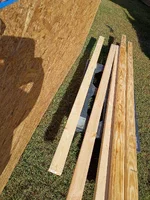
Went to Lowes today for some wood 4- 2x4x8 and 2- 2x4x10 and sheet if 1/2 osb for top and bottom shelf and for extra strength. When I get done I'm sure it would hold a 300g tank. Will wrap the tank in either bead board wood paneling or 1/4" plywood with some nice moulding on corners. Def gotta make a lip to hide the bottom plastic rim as well so its not so ugly. probably build a hood to why not hide some rims! Just gotta build or find a pair of doors on something else I can steal and use for this stand. I don't plan on getting it setup for few weeks but want stand base 1/2 done now so I can try some diff dry scapes with wood and rocks in it. This will be replacing my 20long I was scrapping in other journal its now a plant farm full of ludwigia and plants for sale.
Saw the 75g at PetSmart the imagitarium brand for 150 on sale. Those cheapos have bad reviews on leaking and I believe it as I actually picked up a free leaky 75g imagitarium at petco last week and sold it for snake terrarium for 40.00. Went to petco they also have the 50% off sale on marineland and aqueon. The tank was 159.00 out the door. Got lucky the manager said take this set of new glass tops for free, were a return they cant sell it.I assume the made in USA marineland is a better tank than the other cheapos and I actually don't mind the black silicone.
Went to Lowes today for some wood 4- 2x4x8 and 2- 2x4x10 and sheet if 1/2 osb for top and bottom shelf and for extra strength. When I get done I'm sure it would hold a 300g tank. Will wrap the tank in either bead board wood paneling or 1/4" plywood with some nice moulding on corners. Def gotta make a lip to hide the bottom plastic rim as well so its not so ugly. probably build a hood to why not hide some rims! Just gotta build or find a pair of doors on something else I can steal and use for this stand. I don't plan on getting it setup for few weeks but want stand base 1/2 done now so I can try some diff dry scapes with wood and rocks in it. This will be replacing my 20long I was scrapping in other journal its now a plant farm full of ludwigia and plants for sale.

0 Replies
·
3 views

Wrapped up my AGA submittal a few weeks ago, and I just can't seem to bring myself to take care of my tank right now  I think I'm experiencing burnout. I go through these cycles where my tank is all I can think about for a few weeks/months, and then I need a break, and I can't bring myself to do my usual water change and trim schedule. The good news is my tank has so much healthy plant mass that algae doesnt grow even after a few weeks of neglect.
Any tips on fighting this tendency? I think my first idea is to slow everything down, lower my nitrate to more of a zero-bound system and try to reduce my stem trimming frequency. My second idea is making my water change easier. Right now the hardest part is siphoning detritus into buckets that I walk to the toilet. After that I pump the tank down the rest of the way. How do you guys do this? I would siphon straight to the toilet but I'm bound to accidently send a shrimp to their doom that way.
I think I'm experiencing burnout. I go through these cycles where my tank is all I can think about for a few weeks/months, and then I need a break, and I can't bring myself to do my usual water change and trim schedule. The good news is my tank has so much healthy plant mass that algae doesnt grow even after a few weeks of neglect.Any tips on fighting this tendency? I think my first idea is to slow everything down, lower my nitrate to more of a zero-bound system and try to reduce my stem trimming frequency. My second idea is making my water change easier. Right now the hardest part is siphoning detritus into buckets that I walk to the toilet. After that I pump the tank down the rest of the way. How do you guys do this? I would siphon straight to the toilet but I'm bound to accidently send a shrimp to their doom that way.
45 Replies
·
1295 views

Supporting
I Donated 2026
Rockstar
Journal Kwyet’s 60G Hillstream Tank
Sometime in Nov 2024, I bought a 60G Aqueon tank at the 50% off sale. I already had a 75 gallon stand and tank, but I wanted a shorter tank so I could look in over the top. The 75 gallon was relegated to the garage in case I want it again, and I painted the stand black. I also put black vinyl on the back.
My goal was to make a hillstream environment, based on the long-running tank of Rachel O’Leary. I had looked at other options like the river manifolds, but I liked Rachel’s better. I set it up with an fx6 filter, a horizontal spray bar on the left side, and 2nd modified spray bar situated vertically behind a corner Matten filter on the back right side. Glass strips were attached with silicone to hold it. I cut the Matten filter horizontally a few inches from the tank floor so the top part could be easily removed for cleaning. I also cut a small vertical groove from the inside so it wouldn’t constrict the holes so much on the curve.
This was how it looked on Dec 20, 2024:

My goal was to make a hillstream environment, based on the long-running tank of Rachel O’Leary. I had looked at other options like the river manifolds, but I liked Rachel’s better. I set it up with an fx6 filter, a horizontal spray bar on the left side, and 2nd modified spray bar situated vertically behind a corner Matten filter on the back right side. Glass strips were attached with silicone to hold it. I cut the Matten filter horizontally a few inches from the tank floor so the top part could be easily removed for cleaning. I also cut a small vertical groove from the inside so it wouldn’t constrict the holes so much on the curve.
This was how it looked on Dec 20, 2024:
48 Replies
·
5960 views

Staff member
I Donated 2026
Founding Member
This month's theme is: plant, hardscape and fish
This one is going to be tough but I hope some of you take up the challenge. Take a picture that captures a plant, some hardscape and at least one fish in the same picture.
Be as artistic and creative as you like.
The rules:
A $25 store credit from BurrAqua thanks to @Burr740!

This one is going to be tough but I hope some of you take up the challenge. Take a picture that captures a plant, some hardscape and at least one fish in the same picture.
Be as artistic and creative as you like.
The rules:
- Submissions are allowed between October 7 and October 23.
- Voting will start on October 23 at 12:01 am Eastern time.
- Voting will end on October 31 at 11:30 pm Eastern time.
A $25 store credit from BurrAqua thanks to @Burr740!
17 Replies
·
1181 views

Hey guys, needing some expert insight on my 90P build regarding the Yugang reactor. I’d like a sanity check on sizing.
System
What I measured

View attachment y2.mp4
System
- Display: 90 × 45 cm outside, 10 mm glass, so ~88 × 43 cm inside (~3,780 cm²), rimless, lidless.
- Sump: 20-gallon long (76 × 30 cm, ~2,280 cm²), 3 chambers, loose lid.
- About 220 L total water.
- Return enters below the surface; no deliberate surface agitation.
- BeanAnimal overflow, with the main draining underwater (no cascade).
- Currently cycling on tap water: KH 13, GH 12. The plan is RO remineralised to KH 3–4.
- Horizontal Yugang, 3" Sch40 PVC (ID 77.9 mm), 46 cm long.
- Outlet rotated to near the limit of what my plumbing allows, so the pocket is much smaller than half-full.
- CO₂ flow meter at about 9 mL/min. That’s slightly over what it dissolves, so it gives small occasional burps.
What I measured
- Plateau: pH 6.80 at KH 13 ~ 60 ppm (pH/KH estimate). Degassed baseline pH at 8.2.
- Overnight decay after CO₂ off: k ≈ 0.12/h (half-life ~5.7 h). That implies a CO₂ exchange rate of ~4–7 cm/h, i.e. a calm surface.
- Working the 1/17.7 rule backwards from my reactor area (~180–358 cm² depending on rotation), my effective loss area is ~1,100–2,200 cm², against ~6,060 cm² of real water surface (display + sump).
View attachment y2.mp4
15 Replies
·
206 views

Hello Everyone,
So, 2 years ago I attempted my first Dutch aquarium that some of you may remember from various other forums.
It was this 10gal:

Unfortunately life got busy and this tank became a disaster a few weeks after this picture was shot.
The good news is today starts a new Dutch aquarium. Taking what I learned 2 years ago and hopefully applying more patience this time around for this 40gal:

This was literally setup today. And wanted to share my journey navigating the Dutch aquascaping scene.
Equipment:
Tank: 40gal breeder (36in x 18in x 16in)
Light - Fluval 3.0 Planted (Set to 80% for 6 hours with a ramp up and ramp down time of 1 hour total)
Filter - Aquaclear 70
Heater - Eheim Thermocontrol 125 - set to 72F/22C
CO2 - 10lb tank with Co2Art SE Pro regulator with intank diffuser (On 1.5 hours before lights on and off 2 hour before lights off)
Ferts:
Following @Unexpected fert numbers from his tank of the month post as a baseline to start. These are all front loaded besides the Micros:
NO3 30ppm
PO4 10ppm
K 40ppm
Fe .45ppm
Ca 24ppm
Mg 8ppm
pH and pH drop is currently unknown as I have tested it yet but will tomorrow after work to see numbers as the diffuser and check valve came in about an hour before lights on.
I am using a RO/DI unit that I have setup about 5 feet from the aquarium.
Plants:
So, 2 years ago I attempted my first Dutch aquarium that some of you may remember from various other forums.
It was this 10gal:
Unfortunately life got busy and this tank became a disaster a few weeks after this picture was shot.
The good news is today starts a new Dutch aquarium. Taking what I learned 2 years ago and hopefully applying more patience this time around for this 40gal:
This was literally setup today. And wanted to share my journey navigating the Dutch aquascaping scene.
Equipment:
Tank: 40gal breeder (36in x 18in x 16in)
Light - Fluval 3.0 Planted (Set to 80% for 6 hours with a ramp up and ramp down time of 1 hour total)
Filter - Aquaclear 70
Heater - Eheim Thermocontrol 125 - set to 72F/22C
CO2 - 10lb tank with Co2Art SE Pro regulator with intank diffuser (On 1.5 hours before lights on and off 2 hour before lights off)
Ferts:
Following @Unexpected fert numbers from his tank of the month post as a baseline to start. These are all front loaded besides the Micros:
NO3 30ppm
PO4 10ppm
K 40ppm
Fe .45ppm
Ca 24ppm
Mg 8ppm
pH and pH drop is currently unknown as I have tested it yet but will tomorrow after work to see numbers as the diffuser and check valve came in about an hour before lights on.
I am using a RO/DI unit that I have setup about 5 feet from the aquarium.
Plants:
- alternanthera reineckii var. 'roseafolia' TC
- bacopa carolina TC
- bolbitis heaudelotii difformis TC
- cryptocoryne lutea
- cryptocoryne Crispatula TC
- elocharis montevidensis
- hygrophila salicifolia
- hygrophila pinnatifida TC
- hygrophila lancea araguaia TC
- lobelia cardinalis TC
- ludwigia repens
- ludwigia palustiris
- rotala H'ra TC
- staurogyne repens TC
229 Replies
·
33834 views

Journal Farmer D. Singh's journal
Ive reorganized the order of my tanks so I can better keep track of them ie. Tank 2 moss tank is now tank 3. This helps in any confusion I had when tracking tanks they are in a sort of order now. Rather than taking time editing my old journal id rather create a new thread. Pics will be current (for the most part) as they are posted. I am not aquascaping. I am just farming.
83 Replies
·
5271 views
Staff member
I Donated 2026
Founding Member
Question of the Day Hobby Hacks - your best tips, tricks and time-savers!
If you've been in the aquarium hobby for a while, I'm sure you've created or picked up so valuable hacks that fall into the tips, tricks and time-savers categories. So, in an effort to compile and share them, let's post them here.
This site is about sharing knowledge and experiences so don't be shy, no hack is too small or silly.
Please post yours.

This site is about sharing knowledge and experiences so don't be shy, no hack is too small or silly.
Please post yours.
82 Replies
·
10459 views
Staff member
I Donated 2026
Founding Member
This is the future home for the announcements when someone obtains an achievement badge. Let the games begin!
2054 Replies
·
77248 views

Supporting
I Donated 2026
Rockstar
I hadn't seen it mentioned by others that attended Aquashella, but if you hadn't already heard about it or seen it in Aquashella videos, ADA has come out with Amazonia Pro. It's not a replacement for Version 2, but an addition. It is essentially Version 2 on steroids with higher nutrients and of course the negative side effect of potentially higher initial ammonia leaching and, if your not prepared and skilled, more chance of algae. That's even from the mouth of Homma-san himself. The scaping competitors were using it in the competition and AFA was selling 9l bags at the show. They said it would be available on the website within the next couple weeks.
45 Replies
·
1883 views