Welcome to ScapeCrunch

We are ScapeCrunch, the place where planted aquarium hobbyists come to build relationships and support each other. When you're tired of doom scrolling, you've found your home here.

Journal 40 Gallon Bucephalandra Collection

Joined
Jan 13, 2026
Messages
133
Reaction score
305
Location
Pennsylvania
I'm back with another new setup! Well, sort of new. I ran out of space in my 20g long farm tank, to the point that I had bucephalandra suction cupped to the tank walls. Not only that, but the buce wasn't as happy as it should have been with inert sand, as I felt it isn't fast enough in regards to nutrient absorption that it was able to take what it needed just from the water column.

The buce that I keep are all rare collectors species as well, which really benefit from a more acidic environment to reach their full color potential. Taking those things into account, I knew my collection would benefit greatly by swapping over to a tank with aquasoil and RO water.

Here's the details of the setup:
Landen 90p (44 gallon)
36"×18"x18"
Netlea AT5
Netlea soil capped with Samurai Soil
Inline co2 diffuser
Oase Biomaster 350

Current water parameters:
76F
pH of 6.5, gH of 7, kH<1

The lights are currently running 8 hours, though I wish I could afford a PAR meter rental right now. For what it's worth, my Netlea app says my custom setting is at 70 watts. I'm aiming to run this tank at about 100 watts eventually, but since the buce is going to need some time to settle, slow and steady wins the race on this one. I did dark start the Netlea soil for about 2 weeks, using cycled filter media. When I break down the old farm tank, I'll be taking my Fluval canister off and adding it to this new tank and running 2 filters, to keep flow on the moderate end. I also made the decision to run my co2 24/7, to keep things as stable and consistent as possible for the buce. The only inhabitants I'll be keeping in this tank will be some ramshorn snails and my CRS colony.

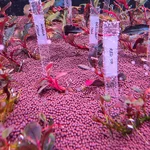
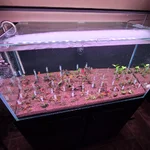
Currently I have a little over 40 rare to incredibly rare species in the tank, though I do have more on the way 😅 as you can see, I'm already running low on floor space.
20260617_173937.webp

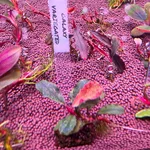
I'm not entirely sure how I feel about the ID stakes I made, truthfully I'm able to ID them by leaf shape and size, but I thought it may make things look more organized. That being said, they're itching my brain in a bad way, so I may end up removing them.

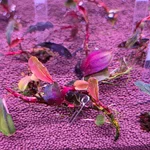
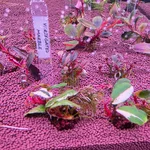
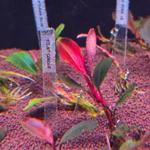
Here's some photos of species that managed to maintain some good color even in a more alkaline setup, so it can only get better from here! I've spent countless hours translating articles and posts in Chinese to figure out what kind of parameters the Chinese collectors use to get their crazy colors and leaf forms, so this will be a very interesting experiment for me!
20260617_191629.webp20260617_191634.webp20260617_191657.webp20260617_191714.webp20260617_191726.webp
 
Wow. All these years of lost identifications because everything just goes in the box. Can you give details on the label materials? Traditional plant labels in the greenhouse even fade in relatively short time.
I do have a lot of species that are positively identified using flowers to ID, such as Helena 2013 or QQ, however there are also many "luxury" or "celebrity" species as the Asian farmers call them, which all have their own coined trade names depending on the country it was farmed in.

The labels are clear acrylic planting stakes with clear adhesive labels printed on my label maker.
 
I do have a lot of species that are positively identified using flowers to ID, such as Helena 2013 or QQ, however there are also many "luxury" or "celebrity" species as the Asian farmers call them, which all have their own coined trade names depending on the country it was farmed in.

The labels are clear acrylic planting stakes with clear adhesive labels printed on my label maker.
Lmk when you have some Helena 2013 available
 
Farm update:

So. Much. Buce.

I think I may have developed a bit of a problem. Do you think they make support groups for buce addiction? I've been a busy little bee, networking and sourcing rare varieties from all over Asia. I recently had the incredible fortune of acquiring some very rare Chinese varieties, as well as some emersed grown species from Indonesia that will be incredibly interesting to see what their submerged forms look like. At my last count, I have 64 species with ID, and probably a dozen random rhizomes with no ID. With multiple rhizomes of each, I probably have almost 250 rhizomes in here 😅

As for tank progress, startup has been rather smooth. I had some green dust algae start up on the glass, so I lowered the light intensity down 10 watts and will keep doing it in 10 watt increments until I get to the point where there is minimal dust on water change day. I also had some GSA, so I'll have to start dosing some Phosphorous into the water. Getting the hang of my RODI routine has been easier than expected, but nailing down an appropriate amount of remineralizer to achieve a dGH of 6 was trickier than I thought. I didnt realize my gH test kit was expired, and gave me a false reading. My gH was actually only 4, and the buce started fussing. I did a water change yesterday with a fresh test kit and got it all sorted.

Speaking of remineralizer, I bought a big ass bag of APT sky, but it didn't come with the scoop! I had to math it out in teaspoons, since I don't own a powder scale (not since my teenager years, IYKYK 😂) @Dennis Wong where is my scoop my guy?!
 
hahaa collectoritis is a real problem :ROFLMAO: Is the scoop buried in the powder? yea Its supposed to come with a scoop. Helena 2013 was a bit disappointing TBH, I expected BG2011 colors but its no where near.
Nah man I excavated that entire bag! No scoop 😢

I'm curious about your Helena 2013, typically the mature leaves should settle to a nice blue metallic. I used to have the impression that coloring was just a genetic factor, but I've been translating articles written by Chinese collectors to learn their methods. The Chinese have definitely perfected growing Bucephalandra. A lot of very interesting variants come from them.

From what I've gathered so far, more acidic water will cause more red and pink coloring, water near neutral or more alkaline will cause purple tones. Temperature doesn't seem to be overly important, but the common temperature seems to be 24-26c, which is much warmer than what I was previously keeping them at.

I've never been one to subscribe to the idea that dosing additional ferrous iron makes a huge difference in plant coloring, but apparently it does factor in to bucephalandra's ability to develop that intense coloring. Additionally, providing excess potassium allows them to grow a thicker leaf, and there is something to thicker leaves having a deeper metallic sheen. It seems to be very common to carefully balance micros in collection tanks, while limiting available N and P to avoid algae.

I've noticed the coloring of my Buce changing to be more optimal when I changed the water parameters and started growing them without the presence of fast growing stem plants. Previously my collection tank had a pH of 7.6, higher TDS in the high 200s- low 300s, fast growing stems and water column dosing. Currently I am now using RO water, with active aquasoil supplemented with iron tablets and potassium tablets. The pH is now 6.2 and TDS around 120ppm, with no fast growing stems to compete. I'm not dosing any fertilizer in the water, so as to allow the Bucephalandra to absorb nutrients via the roots and keep the water column free.

If you haven't already, perhaps try either growing them in their own tank, or adding iron and potassium tablets directly below them in the substrate and see if that makes a difference. A lot of Asian collectors grow them with good color by using inert substrate with good oxygen exchange and daily micro water column dosing, but I feel Buce is somewhat lousy at absorption via the leaves and definitely gets easily outcompeted for nutrients in a mixed species tank.

I continue to scour the internet for Chinese written articles on growing Bucephalandra, as it seems they take a lot of pride in their ability to grow them with the best coloring. I believe they admire the discipline and patience required to grow them well and maintain the stability they require. You may be able to uncover more information through Chinese collectors than I would, because it is rather hard to find a contact online due to China's ban on most social media. I don't know of many people outside of Asia that keep variants that originated in China.

The more I research about these fancy "celebrity" or "luxury" Bucephalandra variants, the more fascinated I am at how a plant that is commonly known as being very easy and low maintenance, can take on an entirely different form and color if they are treated with the same sensitivity of a very picky and demanding stem plant.
 
I have 6 tanks, 10 gallons all growing 90% buces with various species I've completely forgotten the name of.

I use aqua soil with RO water.

If u have any theories regarding colors and nutrient concentrations etc I can test it. I prolly will need 3 months first to regrow my initial batch I kept moving around tho.

One thing I did test in the past was light intensity effecting colors as well. They don't seem to get as intense under ultra high, but the leaves do get pretty thick.

I've tested with adding so much light that the new buce leaves started turning pure white lol, but they can definitely handle more than 200-300 par pretty easily.

Im pretty sure there's no way you can slam that much par in a buce only tank with aqua soil though. I only managed to do it with turface which was basically completely inert

I also share the experience that buces are better grown solo in their own tank, or being surrounded by mosses. They just really suck at competing for resources.
 
Last edited:
I have 6 tanks, 10 gallons all growing 90% buces with various species I've completely forgotten the name of.

I use aqua soil with RO water.

If u have any theories regarding colors and nutrient concentrations etc I can test it. I prolly will need 3 months first to regrow my initial batch I kept moving around tho.
Probably nothing I'm not already testing, but I am curious to know if upping the gH past 6, to something like 8-9dGH would make a difference in metallic sheen. Most collectors I know, keep the gH around 6 or 7 dGH, so my tank is at 6dGH.

I have root tabs that are only iron, and tabs that are only potassium. I added a tab of each every 5 inches before I planted the Buce, but I'm curious to know if running EI levels of potassium would make any kind of difference.
 
Probably nothing I'm not already testing, but I am curious to know if upping the gH past 6, to something like 8-9dGH would make a difference in metallic sheen. Most collectors I know, keep the gH around 6 or 7 dGH, so my tank is at 6dGH.

I have root tabs that are only iron, and tabs that are only potassium. I added a tab of each every 5 inches before I planted the Buce, but I'm curious to know if running EI levels of potassium would make any kind of difference.
Dont think the root tabs do much lol. Potassium does not really stay in substrate too long. I think dennis is right on root tabs just being 90% ammonia.

I'm keeping gh at 6 as well. They definitely don't do well at lower levels. I'm pretty sure this is a plant that needs everything in small abundance.

My thickest buces though were all grown in estimative index. Like 20-30ppm nitrates. Color wise I'm not sure on the impact
 
Dont think the root tabs do much lol. Potassium does not really stay in substrate too long. I think dennis is right on root tabs just being 90% ammonia.

I'm keeping gh at 6 as well. They definitely don't do well at lower levels. I'm pretty sure this is a plant that needs everything in small abundance.

My thickest buces though were all grown in estimative index. Like 20-30ppm nitrates. Color wise I'm not sure on the impact
I'm using Aquario Neo tabs, the ones I am using only contain potassium. No ammonium. They claim to be slow release, I'm not sure on the accuracy of that, only per their instructions they are to be added every 2 months.

Did you have any other plants in the EI tanks? Running EI levels of nutrients is the opposite of what the Asian farmers and collectors do. Their method involves absolute bare minimum excess nutrients, to the point where they do not keep any livestock in the tank other than some snails or shrimp. The purpose is to avoid having to feed anything, and adding to the macros in the water. Most of them either use fully inert substrate, and then dose macros once a week after a water change, then dose micros daily. The rest of them use fresh aquasoil with other nutrient additives (it doesn't translate to English well enough to know what it is, but looks very similar to osmocote beads), and then they cap it with an inert, large grain like crushed lava rock or similar. That allows the buce roots to root feed and have good oxygen exchange, while preventing nutrient availability in the water column to help avoid algae issues.
 
I'm using Aquario Neo tabs, the ones I am using only contain potassium. No ammonium. They claim to be slow release, I'm not sure on the accuracy of that, only per their instructions they are to be added every 2 months.

Did you have any other plants in the EI tanks? Running EI levels of nutrients is the opposite of what the Asian farmers and collectors do. Their method involves absolute bare minimum excess nutrients, to the point where they do not keep any livestock in the tank other than some snails or shrimp. The purpose is to avoid having to feed anything, and adding to the macros in the water. Most of them either use fully inert substrate, and then dose macros once a week after a water change, then dose micros daily. The rest of them use fresh aquasoil with other nutrient additives (it doesn't translate to English well enough to know what it is, but looks very similar to osmocote beads), and then they cap it with an inert, large grain like crushed lava rock or similar. That allows the buce roots to root feed and have good oxygen exchange, while preventing nutrient availability in the water column to help avoid algae issues.
Might just be a culture thing. Minimum dosing seems to be how they run their planted tanks regardless of buces or not no? I don't think buces need perfect oxygen exchange in the root zone, I grew some pretty good clumps back in the day and my substrate was ada amazonia mixed with 1/4 worm castings. It was dusty as hell. I've also grown them in turface in a under gravel filter, they all did pretty similar.

I do want to point out 1 thing tho. Every single time I've seen people grow nice bucephalandras "accidently" without the specific intention are caridina shrimp keepers. Which keep the exact parameters but without co2. And of course absolute stability once the parameters are achieved.

Matter of fact... the MOST impressure clump of bucephalandra I've seen on youtube is this clump of Bucephalandra green wavy from a caridina shrimp breeder.
 
Last edited:
Might just be a culture thing. Minimum dosing seems to be how they run their planted tanks regardless of buces or not no? I don't think buces need perfect oxygen exchange in the root zone, I grew some pretty good clumps back in the day and my substrate was ada amazonia mixed with 1/4 worm castings. It was dusty as hell. I've also grown them in turface in a under gravel filter, they all did pretty similar.

I do want to point out 1 thing tho. Every single time I've seen people grow nice bucephalandras "accidently" without the specific intention are caridina shrimp keepers. Which keep the exact parameters but without co2. And of course absolute stability once the parameters are achieved.
I think the collectors varieties of Bucephalandra fare better with low TDS as well, which does seem contradictory to the idea that Bucephalandra prefers a water column rich in calcium and magnesium. Perhaps it has something to do with the salts and metals that makes up TDS?

It's just a personal assumption, but tracks with your observations regarding Caridina parameters.

All I know is, my buce is doing much better with the new setup. You can see the new leaf growth is incredibly vibrant, and has better leaf form than the old, green leaves. This tank is going to look like a rainbow in a few months as 90% of the growth pictured is not ideal because it was grown in my old farm tank. Switching over to RO water and keeping an acidic pH are the main contributing factors to the improvement in color for sure. How much the iron and potassium contribute to that is not as concrete.
 
Nah man I excavated that entire bag! No scoop 😢

I'm curious about your Helena 2013, typically the mature leaves should settle to a nice blue metallic. I used to have the impression that coloring was just a genetic factor, but I've been translating articles written by Chinese collectors to learn their methods. The Chinese have definitely perfected growing Bucephalandra. A lot of very interesting variants come from them.

From what I've gathered so far, more acidic water will cause more red and pink coloring, water near neutral or more alkaline will cause purple tones. Temperature doesn't seem to be overly important, but the common temperature seems to be 24-26c, which is much warmer than what I was previously keeping them at.

I've never been one to subscribe to the idea that dosing additional ferrous iron makes a huge difference in plant coloring, but apparently it does factor in to bucephalandra's ability to develop that intense coloring. Additionally, providing excess potassium allows them to grow a thicker leaf, and there is something to thicker leaves having a deeper metallic sheen. It seems to be very common to carefully balance micros in collection tanks, while limiting available N and P to avoid algae.

I've noticed the coloring of my Buce changing to be more optimal when I changed the water parameters and started growing them without the presence of fast growing stem plants. Previously my collection tank had a pH of 7.6, higher TDS in the high 200s- low 300s, fast growing stems and water column dosing. Currently I am now using RO water, with active aquasoil supplemented with iron tablets and potassium tablets. The pH is now 6.2 and TDS around 120ppm, with no fast growing stems to compete. I'm not dosing any fertilizer in the water, so as to allow the Bucephalandra to absorb nutrients via the roots and keep the water column free.

If you haven't already, perhaps try either growing them in their own tank, or adding iron and potassium tablets directly below them in the substrate and see if that makes a difference. A lot of Asian collectors grow them with good color by using inert substrate with good oxygen exchange and daily micro water column dosing, but I feel Buce is somewhat lousy at absorption via the leaves and definitely gets easily outcompeted for nutrients in a mixed species tank.

I continue to scour the internet for Chinese written articles on growing Bucephalandra, as it seems they take a lot of pride in their ability to grow them with the best coloring. I believe they admire the discipline and patience required to grow them well and maintain the stability they require. You may be able to uncover more information through Chinese collectors than I would, because it is rather hard to find a contact online due to China's ban on most social media. I don't know of many people outside of Asia that keep variants that originated in China.

The more I research about these fancy "celebrity" or "luxury" Bucephalandra variants, the more fascinated I am at how a plant that is commonly known as being very easy and low maintenance, can take on an entirely different form and color if they are treated with the same sensitivity of a very picky and demanding stem plant.
Yea Bucephalandra definitely has a lot of interesting cultivation approaches. Both the chinese and vietnamese are very into it. I find that the problem Bucephalandra is that the industry has poor naming, mixed in with plenty of fraud from smaller dealers, usage of colored lighting and photography to give a false sense of color in many cases. Until the larger brands produce a certain species in bulk, I think hobbyists are always unsure what they are actually paying for, or if a species is actually what a trader say it is. I've seen many bluish buceps in photographs that when sent to me and put under neutral lighting, loses 70% of the bluish tones that are show in a photograph. I think its fine to acknowledge that light reflection plays a huge role in Bucephalandra coloration because they are reflective, but there is no standard of visual presentation for the sellor side.
 
Yea Bucephalandra definitely has a lot of interesting cultivation approaches. Both the chinese and vietnamese are very into it. I find that the problem Bucephalandra is that the industry has poor naming, mixed in with plenty of fraud from smaller dealers, usage of colored lighting and photography to give a false sense of color in many cases. Until the larger brands produce a certain species in bulk, I think hobbyists are always unsure what they are actually paying for, or if a species is actually what a trader say it is. I've seen many bluish buceps in photographs that when sent to me and put under neutral lighting, loses 70% of the bluish tones that are show in a photograph. I think its fine to acknowledge that light reflection plays a huge role in Bucephalandra coloration because they are reflective, but there is no standard of visual presentation for the sellor side.
Yes I agree, some collectors do pride themselves on posting photos in neutral lighting though, and the colors are impressive. High light can certainly be substituted for a more red and blue spectrum to bring out bright colors in most of these species, but as you know, that would make balancing algae rather difficult.

A lot of people post photos with their hands holding the buce under the light, and a good giveaway on using color spectrum to boost the illusion of bright color is to look at the skin tone of their hand.
 

Top 10 Trending Threads

Back
Top