
Navigation
Install the app
How to install the app on iOS
Follow along with the video below to see how to install our site as a web app on your home screen.
Note: This feature may not be available in some browsers.
More options
Style variation
Welcome to ScapeCrunch
We are ScapeCrunch, the place where planted aquarium hobbyists come to build relationships and support each other. When you're tired of doom scrolling, you've found your home here.
You are using an out of date browser. It may not display this or other websites correctly.
You should upgrade or use an alternative browser.
You should upgrade or use an alternative browser.
Horizontal CO2 Reactor - Yugang 鱼缸 Reactor
- Thread starter Yugang
- Start date


Here is the URL to post #400 here: Horizontal CO2 Reactor - Yugang 鱼缸 Reactor
I'll send to Tommy at Aqua Rocks Colorado and see if he is willing to link it.
I'll send to Tommy at Aqua Rocks Colorado and see if he is willing to link it.


Hey everyone, brand new here with some questions about a DIY reactor I just put together.
After doing quite a bit of research into the Yugang style reactor, I spent a portion of today trying my hand at putting one together. I have a 115 gallon display (60" L x 18" W x 24" H) with a 40 gallon sump (36" L x 18" W x 16" H) on a custom built stand. Space is a little limited under the stand so I had to go with a little bit of a different setup, but i'd seen a couple posts about people doing similar builds so I didnt think it was an issue. If i'm understanding correctly, the math for my setup is as follows:
60 x 18 = 1080sq in for display
36 x 18 = 648 sq in for sump
1080 + 648 = 1,728 sq in total
1,728 / 17.7 = 98 (rounding up)
Using 2" pipe for the reactor body so 98 / 2 = 49" long reactor body for a 1.5 ph drop. Mine comes in just slightly under that at approximately 43", which I figured would be fine since i'm only targeting a 1 - 1.2 ph drop. My issue is that it won't even achieve a .5 ph drop. I'm sure i've done something wrong, i'm just unable to figure out what it is. Is anyone able to help steer me in the correct direction?
Thanks
Please excuse the mess of cables, i'm re-arranging a ton of stuff and cable management is on my to-do list.
Edit:
Apparently I didn't do as much research as I had thought. The flow rate of my return pump was simply too high. I have a variable speed pump so simply dialing it back allowed me to significantly increase the amount of CO2 I was injecting before the reactor was hitting "overflow mode". Since my reactor doesn't have a bypass, i'm now hoping to use the pump speed to help "fine tune" my ph level by keeping the reactor in overflow mode at a specific CO2 flow rate
After doing quite a bit of research into the Yugang style reactor, I spent a portion of today trying my hand at putting one together. I have a 115 gallon display (60" L x 18" W x 24" H) with a 40 gallon sump (36" L x 18" W x 16" H) on a custom built stand. Space is a little limited under the stand so I had to go with a little bit of a different setup, but i'd seen a couple posts about people doing similar builds so I didnt think it was an issue. If i'm understanding correctly, the math for my setup is as follows:
60 x 18 = 1080sq in for display
36 x 18 = 648 sq in for sump
1080 + 648 = 1,728 sq in total
1,728 / 17.7 = 98 (rounding up)
Using 2" pipe for the reactor body so 98 / 2 = 49" long reactor body for a 1.5 ph drop. Mine comes in just slightly under that at approximately 43", which I figured would be fine since i'm only targeting a 1 - 1.2 ph drop. My issue is that it won't even achieve a .5 ph drop. I'm sure i've done something wrong, i'm just unable to figure out what it is. Is anyone able to help steer me in the correct direction?
Thanks
Please excuse the mess of cables, i'm re-arranging a ton of stuff and cable management is on my to-do list.
Edit:
Apparently I didn't do as much research as I had thought. The flow rate of my return pump was simply too high. I have a variable speed pump so simply dialing it back allowed me to significantly increase the amount of CO2 I was injecting before the reactor was hitting "overflow mode". Since my reactor doesn't have a bypass, i'm now hoping to use the pump speed to help "fine tune" my ph level by keeping the reactor in overflow mode at a specific CO2 flow rate
Attachments


Last edited:




When I originally calculated the size of the ARC reactors I used the numbers listed on there website for my calculations. But I have noticed that my 180 at full power of the reactor only reaches a 1.2 pH drop and now I am understanding why. The large is slightly under powered for this size tank.I am sharing here the graphs and calculations that I made for AquaRocksColorado, assisting them with the design of their commercial reactor.
This one illustrates how the power of the reactor can be adjusted. Remember, the power is proportional to surface area, length * width, and it is the width of the water/gas pocket that we adjust by rotating the off-centre water exit.
View attachment 9121
Now if we want to have at least a factor of 2 adjustable power, ie from 100% to 50%, how much does the water exit needs to be off centre? At least 0.86 r.
View attachment 9122
Then I took a table of ADA standard aquarium sizes, and calculated the tank surface area, and then the required reactor surface area for a 1.5 pH drop target, and for a 1.2 drop pH target.
As ARC wanted all reactors to have same 94 mm inner diameter, I tried to setup a range of 4 reactors to cover all tank sizes from 45-P up to 180-P. Each reactor covers a range of powers by virtue of the rotating exit, and I tried to gave them a bit of overlap so that users had a choice if any doubt which one to take.
View attachment 9123
We see that the large reactor works for really big tanks, and could push a 1.5 pH drop for a 180-P in its maximum setting. In its minimum setting, 28.200 mm2, it can do a 1.5 pH drop on a 90-P, but not lower in overflow mode. Of course one could limit the flow of CO2 by the regulator, and have it work in a more conventional regulator mode.
The medium large version in its maximum setting will do 1.5 pH drop on a 120-P tank. On its minimum setting, the 75-P tank is probably the smallest tank without the risk pushing CO2 too far in overflow mode. As mentioned above, we could of course limit the flow and use it on smaller tanks in regulator mode.
Currently only Medium Large and Large versions are commercially available, but as not all tanks are large and not all users want to push as much as 1.5 pH drop it would be recommended to have the two smaller versions available as well.

I had a conversation where I typed this out in a private message, so I thought I'd share here!
You can run a horizontal reactor in either regulator mode or overflow mode.
The pros of regulator mode are:
The pros of overflow mode are:
I have experimented with both. I liked overflow mode for the security and lack of manual purging needed, but something about getting 100% CO2 dissolution in water with NO waste/excess CO2 loss just tickles my brain, so I've been operating both of my tanks in my journals on reactor mode for about 2-3 months now. Plant health and growth is just as good, but I usually need to purge the excess gas pocket at least once per week in each reactor to ensure no splashing noise or overflowing through the reactor exits. This isn't a problem for weekly maintenance, but I'm going out of town a lot in the coming weeks and so I'm considering switching back to overflow mode for the time being.
Let me know if I missed something I should be including!
You can run a horizontal reactor in either regulator mode or overflow mode.
In regulator mode
The reactor exit is positioned as low as possible to maximize the CO2 pocket. As CO2 is injected and the pocket grows, the water absorbs it and reduces the pocket size until an equilibrium is reached. You determine the rate of CO2 injection via your regulator/needle valve, since 100% of what you inject is added into the reactor, and never escapes.The pros of regulator mode are:
- 100% CO2 use, no waste
- If using a flowmeter (instead of a bubble counter), you can accurately KNOW how much CO2 your regulator needs to output (since 100% of injected is used up)
- Relies heavily on a pretty precise needle valve. If you don't have a custom-built regulator, chances are you will have a more difficult time dialing it in
- The reactor will still fill with non-CO2 gas, and need to be "purged" at least once a week or eventually ~60-70% of the reactor will be filled with a combination of gasses (CO2, O2, N2), and make splashing noise/lose efficiency.
In overflow mode
The reactor exit is positioned to create a specific maximum CO2 pocket size. Once this size is reached, the excess CO2 injected will "overflow" out of the reactor and into your aquarium. Since the bubble is quite large, it's not really injected/dissolved, and will quickly reach the surface of your tank and escape into the room. To operate in overflow mode properly, CO2 should be roughly dialed in to purge every few minutes or so. Otherwise, it's technically in regulator mode.The pros of overflow mode are:
- A hard, unpassable upper CO2 injection limit is created, because any excess amount of CO2 over the preset outlet height will be purged from the reactor. This prevents gassing/death of inhabitants due to end-of-cylinder dump, a faulty solenoid, a bad needle valve, etc.
- You don't need a good regulator/needle valve, since you just need your valve to provide "enough" CO2 to purge from the reactor every few minutes.
- Since the reactor pocket's gasses (CO2, O2, N2) are purging every few minutes, there is usually no need to manually purge the reactor once or twice a week (compared to regulator mode).
- You are inherently wasting more CO2 every day due to purging "excess" CO2. If you're ok with paying a little more every few months, it is usually worth it to provide a steady, upper-limited amount of CO2.
- If using a flowmeter (instead of a bubble counter), you will not know exactly much CO2 you are injecting, since "some" amount is purged at maximum setting every now and then
- The purging does mean that CO2 bubbles WILL be exiting your outlet every few minutes (or in some cases, every few seconds). This means you will visually see clear bubbles exiting your outflow when this happens in your tank. If your desire is to never see bubbles in your tank (traumatized from diffuser "sprite water"), this can range from an non-issue, to a major visual problem.
- If you have a very high volume/flow filter system, the bubbles can be atomized from the speed of the returning water anyway, and possibly dissolved into your tank, technically injecting CO2 more than you desire into the system. For standard amounts of filter flow, this isn't likely to happen. If you see the reactor purging every few minutes at the peak of the day's CO2 injection and the bubbles are large, slow, and immediately exit to the surface of your aquarium, you've set up your reactor in overflow mode perfectly.
- The reactor needs to be the last in-line equipment in your setup if it's going to overflow. You can't have UV sterilizers, inline dosing adapters, or inline return pumps since they will all noisily interact with the purged gasses. However, this isn't a problem if you just install the reactor as the last inline equipment before it returns to your aquarium.
I have experimented with both. I liked overflow mode for the security and lack of manual purging needed, but something about getting 100% CO2 dissolution in water with NO waste/excess CO2 loss just tickles my brain, so I've been operating both of my tanks in my journals on reactor mode for about 2-3 months now. Plant health and growth is just as good, but I usually need to purge the excess gas pocket at least once per week in each reactor to ensure no splashing noise or overflowing through the reactor exits. This isn't a problem for weekly maintenance, but I'm going out of town a lot in the coming weeks and so I'm considering switching back to overflow mode for the time being.
Let me know if I missed something I should be including!


Forum simpleton here, happy to helpI had a conversation where I typed this out in a private message, so I thought I'd share here!


That’s a bummer, I’m sorry. I’m currently trying to avoid the opposite problem with a tank I’m setting up. I bought the large acrylic Yugang from ARC a couple months ago and thankfully I haven’t set it up. The tank is a 48in x 20in, 80ish gallon and I bought the reactor before a really understood the math.(still not sure if I do.) Now that I’ve done the math numerous times I have realized that there is absolutely no way in hell anyone should run the large one on a 90cm tank like their site says. I’ve also realized that if I want to run overflow mode(I do) on my tank, that I can’t mount it using the attached mount. I’m honestly not even sure I’ll be able to fit it in my cabinet and mount it in a way that I can run overflow mode. I’m thinking about purchasing the small acrylic Yugang from arc and selling the large one to someone with a larger tank. I would love to hear your thoughts on my situation since I’m at a loss. I appreciate any and all the help I can get. Thank you.When I originally calculated the size of the ARC reactors I used the numbers listed on there website for my calculations. But I have noticed that my 180 at full power of the reactor only reaches a 1.2 pH drop and now I am understanding why. The large is slightly under powered for this size tank.
So I have a small and a large. Small on a 40gal breeder 36" x 18" it works perfectly when I was using it never had an issue with it. When I was checking on the math for a 75gal basically the same area as the one you mentioned the small was big enough. It was barely big enough but it would suffice. Personally if it was me in your situation I'd buy the small. I just did the math and it would be a little undersized. But not much, see below:That’s a bummer, I’m sorry. I’m currently trying to avoid the opposite problem with a tank I’m setting up. I bought the large acrylic Yugang from ARC a couple months ago and thankfully I haven’t set it up. The tank is a 48in x 20in, 80ish gallon and I bought the reactor before a really understood the math.(still not sure if I do.) Now that I’ve done the math numerous times I have realized that there is absolutely no way in hell anyone should run the large one on a 90cm tank like their site says. I’ve also realized that if I want to run overflow mode(I do) on my tank, that I can’t mount it using the attached mount. I’m honestly not even sure I’ll be able to fit it in my cabinet and mount it in a way that I can run overflow mode. I’m thinking about purchasing the small acrylic Yugang from arc and selling the large one to someone with a larger tank. I would love to hear your thoughts on my situation since I’m at a loss. I appreciate any and all the help I can get. Thank you.

You could always use the large reactor but run it with the water outlet higher to cerate a smaller pocket. Those numbers for ARC reactors Surface area are the maximum it would allow. Out of curiosity did you buy the ARC acrylic or stainless steel version?
Thank you for the reply, I really do appreciate the help. I bought the acrylic one. The stainless would have been more ideal because you aren’t limited to 3 positions of the outlet when mounting it with attached mounts. My thing is that I live in a part of the U.S. where almost everyone is scared of injecting co2 and/or scared of the price that comes with it. As we all are finding out, the Yugang reactor can help eliminate both of those concerns. In order to accomplish that with reluctant newbies, I think it needs to be presented to them in overflow mode. I want to show people that you don’t have to worry about buying an expensive regulator because with the built in safety mechanism that is overflow mode, it’s almost impossible to gas your fish. If you have a clean surface with good agitation that is. I built one using pvc for a scape I did at my local fish store and it’s working perfectly. I still don’t think people are able to grasp the concept without seeing it but that’s where the acrylic Yugang comes in. I want to record the setup of my tank and especially want to record the acrylic Yugang in action. I want people to see the gas pocket so it helps explain the science behind it. A 1.2 ph drop will definitely suffice in the scape I’m building. If you think I can I can easily achieve that with the small acrylic Yugang from ARC then that’s what I will do. I’m just so sick of seeing low effort ugly tanks being praised around here. I know it’s an epidemic across the U.S. but if I can help bring more beauty into the hobby here locally… it’s a start.So I have a small and a large. Small on a 40gal breeder 36" x 18" it works perfectly when I was using it never had an issue with it. When I was checking on the math for a 75gal basically the same area as the one you mentioned the small was big enough. It was barely big enough but it would suffice. Personally if it was me in your situation I'd buy the small. I just did the math and it would be a little undersized. But not much, see below:
View attachment 9948
You could always use the large reactor but run it with the water outlet higher to cerate a smaller pocket. Those numbers for ARC reactors Surface area are the maximum it would allow. Out of curiosity did you buy the ARC acrylic or stainless steel version?
Im in the same boat here in my area. Im the secretary for my local club and only a few will even consider or us co2 and its so easy.Thank you for the reply, I really do appreciate the help. I bought the acrylic one. The stainless would have been more ideal because you aren’t limited to 3 positions of the outlet when mounting it with attached mounts. My thing is that I live in a part of the U.S. where almost everyone is scared of injecting co2 and/or scared of the price that comes with it. As we all are finding out, the Yugang reactor can help eliminate both of those concerns. In order to accomplish that with reluctant newbies, I think it needs to be presented to them in overflow mode. I want to show people that you don’t have to worry about buying an expensive regulator because with the built in safety mechanism that is overflow mode, it’s almost impossible to gas your fish. If you have a clean surface with good agitation that is. I built one using pvc for a scape I did at my local fish store and it’s working perfectly. I still don’t think people are able to grasp the concept without seeing it but that’s where the acrylic Yugang comes in. I want to record the setup of my tank and especially want to record the acrylic Yugang in action. I want people to see the gas pocket so it helps explain the science behind it. A 1.2 ph drop will definitely suffice in the scape I’m building. If you think I can I can easily achieve that with the small acrylic Yugang from ARC then that’s what I will do. I’m just so sick of seeing low effort ugly tanks being praised around here. I know it’s an epidemic across the U.S. but if I can help bring more beauty into the hobby here locally… it’s a start.
You'll get a 1.2 with the small. I get it that on my 180 with the large and my number is stronger difference than the small would be for you.


Thanks Rocco. It would be useful if you can add some pictures with the positions in the acrylic reactor in both regulator and overflow mode. Also the process of purging it.I had a conversation where I typed this out in a private message, so I thought I'd share here!
You can run a horizontal reactor in either regulator mode or overflow mode.
In regulator mode
The reactor exit is positioned as low as possible to maximize the CO2 pocket. As CO2 is injected and the pocket grows, the water absorbs it and reduces the pocket size until an equilibrium is reached. You determine the rate of CO2 injection via your regulator/needle valve, since 100% of what you inject is added into the reactor, and never escapes.
The pros of regulator mode are:
The cons of regulator mode are:
- 100% CO2 use, no waste
- If using a flowmeter (instead of a bubble counter), you can accurately KNOW how much CO2 your regulator needs to output (since 100% of injected is used up)
- Relies heavily on a pretty precise needle valve. If you don't have a custom-built regulator, chances are you will have a more difficult time dialing it in
- The reactor will still fill with non-CO2 gas, and need to be "purged" at least once a week or eventually ~60-70% of the reactor will be filled with a combination of gasses (CO2, O2, N2), and make splashing noise/lose efficiency.
In overflow mode
The reactor exit is positioned to create a specific maximum CO2 pocket size. Once this size is reached, the excess CO2 injected will "overflow" out of the reactor and into your aquarium. Since the bubble is quite large, it's not really injected/dissolved, and will quickly reach the surface of your tank and escape into the room. To operate in overflow mode properly, CO2 should be roughly dialed in to purge every few minutes or so. Otherwise, it's technically in regulator mode.
The pros of overflow mode are:
The cons of overflow mode are:
- A hard, unpassable upper CO2 injection limit is created, because any excess amount of CO2 over the preset outlet height will be purged from the reactor. This prevents gassing/death of inhabitants due to end-of-cylinder dump, a faulty solenoid, a bad needle valve, etc.
- You don't need a good regulator/needle valve, since you just need your valve to provide "enough" CO2 to purge from the reactor every few minutes.
- Since the reactor pocket's gasses (CO2, O2, N2) are purging every few minutes, there is usually no need to manually purge the reactor once or twice a week (compared to regulator mode).
- You are inherently wasting more CO2 every day due to purging "excess" CO2. If you're ok with paying a little more every few months, it is usually worth it to provide a steady, upper-limited amount of CO2.
- If using a flowmeter (instead of a bubble counter), you will not know exactly much CO2 you are injecting, since "some" amount is purged at maximum setting every now and then
- The purging does mean that CO2 bubbles WILL be exiting your outlet every few minutes (or in some cases, every few seconds). This means you will visually see clear bubbles exiting your outflow when this happens in your tank. If your desire is to never see bubbles in your tank (traumatized from diffuser "sprite water"), this can range from an non-issue, to a major visual problem.
- If you have a very high volume/flow filter system, the bubbles can be atomized from the speed of the returning water anyway, and possibly dissolved into your tank, technically injecting CO2 more than you desire into the system. For standard amounts of filter flow, this isn't likely to happen. If you see the reactor purging every few minutes at the peak of the day's CO2 injection and the bubbles are large, slow, and immediately exit to the surface of your aquarium, you've set up your reactor in overflow mode perfectly.
- The reactor needs to be the last in-line equipment in your setup if it's going to overflow. You can't have UV sterilizers, inline dosing adapters, or inline return pumps since they will all noisily interact with the purged gasses. However, this isn't a problem if you just install the reactor as the last inline equipment before it returns to your aquarium.
I have experimented with both. I liked overflow mode for the security and lack of manual purging needed, but something about getting 100% CO2 dissolution in water with NO waste/excess CO2 loss just tickles my brain, so I've been operating both of my tanks in my journals on reactor mode for about 2-3 months now. Plant health and growth is just as good, but I usually need to purge the excess gas pocket at least once per week in each reactor to ensure no splashing noise or overflowing through the reactor exits. This isn't a problem for weekly maintenance, but I'm going out of town a lot in the coming weeks and so I'm considering switching back to overflow mode for the time being.
Let me know if I missed something I should be including!

Let me know if I missed something I should be including!
Any sense as to the range of how much extra co2 is being wasted by running in overflow mode? 5-10%?
If you go through co2 10% faster, and a 20 pound tank costs $50.00 to swap, that $5.00 over 6 months of use seem s well spent to avoid weekly purging and the inherent safety provided…
Couldn't agree more. Being willing to spend money on "wasted" CO2, fertilizers, etc is always worth it in my book (if the result is a CO2/fert-rich environment for plants).Any sense as to the range of how much extra co2 is being wasted by running in overflow mode? 5-10%?
If you go through co2 10% faster, and a 20 pound tank costs $50.00 to swap, that $5.00 over 6 months of use seem s well spent to avoid weekly purging and the inherent safety provided…
So with using both modes for a bit, do you have any sort of sense over how much percentage savings you see by running in regulator mode vs overflow?Couldn't agree more. Being willing to spend money on "wasted" CO2, fertilizers, etc is always worth it in my book
Or is it strictly a theoretical savings that you have no sense as to percentages?
do you have any sort of sense over how much percentage savings you see by running in regulator mode vs overflow?
Or is it strictly a theoretical savings that you have no sense as to percentages?
I'd say it's more strictly a theoretical savings, I don't exactly remember or have any numbers on savings! If dialed in correctly, it shouldn't be too much wasted CO2. And I really do think it's worth wasting CO2 to have a healthy tank.
However, that's part of what's so appealing for me about using Regulator mode. I have really nice custom regulators with good needle valves, and flowmeters to measure the actual rate of CO2 injection in SCCM.
Because 100% of my CO2 gets dissolved with regulator mode, I know that if my flow meter is at 30sccm, ALL 30sccm of CO2 is being injected into my tank at all times while active...
Whereas, the exact amount of CO2 injected in overflow mode is ¯\(ツ)/¯ There's no way to tell. Which might not matter, but for some reason it feels good to know that 30sccm is always the same 30sccm for my tank's needs.


Any chance you could provide details on that fitting that allows your CO2 tubing into the reactor? I've been trying to build a PVC version of this too but I'm losing my mind trying to find how to get a 6mm OD 4MM ID tube cleanly into the reactor.Hey everyone, brand new here with some questions about a DIY reactor I just put together.
After doing quite a bit of research into the Yugang style reactor, I spent a portion of today trying my hand at putting one together. I have a 115 gallon display (60" L x 18" W x 24" H) with a 40 gallon sump (36" L x 18" W x 16" H) on a custom built stand. Space is a little limited under the stand so I had to go with a little bit of a different setup, but i'd seen a couple posts about people doing similar builds so I didnt think it was an issue. If i'm understanding correctly, the math for my setup is as follows:
60 x 18 = 1080sq in for display
36 x 18 = 648 sq in for sump
1080 + 648 = 1,728 sq in total
1,728 / 17.7 = 98 (rounding up)
Using 2" pipe for the reactor body so 98 / 2 = 49" long reactor body for a 1.5 ph drop. Mine comes in just slightly under that at approximately 43", which I figured would be fine since i'm only targeting a 1 - 1.2 ph drop. My issue is that it won't even achieve a .5 ph drop. I'm sure i've done something wrong, i'm just unable to figure out what it is. Is anyone able to help steer me in the correct direction?
Thanks
Please excuse the mess of cables, i'm re-arranging a ton of stuff and cable management is on my to-do list.
Edit:
Apparently I didn't do as much research as I had thought. The flow rate of my return pump was simply too high. I have a variable speed pump so simply dialing it back allowed me to significantly increase the amount of CO2 I was injecting before the reactor was hitting "overflow mode". Since my reactor doesn't have a bypass, i'm now hoping to use the pump speed to help "fine tune" my ph level by keeping the reactor in overflow mode at a specific CO2 flow rate
Hi all,
@Jeff Miotke introduced me to the concept of a Yugang reactor recently as I get back into the hobby from a 7 year break.
After getting the basic concept down, I started tinkering to see if I could make an affordable DIY reactor for my ADA 60P I’m in the process of setting up.
The biggest problem I’m running into is that any commercially made reactors are WAY too big for a 60cm cabinet.
I’d seen some PVC examples here but wanted something that had the ability to be taken apart for cleaning and such.
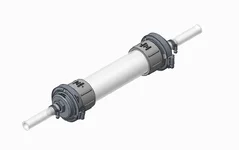
Here's what I came up with - It’s a clear PVC pipe combined with something known as “manifold pipe fittings” off a site called Banjo Valves (Alsco). The big advantage here is that the end-pieces are rotatable and removable, fairly cheap to replace, and can be drilled off-center so that you can rotate them and adjust the power.
My understanding of Yugang’s post on calculations for these reactors is that the CO2 being diffused into the water by the reactor must be equal to or slightly greater than that escaping the top surface of the tank (plant absorption negligible). He empirically found a 17.7 : 1 ratio (tank surface area : reactor surface area) to achieve ~1.5 pH drop in the tank. (For those not familiar, pH drop is used to estimate the ppm of CO2 dissolved in the water)
As such the calcs for my tank are as follows:
ADA 60P
Top Surface = 600 x 300mm = 180,000 mm^2
Reactor Surface = 180,000mm^2 / 17.7 = 10,526 mm^2
For a 2” PVC pipe, the Diameter is ~ 50.8mm —> 10,526mm^2/50.8mm = ~207mm (~8” length of 2” pipe)
To be clear, I have NOT tested this design yet because it’s pretty expensive to buy everything.
I couldn’t find a good way to connect the 6mm OD/4mm ID CO2 tubing to the reactor other than with an in-line diffuser as I don’t like to use silicone caulk whenever possible. Open to any ideas here, as this could drive down the cost quite a lot to find an alternative.
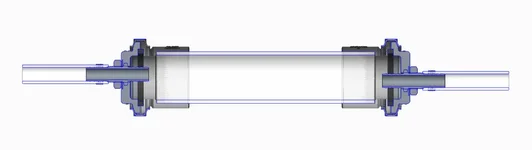
As you’ll see from the diagrams, I can only get .3” offset between the axes of the inlet and outlet which I’m not sure will do much. I’d looked at sizing this up to 3” parts and tubing which is more expensive but may be offset if the in-line diffuser isn't needed.

Right now the cost for this is sitting around $200, which is pretty steep especially compared to commercial options but again nothing fits my tank. Full diagrams and parts lists included.
To be clear, I have NOT built or tested this so I cannot confirm that it works quite yet but wanted to share the concept for those who might be interested. Would love to get feedback from anyone experienced or interested in these.

@Jeff Miotke introduced me to the concept of a Yugang reactor recently as I get back into the hobby from a 7 year break.
After getting the basic concept down, I started tinkering to see if I could make an affordable DIY reactor for my ADA 60P I’m in the process of setting up.
The biggest problem I’m running into is that any commercially made reactors are WAY too big for a 60cm cabinet.
I’d seen some PVC examples here but wanted something that had the ability to be taken apart for cleaning and such.
Here's what I came up with - It’s a clear PVC pipe combined with something known as “manifold pipe fittings” off a site called Banjo Valves (Alsco). The big advantage here is that the end-pieces are rotatable and removable, fairly cheap to replace, and can be drilled off-center so that you can rotate them and adjust the power.
My understanding of Yugang’s post on calculations for these reactors is that the CO2 being diffused into the water by the reactor must be equal to or slightly greater than that escaping the top surface of the tank (plant absorption negligible). He empirically found a 17.7 : 1 ratio (tank surface area : reactor surface area) to achieve ~1.5 pH drop in the tank. (For those not familiar, pH drop is used to estimate the ppm of CO2 dissolved in the water)
As such the calcs for my tank are as follows:
ADA 60P
Top Surface = 600 x 300mm = 180,000 mm^2
Reactor Surface = 180,000mm^2 / 17.7 = 10,526 mm^2
For a 2” PVC pipe, the Diameter is ~ 50.8mm —> 10,526mm^2/50.8mm = ~207mm (~8” length of 2” pipe)
To be clear, I have NOT tested this design yet because it’s pretty expensive to buy everything.
I couldn’t find a good way to connect the 6mm OD/4mm ID CO2 tubing to the reactor other than with an in-line diffuser as I don’t like to use silicone caulk whenever possible. Open to any ideas here, as this could drive down the cost quite a lot to find an alternative.
As you’ll see from the diagrams, I can only get .3” offset between the axes of the inlet and outlet which I’m not sure will do much. I’d looked at sizing this up to 3” parts and tubing which is more expensive but may be offset if the in-line diffuser isn't needed.
Right now the cost for this is sitting around $200, which is pretty steep especially compared to commercial options but again nothing fits my tank. Full diagrams and parts lists included.
To be clear, I have NOT built or tested this so I cannot confirm that it works quite yet but wanted to share the concept for those who might be interested. Would love to get feedback from anyone experienced or interested in these.
Attachments
Last edited:

Any sense as to the range of how much extra co2 is being wasted by running in overflow mode? 5-10%?
@Yugang do you have any feedback?
I’ve seen people use an inline diffuser with the ceramic part taken out. On the few that I’ve made I used a 1/4 in. O.D. Push-To-Connect x 1/4 in. MIP 90° Polypropylene Elbow Adapter Fitting.Any chance you could provide details on that fitting that allows your CO2 tubing into the reactor? I've been trying to build a PVC version of this too but I'm losing my mind trying to find how to get a 6mm OD 4MM ID tube cleanly into the reactor.
Using a step drill bit I drill a hole(on the inlet side) that’s just big enough to kind of thread in the fitting and then slap on some JB Water Weld to seal it up. I shove a short piece(3inch or so) of reverse osmosis tubing in the fitting cus that’s what it’s made for. Add a check valve to the RO tubing and connect the co2 tubing to that.
They aren’t the prettiest builds but they do the trick and cost about $30. Ideally they’d be hidden in a cabinet anyway.
I slapped this one together for a plant holding tank.

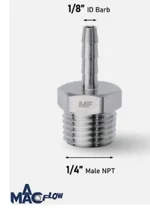
This also works. You can drill the hole slightly smaller than the width of the fitting. Then heat up the fitting with a lighter and screw it into the PVC. It will melt the PVC around threads giving a nice seal when it hardens. Alternatively you could drill the correct hole size and just wrap it good with plumbers tape, either will work.
Similar threads


- Replies
- 19
- Views
- 2K


- Replies
- 5
- Views
- 358


- Replies
- 14
- Views
- 674


