Welcome to ScapeCrunch

We are ScapeCrunch, the place where planted aquarium hobbyists come to build relationships and support each other. When you're tired of doom scrolling, you've found your home here.

Journal Farmer D. Singh's journal

  • Thread starter Thread starter mrmoss
  • Start date Start date
  • Tagged users Tagged users None
Tank 1
Algae spreads every day
Its a type of string hair algae
I can tell by the pics, it's the same thing I have.
Tom Barr thought it was likely a strain of Pithophora. He recommended "Silver Siamese" algae eaters. Said I would need something that would eat it and that algaecides wouldn't work.
I've been able to keep at bay by trimming replanting the tops, but I still have a spot here and there that attacks older or damaged growth. The problem is that Synogoanthus and Erios don't usually grow fast enough to use that method. I have mostly stems and only a few slower growing plants.
Good luck! It's a beast.
 
"Silver Siamese" algae eaters.

Wet Spot has them 👍


Last edited:
Wet Spot has them 👍
I looked at getting a couple after I talked to Tom, but what do you do with them after you don't need them for algae control anymore?
Right now I just have a tiny amount of this algae left. Tank needs trimming badly. Then I'll have pretty much none until there are more old leaves.
 
Tank 6

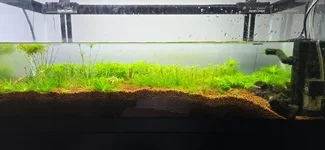
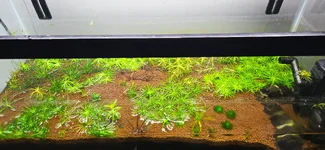
The reason i do shallow tanks and have a gap for filter is purely for water change reasons. I can get almost a near 100% change while only using a 5g jug of rodi. I can also get the water in the soil too. Which makes it more aerobic in my opinion. Aesthetics wise the shallow perspective doesn't look as nice but hey! Im only farming. The work is much easier.
20260711_214444.webp20260704_204209.webp20260704_204205.webp20260704_191914.webp20260704_204121.webp
 
No algae on the soil is usually a great sign things are going good especially if you have gaps or space. So if the soil is clean and you have algae its usually "soft" algae that's easily removed as opposed to "rooted" algae which is really attached and very difficult to remove. Soft bba or even free floating bba is a good example, its tucked under my erios and easy to pull out as opposed to rooted bba which is impossible to remove. Rooted algae is likely well-fed (light/nutrients). Rooted algae is well attached. If you dont tackle your algae quickly it can turn into rooted algae with time only. Having clean soil is a great sign. No cyano is the perfect example as well as other green type algaes. Even if your plants have algae its a lot more visually appealing. Co2 gas is a totally different game-changer in which being a nutrient you can od it without any effect to plant vulnerability. Why did i write this? Because algae prevention and soft algae is way easier than battling rooted algae. Letting time get the better off, it is way more difficult. And having a clean soil is a part of it and a good sign. Algae would likely attack soil first as it doesnt have to fight anything, right?
 
Sunlikes led
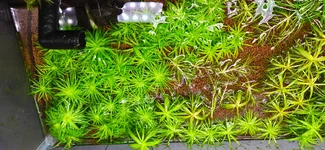
Ferts co2 are out done, dose this...inject that ppm. What we truly need to be studying and expand information on is lighting. The different pars and spectrum. How different plants grow in different light variables. Leaves, nodes, thickness, structure. The same plant could look different in different tanks. This topic area goes way over my head and beyond my capabilities in learning testing and observing. Tank 2 is by far my best tank. And i want to mimick 4 other tanks to be just like it. Tank 2 is where I put my new species of plants. Anything I want to grow or cant risk losing goes into this tank. Why? Is it the co2? The soil? These all for the most part are constant through out my tanks. No its all in the lighting. Growing plants come down to simply nutrients (co2 included), water parameters and lighting, oh and oxygen. The main difference though that's apart from each other's tank though is lighting and water parameters. And in my tanks is just lighting. Nutrients (co2 included) in other people's tanks are basically the same just different by the amounts used given diffusion and types of elements make slight differences. Plants needing certain wavelengths certain spectrum and certain par. The interesting thing is light can be the least important factor as well as the most important factor. All in all depending what you want to grow. Mosses vs eriocaulon. A huge swing in necessity. In tank 2 my plants dont get chloroplast positioning for the most part only a little bit, im guessing its not par that does this but rather spectrum. Red and blue makes syngs and erios look white but my par throughout the tank ranges from 100 to 120 dead center. These plants in nature get full sunlight (syngs and erios) a lot of the time (do i really know this? No, I've never been but I've read and heard) so whats better than replicating the sun. As far as I know tank 2 has been filled with water so setup around August 21, 2025. Sunlikes were installed october 23, 2025. I did get a doubt though that the spectrum is not perfect a slight on warm side and that its par and spread and the way the light was built is the reason for success. But something about the spectrum I describe as clean and natural erased that doubt. The only critic I have on this light is red plants. But that may be a par issue. The tank is 23.5 "l x 11 3/4 d and the light is 2 feet from the substrate. Dimmed at 50% the fixture packs a bit of punch.
All plants of the same species dont look the same. There's different structures, thickness, colors, etc.
Im getting sunlikes for my 4 other tanks. My prediction in this is each of the tanks will lean closer to perfection. Tank 2 would be my standard for perfection. Dont get me wrong though, its not perfect. I get algae, mostly soft forms that is easy for manual removal but its the standard on my goal for the four other tanks. The kush spot (par) of lighting id say is 100 at the entire substrate. This you can grow anything. Reds im still not experienced enough to determine a given amount nor do I choose to given the type of plants i grow or want to grow.

Ending:
An even spread and par to the entire tank is my highest desiration. Lights out these days is just center with corners and sides uneven spread/par. The sunlikes handle that perfectly.

Take any subject and you can build around that centerpiece and form information around it. Centric. But all the ingredients are the formation of the cake or "baby". Example I've seen "given co2 and lighting correct" then nutrients are the issue. Or "given light and Fertilization are correct" then co2 is the issue. Im purely light-centric-thats what determines everything but the fact is they all contribute to node space, thickness, color. The thing is there is no right answers as one can do a planted tank in any way. Like that no co2 guy. You see ppl bashing ppl for their methods yet the implication is im right your wrong. It always leads to that. Walstad, fatherites i know nothing about those two subjects but you see a lot there im right your wrong instances. You hear "well I fo this this way and my results while another I do this way and her results" everything is a factor.

20260826_221928.webp20260826_221920.webp
 
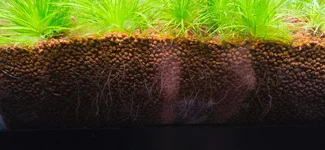
The pattern of soil
1st month
Oh it leeches like crazy. Tds sky rockets! Battle and battle with water changes
Still may get algae. Plants adapt and start to settle in

2nd month
Oh wow everything looks great. Things are booming. Things are fluoreshing.

Months on after. This is the test if you see it through and haven't quit yet. This is your testament. This is your goal. Keep things consistent meaning water changes/co2. Nutrients you may need to up or form your adaptive process to move with what you have lost in the soil.

And now the soil is crumbled into dust. Yet...you can still keep going, dosing/root tabs. But now the pattern is in full circle and possible time to begin and go back to the first step.

20260826_221954.webp
 
Mimick nature
If you really love a plant but cant get it growing your best chance is to try and mimick its natural habitat. Uaupes for example comes from clean waters with literally no water column nutrients. Its has to be getting nutrients somewhere though so its all substrate. The water is acidic and soft. I wonder though how rivers creeks streams and lakes get their co2, all fish and decaying matter?. So seeing that no co2 guy well...it all could be water parameters. Mainly plants in general adapt to a wide range of conditions but there's always that one unique plant...

Pic for attention erio fbe066
20260826_233729.webp
 

Top 10 Trending Threads

Back
Top