Welcome to ScapeCrunch

We are ScapeCrunch, the place where planted aquarium hobbyists come to build relationships and support each other. When you're tired of doom scrolling, you've found your home here.

Journal 40 Gallon Bucephalandra Collection

  • Thread starter Thread starter Fishstery
  • Start date Start date
  • Tagged users Tagged users None

This log seems more up your alley.
Very extensive with fertilizer regime included.
Will probably use chatgbt for translation as chinese isn't my first language and reading this is probably more painful than translating to english.
Translation below with images pasted as well.

STARTS BELOW THIS LINE.
---------

This pasted post is a full 6-month Chinese buce tank diary for a 60×45×45 cm buce setup. The important English summary:


Core setup​


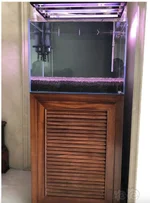
Tank: 60×45×45 cm
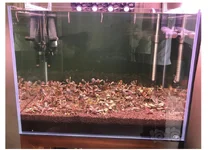
Substrate: 3 L ADA Power Sand + 18 L ADA aquasoil
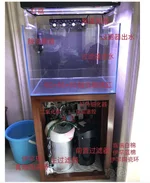
Filter:
prefilter for physical waste + large bio-filter for stability
Water target: around TDS 150, pH around 6.8 once mature
Temp: usually 23–24°C
Ferts:
AF Micro, AF Iron, AF Potassium
CO₂:
pressurized CO₂, eventually 24/7
Light:
5-tube T5 fixture, ramped slowly over months


His main philosophy​


He is basically saying:


Buce needs stability more than anything.
New aquasoil swings pH/TDS /hardness hard, so he ages the tank, changes water often early, adds coral bone temporarily to stabilize hardness/pH, then slowly ramps light, CO₂, and ferts.


He does not treat buce like a normal fast stem-plant tank.


Substrate method​


He uses:


ADA Power Sand bottom + ADA aquasoil top.


He says because Power Sand already contains organic/inorganic nutrient base, there is no need for extra base fertilizer or root tabs at startup.


For planting, he trims bad leaves/rotten roots, then uses tweezers to insert the roots into the soil while keeping about 1/3 of the main stem/rhizome exposed above the substrate, then clips/pins it down. His view is that for propagation/display, planting/pinning into the substrate is better because roots can enter the soil and grow faster.


Important: he is not burying the whole rhizome deep. It is root access to soil, not suffocating the crown.


Cycling before buce​


He cycles/ages the tank for about 28 days before adding buce.


During that time, he does 5 water changes totaling about 3.5 tank volumes. Reason: new aquasoil releases too much fertility and has strong acid/hardness-lowering ability. He wants to weaken those swings before buce goes in.


His data showed early tank water going:


TDS up, pH down
because nutrients/minerals leach while aquasoil acidifies/softens the water.


So he says if you don’t age/change water properly, buce can melt from unstable new-tank conditions.


Water targets​


He says ideal GH is around:


GH 5–12 dH


He sets his tank around:


TDS 140 first, then 155, later stable around 150


He uses filtered tap water plus some RO/pure water. He is not using pure RO only. His tap varies a lot, so he mixes water to hit his target TDS.


He temporarily puts coral bone/coral gravel in the prefilter to counter the aquasoil’s strong acid/softening effect. As the aquasoil gets older and stops lowering hardness as much, he slowly removes the coral bone.


So his mindset is:


Use RO/pure water as a mixing tool. Keep TDS stable. Don’t chase ultra-soft water.


Water changes​


Early after planting:


  • every 3 days, 1/3 water change, three times
  • then every 4 days, 1/3, two times
  • then every 5–6 days
  • eventually settles into weekly 1/3 water changes

If algae or water-quality problems happen, he increases to 1/2 water changes or more frequent changes.


He also says not to panic with unlimited huge water changes. Adjust slowly according to the situation.


Cleanliness / maintenance​


He emphasizes cleanliness a lot:


  • clean prefilter regularly
  • remove fallen/melting leaves
  • trim flower buds because flowering consumes plant energy
  • trim damaged old leaves
  • clean glass/equipment biofilm
  • keep dead snails/leaves out because decay pollutes water

He specifically says a strong filter catches more waste, so the prefilter must be cleaned often. Dirty prefilters can cause ammonia/water quality issues and lead to poor plant condition or melt.


This is not deep gravel vacuuming the aquasoil. It is keeping the system clean: prefilter, glass, dead leaves, visible waste.


Lighting schedule​


He starts very low and ramps slowly.


After planting:


  • first: 3 hours/day with 3 tubes
  • then 4 hours
  • then 5 hours
  • then 6 hours
  • then 6.5–7 hours
  • later 7.5–8 hours
  • eventually main 3 tubes run about 8–9 hours, with the extra 2 tubes added gradually for a shorter midday period

He says strong light alone does not make buce color better. Strong light must match substrate fertility, liquid fertilizer, CO₂, stable water, and the plant’s ability to absorb nutrients. If not, buce can fade, stretch, melt, or get algae.


This is a major point.


CO₂​


He uses pressurized CO₂ from the start, but carefully.


Early after planting:


15–20 bubbles/min with the light


Then later:


60 bubbles/min


Then once stable:


24-hour CO₂, around 1 bubble/sec or 60–80 bubbles/min


Reason: after the tank stabilizes, 24h CO₂ helps stabilize pH. But he warns CO₂ is not “more is always better.” Too much can hurt livestock and water quality.


He also keeps pH from dropping too low early. He tries to keep pH above about 6.3 in the early phase.


Fertilizer schedule​


This is the most important part.


He does not dose heavy ferts from day one.


Around day 50–65​


First liquid fert:


AF Micro 0.5 mL


Purpose: let buce slowly adapt to liquid ferts; micro helps side shoots/root growth.


Around day 66–79​


After water changes:


  • AF Micro 0.5–1 mL
  • AF Potassium 0.5 mL
  • AF Iron 0.5 mL

Around day 90-ish​


After weekly water change:


  • AF Potassium 1 mL
  • AF Micro 1 mL
  • AF Iron 2 mL

Around day 99–123​


After water change:


  • AF Micro 1.5 mL
  • AF Potassium 1.5 mL
  • AF Iron 3 mL

He says once buce is growing normally, iron becomes the main fertilizer, while potassium and micros are supporting fertilizers.


Later higher point​


He tried:


  • Micro 2 mL
  • Potassium 2 mL
  • Iron 4 mL

But then algae appeared, so he stopped ferts temporarily.


His warning about overdosing​


He says micros are needed in very small amounts. If overdosed, they can cause leaf holes.


He also specifically says most buce leaf holes are caused by too much iron fertilizer.


His advice:


If buce already looks good, reduce/maintain iron, don’t keep increasing.


That is a huge Chinese-style warning:
Do not chase color by constantly increasing iron.


Algae response​


When green dust algae appeared, he:


  1. cleaned prefilter
  2. changed 1/2 water
  3. stopped ferts for 2 weeks
  4. reduced/held lighting
  5. used snails
  6. later used AF algae remover daily for a week
  7. resumed ferts at a lower adjusted dose

After recovery, he settled around:


  • Micro 1 mL
  • Potassium 1.5 mL
  • Iron 3 mL

Then held that dose for a while.


Temperature​


He strongly controls temperature.


He keeps water around:


23–24°C


In summer he uses fans, AC, and possibly a chiller. He even sets the light period from early morning to early afternoon to avoid afternoon heat.


This matches that other Chinese line you showed: at 29°C+, many buces fade.
1783488994197.webp
1783489001907.webp1783489007838.webp1783489015415.webp1783489024670.webp1783489031089.webp1783489036286.webp1783489041291.webp1783489045963.webp1783489049875.webp


-----
END OF TRANSLATION COPY>


I do have a few more of these forum posts I can copy/translate over here, but that would be a bit spammy, unless you guys are interested in seeing a few more.
 
Last edited:

This log seems more up your alley.
Very extensive with fertilizer regime included.
Will probably use chatgbt for translation as chinese isn't my first language and reading this is probably more painful than translating to english.
Translation below with images pasted as well.

STARTS BELOW THIS LINE.
---------

This pasted post is a full 6-month Chinese buce tank diary for a 60×45×45 cm buce setup. The important English summary:


Core setup​


Tank: 60×45×45 cm
Substrate: 3 L ADA Power Sand + 18 L ADA aquasoil
Filter:
prefilter for physical waste + large bio-filter for stability
Water target: around TDS 150, pH around 6.8 once mature
Temp: usually 23–24°C
Ferts:
AF Micro, AF Iron, AF Potassium
CO₂:
pressurized CO₂, eventually 24/7
Light:
5-tube T5 fixture, ramped slowly over months


His main philosophy​


He is basically saying:


Buce needs stability more than anything.
New aquasoil swings pH/TDS/hardness hard, so he ages the tank, changes water often early, adds coral bone temporarily to stabilize hardness/pH, then slowly ramps light, CO₂, and ferts.


He does not treat buce like a normal fast stem-plant tank.


Substrate method​


He uses:


ADA Power Sand bottom + ADA aquasoil top.


He says because Power Sand already contains organic/inorganic nutrient base, there is no need for extra base fertilizer or root tabs at startup.


For planting, he trims bad leaves/rotten roots, then uses tweezers to insert the roots into the soil while keeping about 1/3 of the main stem/rhizome exposed above the substrate, then clips/pins it down. His view is that for propagation/display, planting/pinning into the substrate is better because roots can enter the soil and grow faster.


Important: he is not burying the whole rhizome deep. It is root access to soil, not suffocating the crown.


Cycling before buce​


He cycles/ages the tank for about 28 days before adding buce.


During that time, he does 5 water changes totaling about 3.5 tank volumes. Reason: new aquasoil releases too much fertility and has strong acid/hardness-lowering ability. He wants to weaken those swings before buce goes in.


His data showed early tank water going:


TDS up, pH down
because nutrients/minerals leach while aquasoil acidifies/softens the water.


So he says if you don’t age/change water properly, buce can melt from unstable new-tank conditions.


Water targets​


He says ideal GH is around:


GH 5–12 dH


He sets his tank around:


TDS 140 first, then 155, later stable around 150


He uses filtered tap water plus some RO/pure water. He is not using pure RO only. His tap varies a lot, so he mixes water to hit his target TDS.


He temporarily puts coral bone/coral gravel in the prefilter to counter the aquasoil’s strong acid/softening effect. As the aquasoil gets older and stops lowering hardness as much, he slowly removes the coral bone.


So his mindset is:


Use RO/pure water as a mixing tool. Keep TDS stable. Don’t chase ultra-soft water.


Water changes​


Early after planting:


  • every 3 days, 1/3 water change, three times
  • then every 4 days, 1/3, two times
  • then every 5–6 days
  • eventually settles into weekly 1/3 water changes

If algae or water-quality problems happen, he increases to 1/2 water changes or more frequent changes.


He also says not to panic with unlimited huge water changes. Adjust slowly according to the situation.


Cleanliness / maintenance​


He emphasizes cleanliness a lot:


  • clean prefilter regularly
  • remove fallen/melting leaves
  • trim flower buds because flowering consumes plant energy
  • trim damaged old leaves
  • clean glass/equipment biofilm
  • keep dead snails/leaves out because decay pollutes water

He specifically says a strong filter catches more waste, so the prefilter must be cleaned often. Dirty prefilters can cause ammonia/water quality issues and lead to poor plant condition or melt.


This is not deep gravel vacuuming the aquasoil. It is keeping the system clean: prefilter, glass, dead leaves, visible waste.


Lighting schedule​


He starts very low and ramps slowly.


After planting:


  • first: 3 hours/day with 3 tubes
  • then 4 hours
  • then 5 hours
  • then 6 hours
  • then 6.5–7 hours
  • later 7.5–8 hours
  • eventually main 3 tubes run about 8–9 hours, with the extra 2 tubes added gradually for a shorter midday period

He says strong light alone does not make buce color better. Strong light must match substrate fertility, liquid fertilizer, CO₂, stable water, and the plant’s ability to absorb nutrients. If not, buce can fade, stretch, melt, or get algae.


This is a major point.


CO₂​


He uses pressurized CO₂ from the start, but carefully.


Early after planting:


15–20 bubbles/min with the light


Then later:


60 bubbles/min


Then once stable:


24-hour CO₂, around 1 bubble/sec or 60–80 bubbles/min


Reason: after the tank stabilizes, 24h CO₂ helps stabilize pH. But he warns CO₂ is not “more is always better.” Too much can hurt livestock and water quality.


He also keeps pH from dropping too low early. He tries to keep pH above about 6.3 in the early phase.


Fertilizer schedule​


This is the most important part.


He does not dose heavy ferts from day one.


Around day 50–65​


First liquid fert:


AF Micro 0.5 mL


Purpose: let buce slowly adapt to liquid ferts; micro helps side shoots/root growth.


Around day 66–79​


After water changes:


  • AF Micro 0.5–1 mL
  • AF Potassium 0.5 mL
  • AF Iron 0.5 mL

Around day 90-ish​


After weekly water change:


  • AF Potassium 1 mL
  • AF Micro 1 mL
  • AF Iron 2 mL

Around day 99–123​


After water change:


  • AF Micro 1.5 mL
  • AF Potassium 1.5 mL
  • AF Iron 3 mL

He says once buce is growing normally, iron becomes the main fertilizer, while potassium and micros are supporting fertilizers.


Later higher point​


He tried:


  • Micro 2 mL
  • Potassium 2 mL
  • Iron 4 mL

But then algae appeared, so he stopped ferts temporarily.


His warning about overdosing​


He says micros are needed in very small amounts. If overdosed, they can cause leaf holes.


He also specifically says most buce leaf holes are caused by too much iron fertilizer.


His advice:


If buce already looks good, reduce/maintain iron, don’t keep increasing.


That is a huge Chinese-style warning:
Do not chase color by constantly increasing iron.


Algae response​


When green dust algae appeared, he:


  1. cleaned prefilter
  2. changed 1/2 water
  3. stopped ferts for 2 weeks
  4. reduced/held lighting
  5. used snails
  6. later used AF algae remover daily for a week
  7. resumed ferts at a lower adjusted dose

After recovery, he settled around:


  • Micro 1 mL
  • Potassium 1.5 mL
  • Iron 3 mL

Then held that dose for a while.


Temperature​


He strongly controls temperature.


He keeps water around:


23–24°C


In summer he uses fans, AC, and possibly a chiller. He even sets the light period from early morning to early afternoon to avoid afternoon heat.


This matches that other Chinese line you showed: at 29°C+, many buces fade.
View attachment 18271
View attachment 18272View attachment 18273View attachment 18274View attachment 18275View attachment 18276View attachment 18277View attachment 18278View attachment 18279View attachment 18280


-----
END OF TRANSLATION COPY>


I do have a few more of these forum posts I can copy/translate over here, but that would be a bit spammy, unless you guys are interested in seeing a few more.

Haha, thank you for your effort, but I already read that article 🙂
 
Haha, thank you for your effort, but I already read that article 🙂
Hm.. I might set up a 5.5 gallon tank with just the specific intention of testing that.
Start them out with 20ppm Nitrates or estimative index levels in main grow out tank.
Grow them out for a 2-3 months.

Put them 5.5 gallon N limited set up with nutrient rich substrate and a tad higher iron dosing depending on reaction

See difference in growth shapes.
Since its a 5.5 gallon I can also use 24/7 CO2 at like 0.5bubbles per second just to keep it extra stable.

Would be very interesting to see how the bucephalandras look adapted over.
 
Hm.. I might set up a 5.5 gallon tank with just the specific intention of testing that.
Start them out with 20ppm Nitrates or estimative index levels in main grow out tank.
Grow them out for a 2-3 months.

Put them 5.5 gallon N limited set up with nutrient rich substrate and a tad higher iron dosing depending on reaction

See difference in growth shapes.
Since its a 5.5 gallon I can also use 24/7 CO2 at like 0.5bubbles per second just to keep it extra stable.

Would be very interesting to see how the bucephalandras look adapted over.
That would be interesting. My tank is set up to mimic the Chinese grow method, and I'm getting good color results. I tested my nitrate and phosphate yesterday and both are 0ppm in the water column.
 
That would be interesting. My tank is set up to mimic the Chinese grow method, and I'm getting good color results. I tested my nitrate and phosphate yesterday and both are 0ppm in the water column.
Yeah, I notice all the tanks I see are with aquasoil but only up to 6-12 months though.
Their dosing ppm is basically non existent. Even potassium is very low. like 3 ppm.
Basically seachem levels of nutrients.

I assume, just like caridina shrimp keepers, they reset substrate fertility after that since no amount of root tabs gives the same effect as fresh aquasoil.
 
Yeah, I notice all the tanks I see are with aquasoil but only up to 6-12 months though.
Their dosing ppm is basically non existent. Even potassium is very low. like 3 ppm.
Basically seachem levels of nutrients.

I assume, just like caridina shrimp keepers, they reset substrate fertility after that since no amount of root tabs gives the same effect as fresh aquasoil.
They call it "turning over the tank", so yes. Usually they wait to see growth and color difference in the Buce, the reset with fresh soil. Using water column dosing and root tabs can buy more time as fertility lowers.

However, Osmocote 518s and 528s are popular in Chinese Bucephalandra tanks, and some of them will actually fertilize with that sprinkled around on top of the substrate, though most add it below the substrate during initial start up.
 
Yo you've got any experience with co2 ppm for buces? Specifically its effect on leaf size.

I did find it produced much bigger leaves despite me only using 5 watts on a 10 gallon. However, the coloration didn't seem to really pop unless the lighting was much heavier. This was me using near lethal amounts of CO2 with good surface agitation. My neocaridina shrimp would become very inactive during the day because of it. Sometimes they would become listless and only start moving again after co2 was off. I had to stop it for livestock sake.

There was a chinese log I found that also did 24/7 co2 but very low rate, like 2BPS on a 20-30 gallon.

I'm getting some newer buces as well, so I kinda want to retest a tank with ultra high co2, but no livestock, only a few ramshorn snails with inert substarte.
 

Top 10 Trending Threads

Back
Top