We are ScapeCrunch, the place where planted aquarium hobbyists come to build relationships and support each other. When you're tired of doom scrolling, you've found your home here.
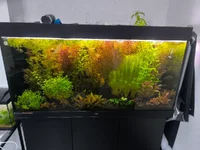
I want to vacuum my complete soil and pull out all the plants add some apt root tabs en replant after.
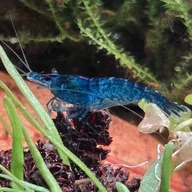
Does anybody have tips or tricks to keep the shrimp safe during this big clean up.
I have a 350 liter tank 120x50x60. So thats quite a big surface.
The reason for the clean up is that my plants need to be replanted since i have not been doing maintenance for a few weeks and had some algae problems.
Since i need to pull out all the plants, a big vacuum would not hurt and will be easy.
Hopefully some of our shrimp experts and the local fish vet will respond. I can say I've done some fairly major scape renovations and the shrimp got through it just fine. Just keep an eye on the critical parameters and treat as necessary. If I do any heavy substrate vacuuming, I also use DIY strainers on my vacuum wands to prevent shrimp from getting sucked in.
The first question is, what type of shrimp? Neocaridina? Caridina? Bamboo shrimp?
Neos will be the most tolerant of a major tank intervention, but I think you will find that it is risky to do a major reset on any tank that houses shrimp populations.
The obvious is water parameter shifts (TDS , GH, KH), ammonia spikes from removing plant mass and substrate disturbance, and loss of surface area for biofilm (aka food sources).
If this is a Dutch-style tank, you likely have no hardscape in the tank. If it is a nature style tank, with hardscape, I would leave the hardscape untouched to protect biofilm which is their primary preferred food source. If you are just uprooting, trimming, and returning plants, some biofilm should be conserved, but if you are replacing plants, you have significant loss of biofilm with new plants as it will take time to reestablish.
If I was going to attempt a reset at this scale, I would first measure the base water parameters (temperature, pH, GH, KH, +/- TDS), drain the water enough to make catching shrimp easier, and reserve some of that water in buckets. If you have a spare small tank, even better. Then I would net out the shrimp as best as I can (you may miss a few). Put the shrimp in their own tank water in the bucket/tank, with an airstone running to maintain oxygen exchange. If you have any floating plants, or even some pieces of rotala stems, or myrio, put a few in the bucket floating on the surface with the shrimp, it will help them feel more secure. Remember that a bucket or small tank will swing in temperature much more than your tank, so a temperature controlled room is preferred to house them in while you do the reset to avoid rapid significant swings. Another bucket of tank water would be used to run my filter(s) through the lily pipes.
I would then do the part that disturbs the substrate. Plant removal, trimming, replanting, substrate cleaning etc. I would personally not clean the tank walls (to conserve biofilm) and do that on the next tank maintenance. If you find a few rogue shrimp while uprooting plants, net them out, and transfer them to their bucket of tank water with the other shrimp.
After replanting/vacuuming and refilling the tank, first re-establish the filters on the tank, and reset your tank environment (including fert dosing, and remineralizers if using) and let the filters run for at least 24 hours to clear the water column and re-equilibrate tank temperature, and clean the prefilter if you have one. Once the water has cleared, and the temperature has stabilized, before returning the shrimp recheck ammonia, nitrite, nitrate (which may be higher due to less plant mass). If those parameters are safe for shrimp, I would then drain down the water in the bucket housing the shrimp, and re-drip acclimate the shrimp back to your tank parameters over several hours. Shrimp can cope with changes in tank environments, but they cannot cope with fast changes! Note that even a shift in TDS will stress shrimp, even if GH, KH, pH, temp etc. all match. You have essentially done a 100% water change with the tank reset, and it is unlikely that you will fully re-match those parameters, especially TDS, before returning the shrimp back to the tank. So treat them as if you just purchased them, and slowly transition them to your tank, just as you would if you had brought them home. I can’t guarantee you might not lose a few through this process, or trigger early molts, but you should be able to minimize the risk of osmotic shock if you go slowly upon their return to their tank.
I do that fairly often with my caridina shrimp. Just let them out and put them in a seperate bucket until your done. Wait a few hours so the pH is stable then put them back in.
As long as the pH and tds is near what it originally was they don't care.
I've lost infinitely more shrimp accidently gassing tank when adjusting my co2 than anything else.
If it's neocaridina, you could probably just do it while they are still in the tank. They are pretty difficult to kill.
Speaking as someone who has killed literally dozens of Neocaridina with water change mistakes you will need to be very careful that the GH, KH and temperature all stay the same: before the change, after the change, and in the transition bucket
Thank you all for the comments. Especially Capra for taking the time for that extended explanation.
My tds will probably drop a lot. Since i havent done any water changes for weeks. Due to vacation (4weeks) and 2 weeks lack of time.
My gh is always 8, kh always 0 since i use apt sky with osmose water.
I only have neocardina shrimps since cardina did not mix well in my tank with high fertz, co2.
I will then do a 50% change where i will keep 50% in a large bucket where i will put my fish, shrimp and filters in. I will cut the tops of the plants that i will replant and place them in the bucket. I will try to catch fish and shrimp as much as possible, before pulling the leftover plants out. So it will be easier to see them. Once that is done i will remove the plants catch the rest and start vacuum the substrate. I will keep adding water to minimize the ammonia release. Once vacuum is done. I will waterchange the water that is left. And then the root tabs and plants can be added again. Fill up 50%, add apt sky to gh 8. And replace the fish and shrimp.
The osmose water is stored in a large tank of 300 liter and is already at aquarium tempature. The biomaster thermo will keep the bucket at tempature so the temp difference will be almost nothing.
Sorry if my English is a little confusing
Thanks for the information and tips
Thank you all for the comments. Especially Capra for taking the time for that extended explanation.
My tds will probably drop a lot. Since i havent done any water changes for weeks. Due to vacation (4weeks) and 2 weeks lack of time.
My gh is always 8, kh always 0 since i use apt sky with osmose water.
I only have neocardina shrimps since cardina did not mix well in my tank with high fertz, co2.
I will then do a 50% change where i will keep 50% in a large bucket where i will put my fish, shrimp and filters in. I will cut the tops of the plants that i will replant and place them in the bucket. I will try to catch fish and shrimp as much as possible, before pulling the leftover plants out. So it will be easier to see them. Once that is done i will remove the plants catch the rest and start vacuum the substrate. I will keep adding water to minimize the ammonia release. Once vacuum is done. I will waterchange the water that is left. And then the root tabs and plants can be added again. Fill up 50%, add apt sky to gh 8. And replace the fish and shrimp.
The osmose water is stored in a large tank of 300 liter and is already at aquarium tempature. The biomaster thermo will keep the bucket at tempature so the temp difference will be almost nothing.
Sorry if my English is a little confusing
Thanks for the information and tips
This site uses cookies to help personalise content, tailor your experience and to keep you logged in if you register.
By continuing to use this site, you are consenting to our use of cookies.