Welcome to ScapeCrunch

We are ScapeCrunch, the place where planted aquarium hobbyists come to build relationships and support each other. When you're tired of doom scrolling, you've found your home here.

The Great Big Filter Thread

  • Thread starter Thread starter JayP
  • Start date Start date
  • Tagged users Tagged users None
How much turnover is ideal for a tank? Well I've seen threads on this forum saying 10 to 20 times an hour, but I usually advise people 4 to 8 times tank volume turnover per hour. But those are actual tank volume turnover, not the fake numbers reported by canister filter makers. If you had a 75 gallon tank, then the math would look like this.
In my previous posts I said I believed flow was over emphasized. That was a misstatement. I meant to say; I believe the "turn-over rate number" is over emphasized. Why do I think this? As you pointed out, you'll see a number of anywhere from 4, to well over 10 thrown out. Where does this number come from? Where is the empirical data showing this? What is to say an aquarium with a 3x turnover is any less healthy than on aquarium with a 10x turnover. I mean, we know what factors determine whether an aquarium is optimally healthy. Where we run into an issue, and what makes the math harder, is all the other factors involved and how they contribute to healthy water as well. How heavily planted is the tank? What kinds of fish are in the tank. How is hardscape set up in the tank and how does it affect water flow. How does the substrate affect water parameters. While a 4x turnover for one tank may work great, it may be woefully inadequate for another. I wouldn't recommend an Oase Biomaster to someone with a large heavily stocked goldfish, Pleco, or Cichlid tank with little to no plant mass.

As for marketing people over hyping products, yeah, that's been going on since humans roamed the Earth It's no different than any other consumer product. As an engineer that had to try to fulfill promises delivered by marketing people, it's infuriating. But I also take issue with experienced/pro aquarists out there telling people new to the hobby, they should ovoid this filter or that filter because it has this number turnover rate and you need one with this turnover rate, without anything to back the claim up other than, it's the number that other people say, infuriates me just as much.

But this is why I love this forum. Lots of very knowledgeable and experienced aquarists who have done a lot of experimentation over the years and can provide data to back up what they say. Even then, I sometimes have to see it for myself to be convinced. I have a much more open mind now than when I was younger though. 😁
 
I think you raise a fair point regarding flow versus turnover and when each is actually needed—they are not the same thing. Flow for nutrient movement and detritus transport can be achieved with wavemakers; no canister filter is realistically turning over 2,500 GPH on a 250‑gallon cichlid tank, nor should it need to. Instead, two 600 GPH wavemakers can effectively alleviate dead spots, agitate the surface, and move detritus toward the filter intake or outflow. Also there is flow and there is velocity. Too much velocity is bad in all but niche scenarios like a fats stream/river tank or tidal reef.

With a low bioload, it’s entirely possible to have minimal flow or turnover and still be successful, as demonstrated by filterless bowls and similar setups. In my view, turnover largely loses relevance beyond ~4× per hour for biological filtration, regardless of tank size. Beyond that point, the discussion shifts to situational flow needs, which are typically about nutrient and CO₂ transport, avoiding dead spots, surface agitation, and preventing detritus from settling. These considerations become more important as tank size increases and dead zones become more likely. Plus by using multiple sources of flow you alleviate the risk of relying on one source where to get the desired flow you need more extreme velocity.

For that reason, lower‑rate wavemakers often make more sense than running two or three filters or one super strong filter in most cases (FX6 on a 40 gallon lol). Interestingly, wavemakers tend to be associated primarily with reef and cichlid setups, even though most fish can easily handle a 300–500 GPH wavemaker in a 36″ (90 cm) or 48″ (120 cm) tank. The turbulence dissipates rapidly within a few inches, providing effective circulation without creating sustained high-flow conditions or water velocity. I would be far more worried of a vortex in the water when running one 2500gph pump than a canister and two smaller wave makers crating a steady flow rate.
 
So for my 24 gallon, i have a 350 Oase biomaster 2 pump - which will put out 300 gallons/hr - I have always assumed this is an overkill. I use a steel lily pipe with some flare at the tip pointed at my front glass Dennis wong style. But i do see detritus collect at my base and with the heavy planting i am always concerned that I am missing removing detritus at the base even with the weekly cleaning. I have quite a bit of surface agitation and often concerned that there is too much flow within the tank since i can see fish sometimes getting caught in strong current. I would be quite concerned about adding more flow to this, but would a wave maker make sense ?
 
In my previous posts I said I believed flow was over emphasized. That was a misstatement. I meant to say; I believe the "turn-over rate number" is over emphasized. Why do I think this? As you pointed out, you'll see a number of anywhere from 4, to well over 10 thrown out. Where does this number come from? Where is the empirical data showing this? What is to say an aquarium with a 3x turnover is any less healthy than on aquarium with a 10x turnover. I mean, we know what factors determine whether an aquarium is optimally healthy. Where we run into an issue, and what makes the math harder, is all the other factors involved and how they contribute to healthy water as well. How heavily planted is the tank? What kinds of fish are in the tank. How is hardscape set up in the tank and how does it affect water flow. How does the substrate affect water parameters. While a 4x turnover for one tank may work great, it may be woefully inadequate for another. I wouldn't recommend an Oase Biomaster to someone with a large heavily stocked goldfish, Pleco, or Cichlid tank with little to no plant mass.

As for marketing people over hyping products, yeah, that's been going on since humans roamed the Earth It's no different than any other consumer product. As an engineer that had to try to fulfill promises delivered by marketing people, it's infuriating. But I also take issue with experienced/pro aquarists out there telling people new to the hobby, they should ovoid this filter or that filter because it has this number turnover rate and you need one with this turnover rate, without anything to back the claim up other than, it's the number that other people say, infuriates me just as much.

But this is why I love this forum. Lots of very knowledgeable and experienced aquarists who have done a lot of experimentation over the years and can provide data to back up what they say. Even then, I sometimes have to see it for myself to be convinced. I have a much more open mind now than when I was younger though. 😁

The flow numbers come from a lot of people observing their tanks and figuring out what works. Different people have vastly different opinions on what works best, but pretty much everyone agrees you don't want too little flow. What the low end means.... well that's different.

There are 3 things a filter does in a tank generally speaking and each of these 3 things are important but some may be more or less important for some people which is why you will see a lot of variation in opinions.

Those three things are:

1) Biological Filtration
2) Mechanical Filtration
3) Flow

1) For biological filtration, a filter's job in a planted tank is actually pretty minimal. Why? Because bacteria grow on surface area and bacteria do not discriminate on what surface they grow on. In a planted tank there is a LOT of surface area because every bit of substrate, plant, hardscape, and even the fish themselves is a viable surface for bacteria to grow. So even before the filter is taken into account bacteria can already grow in a lot of places. Bacteria do not grow endlessly, they grow based on how much food they have. So if you have a well planted tank (which means the plants are already eating ammonia) and a lightly stocked tank, then there isn't a lot of ammonia available for bacteria to eat and thus not a lot of surface area needed to fulfill the nitrogen cycle.

But, if you had say a bare bottom tank with a huge bioload, then keeping a ton of biological media in your filter becomes hugely important because that's where the majority of your surface area is going to come from. That's why you will see different opinions on how important biological filtration is in a tank.

2) Mechanical Filtration matters a lot in a planted tank because plants are somewhat messy with decaying matter. If you have wood its going to slowly fall apart in a planted tank as well. Plus all the normal reasons (poop) that we need mechanical filtration.

3) Flow matters only so much as we don't end up with dead spots in a tank and for helping mechanical filtration. If flow drops so low that there are sections of the tank without movement, then there are certain kinds of algae that are more likely to form like diatoms, and Cyno bacteria for example.

So what does this mean for deciding on a filter? It will depend on what kind of tank and what you are trying to accomplish. If you have a bare bottom tank with a big fish load, you won't care much about flow but will care a lot about biological filtration. If you have a tank with a fish that wants fast water movement, you will care a lot about having a powerful pump. And if you have a fully planted tank with a lot of big hardscape you will care a lot about mechanical filtration and flow because you will get a lot of debris and the hardscape will be creating dead spots where you might have too little flow. And you will want enough flow to collect all the debris and keep algae (that is otherwise avoidable) from forming.

People have spent a LOT of time figuring this out and that is where the minimum 4 times tank volume turn over figure comes from.

But, at the end of the day, all this information is just what people have observed in their tanks. Your tank is whatever you want to make of it and no one is going to stop you from just using a single oase filter. Hopefully its everything you wanted it to be. But if in 6 or 10 months you notice a lot of debris, some extra algae, and your tired of it, well consider increasing flow.
 
I feel so ambivalent a lot of the aspects of filtration. User satisfaction seems to be as important as anything, really. I think a lot of planted tanks don't really need external filtration once the tank is mature. Between the substrate, the plants, and the fact we typically don't overstock, the surface area/food source ratio is typically favorable and it just becomes a question of gas exchange and nutrient mixing, i.e. more about water movement than microbial nutrient processing. I have never pushed this to extreme, though I certainly have heard of experienced hobbyists who run filters without media at all, or only with disposable polishing media, but I've never really noticed a difference from changing up my filtration. There are a few tricks I believe in (the importance of a prefilter, relying primarily on foam for both mechanical and biological filtration)

That said, I really want to have a huge tank with a coast to coast overflow on the short side and a sump with, like, super slick plumbing. Not anytime soon though. I have a lot of more pressing projects and skills to build. Maybe when my kids are grown.

An Eheim classic 600 has a flow rate of ~264GPH at $300,
Wait, WHAT?! They are how much now?? Man, I bought mine in 2022 for half that. Yeesh.
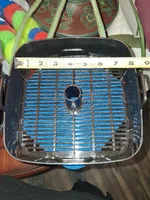
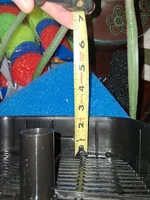
If you want to clean an Eheim classic sponge, how do you get to it? You have to remove the ENTIRE filter media to get to the initial "prefilter" sponge part:
View attachment 15960
I would not consider that a prefilter at all. Eheim makes a prefilter that fits over the intake. Now, not everyone is going to put with something that large in the tank itself, but it does the job well and it is easy to remove. I have also used a plain sponge as a prefilter on their smaller models and that was even cheaper and much less intrusive. Of course it doesn't add a much filtration volume at all, but my concern is just keeping particulate matter out of the main body with as little fuss as possible.
 
But i do see detritus collect at my base and with the heavy planting i am always concerned that I am missing removing detritus at the base even with the weekly cleaning.
I don't think any filter is going to physically remove all detritus in the substrate, even an undergravel filter. This is why people periodically vacuum the substrate when doing maintenance.
 
One biomaster 850 fully loaded has a flow rate of about 1,800-2200GPH. Again, the flow rate is NOT good, but the other features are nice (built in heater, prefilter, etc). But on large tanks often one Biomaster simply won't cut it in terms of flow/filtration, but YMMV!


With a setup like mine and that Sicce Syncra pump, you could get comparable results in terms of flow rate, if not more. I'd recommend spending a bit more to get a higher flow rate pump... Or, that's the beauty of this setup! Get the pump, if you don't like it, just swap it out in the future for a different one.

A similar AC pump would be the Optimax 560, which is only $65 USD right now. My point being, you don't need a $350 DC pump to run a prefilter setup like this! You could either save some money there, or invest the money in a more powerful inline pump for even better results.
Thanks for the reply. I’m only putting it on a ~130L (35gal), so I think I will stick with the 850 purely out of convenience.

I am very interested in the DC pumps with their controllability though. Adjusting flow for night time cycles, having a short high flow period during the day to stir up detritus into a pre filter or using surges to change flow patterns and reduce dead spots.
When I upgrade to a larger tank, I think I will keep the 850, with it’s hidden heater and easy access prefilter. Then I will add another loop with a DC pump and prefilter, with the CO2 reactor on it.
 
+1 for Aquael

I puran Ultramax 1000 in Feb. 2026 and so far so good.
The prefilter is large amd works well. It has an interesting design which the incoming water actually flows up from the bottom of the prefilter sponge. No bypass.
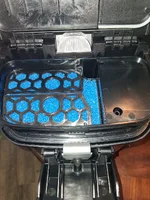
The 1000 comes with 3 large trays and enough included media (floss, ceramics, and foam) that you could set ir up amd use it right out of the box if you so desired.
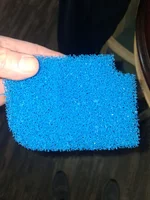
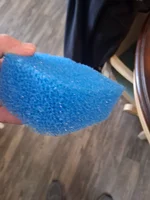
I have installed a 20-25 ppi foam prefilter on the inlet. Yes the standard strainer basket is ugly and large enough that it would suck up fry? Shrimps, and large debris.
In my bottom tray is poly fill and the two upper trays are 2" 30 ppi Poret foam. The combination of two prefilters amd floss should keep any and all detritus out of the poret foam. At this point I'm not sure yet how often I'll have to service it. I realize with the poly fill it will probably be more often than most would like but that's fine. If I have to replace poly fill every two months but it extends the time between rinsing the poret I'm good with that trade off.

The construction is solid. This is not some thin cheap plastic. It's solid and feels solid.
I have no complaints about is operation. It primes very easy with one pull of the primer and then it runs silent .

As far as cost I did kind of hunt for a bargain. I bought the 1000 from Ebay and I paid $129 with free shipping. That's $50-$60 below retail.
It was new in the box, however someone had gone into the parts bag and stole the end cap to the included spray bar.

But Aquael came through. I emailed them about the missing part and the FedEx'd a whole new spray bar kit free if charge, no questions20260126_130521.webp asked. I like that. That's good customer service.

All in all I'm very pleased and I would vote with my $$ again.

20260126_130540.webp20260126_130550.webp20260126_142455.webp20260126_142631.webp
 
Subject: fluval fx4 canister Intake
Sorry haven't read through this whole thread but can I get some help?
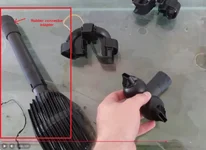
So the intake right now is a sponge prefilter. As past experience it always needs cleaning with other filters ive used periodically and I really dont want to do that. I just want a set and forget type setup. My problem is the lenght of both ribbed intake tube and the bottom intake tube. Question is can I cut the bottom intake tube from the top side and ditch the ribbed tube and still be able to connect bottom tube to the hose via the rubber connector still?


My tank is pretty shallow I think around 12". I bought a 3d print prefilter which I already broke and would purchase another one on amazon.

Welcome to other prefilter suggestions as well. Im never gonna use the strainer the filter came with as itll suck up loaches.
 
Flow isn’t just about picking detritus up and getting it to the intake, it’s also about oxygenating the water. My loaches and catfish need more flow because they need more oxygen in the water, while gouramis etc don’t need so much. I just wanted to throw that out there as another consideration.
 
This has been a great thread so far, thanks @JayP for getting the discussion going. In regards to filtration, I really am starting from the ground up, and trying to catch up as fast as I can as canister filters weren’t really in my budget a quarter century ago.

So everyone’s outside-the-box creativity on filtration setups got me thinking last night on how I might modify what I have set up so far to optimize my setup PRIOR to CO2 setup and planting out the tank.

As my current build is functionally configured more as a peninsular tank-style due to its location, I have both sets of lily pipes on the same short side on the left of the tank, ADA style. Perhaps not ideal for full rotational flow, but for aesthetic reasons it is what it is.

With the two Biomasters right now during the dark start, I already have a dead circulation area at the end of the water circulation loop in the front left corner of the tank. It is almost enough, but not quite. Most of the water movement at that end of the tank is courtesy of the skimmer right now, so I am concerned about that becoming an algae infested corner once the tank is planted and CO2 is running due to sub-par circulation. Wavemakers are out as they are hard on small fish/shrimp, and they’re ugly.

I pulled the trigger on the Oase Biomaster2 Thermo 600 too soon, slightly dazzled by a holiday sale, before fully doing my homework. Then promptly added the 850 when I realized the 600 wasn’t enough. Oase does have some features I love, though, and I’m not sure I am willing to sacrifice at the moment (hidden heater, and rapid maintenance prefilter, as stated by others above). This thread has me thinking, though.

I absolutely LOVE my DC pump that I set up for my RO water storage tanks. The complete flow control and flexibility is great. It can be controlled via phone app/wifi, and it is SILENT. I do find the hum of the two Biomasters in the cabinet right now to be slightly irritating at the moment, but I accepted it as I don’t sleep in that space. I just, until yesterday and reading this thread, didn't even think about putting a dc pump on this tank.

I already had the intention of driving the CO2 reactor via the 850, and then using the 600 as backup auxiliary flow, bio, and mechanical filtration. What if, instead, I do the following, with a bit of role reversal.

Configure the Oase 850 as my primary heating, bio/mechanical filtration, as Oase originally intended. I get to keep the heater hidden, and can use tighter pore prefilter sponges and/or floss for gin-clear water, as I am not relying on that canister to do the heavy lifting on tank circulation.

Eliminate the 600 completely, and use it on a future 90P.

Replace the 600 with a Netlea prefilter, or SS canister (thank you for explaining your setups, @Naturescapes_Rocco , and @Minorhero ) connected to a DC pump through the Yugang (the large SS Arc reactor).

The DC pump and prefilter housing would be cheaper than buying a second 850 (which prior to this thread is what I was considering), and should be effective, without the potential hazards of a wavemaker. Also easier to source components at the moment than finding the Hypermax 4500 in the US. It won’t get rid of all the hum in the cabinet, but the DC pump certainly will run MUCH quieter, and I could evolve the system as I go, but the advantage is I would have so much more circulation control. I am not looking for a tidal wave in the tank, or to blast the fish into the next room, just trying to optimize CO2 circulation around the tank, and eliminate dead zones as much as possible.
 
This has been a great thread so far, thanks @JayP for getting the discussion going. In regards to filtration, I really am starting from the ground up, and trying to catch up as fast as I can as canister filters weren’t really in my budget a quarter century ago.

So everyone’s outside-the-box creativity on filtration setups got me thinking last night on how I might modify what I have set up so far to optimize my setup PRIOR to CO2 setup and planting out the tank.

As my current build is functionally configured more as a peninsular tank-style due to its location, I have both sets of lily pipes on the same short side on the left of the tank, ADA style. Perhaps not ideal for full rotational flow, but for aesthetic reasons it is what it is.

With the two Biomasters right now during the dark start, I already have a dead circulation area at the end of the water circulation loop in the front left corner of the tank. It is almost enough, but not quite. Most of the water movement at that end of the tank is courtesy of the skimmer right now, so I am concerned about that becoming an algae infested corner once the tank is planted and CO2 is running due to sub-par circulation. Wavemakers are out as they are hard on small fish/shrimp, and they’re ugly.

I pulled the trigger on the Oase Biomaster2 Thermo 600 too soon, slightly dazzled by a holiday sale, before fully doing my homework. Then promptly added the 850 when I realized the 600 wasn’t enough. Oase does have some features I love, though, and I’m not sure I am willing to sacrifice at the moment (hidden heater, and rapid maintenance prefilter, as stated by others above). This thread has me thinking, though.

I absolutely LOVE my DC pump that I set up for my RO water storage tanks. The complete flow control and flexibility is great. It can be controlled via phone app/wifi, and it is SILENT. I do find the hum of the two Biomasters in the cabinet right now to be slightly irritating at the moment, but I accepted it as I don’t sleep in that space. I just, until yesterday and reading this thread, didn't even think about putting a dc pump on this tank.

I already had the intention of driving the CO2 reactor via the 850, and then using the 600 as backup auxiliary flow, bio, and mechanical filtration. What if, instead, I do the following, with a bit of role reversal.

Configure the Oase 850 as my primary heating, bio/mechanical filtration, as Oase originally intended. I get to keep the heater hidden, and can use tighter pore prefilter sponges and/or floss for gin-clear water, as I am not relying on that canister to do the heavy lifting on tank circulation.

Eliminate the 600 completely, and use it on a future 90P.

Replace the 600 with a Netlea prefilter, or SS canister (thank you for explaining your setups, @Naturescapes_Rocco , and @Minorhero ) connected to a DC pump through the Yugang (the large SS Arc reactor).

The DC pump and prefilter housing would be cheaper than buying a second 850 (which prior to this thread is what I was considering), and should be effective, without the potential hazards of a wavemaker. Also easier to source components at the moment than finding the Hypermax 4500 in the US. It won’t get rid of all the hum in the cabinet, but the DC pump certainly will run MUCH quieter, and I could evolve the system as I go, but the advantage is I would have so much more circulation control. I am not looking for a tidal wave in the tank, or to blast the fish into the next room, just trying to optimize CO2 circulation around the tank, and eliminate dead zones as much as possible.

If you already own the 850, and are willing to diy a bit with a dc pump. My advice is to just use the 850 by itself. But, don't plug it in. Instead on the return line install an inline dc pump of appropriate size. You can then run the 850 absolutely the same as you do now with none of the problems with flow, or noise. The 850 will act just like the netlea prefilter setups. On the planted tank there was a guy a few years back who was unhappy with his oase on a 75 gallon tank and did this for a while. So you won't be breaking new ground or anything. Good luck!
 
If you already own the 850, and are willing to diy a bit with a dc pump. My advice is to just use the 850 by itself. But, don't plug it in. Instead on the return line install an inline dc pump of appropriate size. You can then run the 850 absolutely the same as you do now with none of the problems with flow, or noise. The 850 will act just like the netlea prefilter setups. On the planted tank there was a guy a few years back who was unhappy with his oase on a 75 gallon tank and did this for a while. So you won't be breaking new ground or anything. Good luck!
Interesting thought. Certainly simplifies setup. I guess my only concern running the 850 on its own with the DC pump, would be less stability in flow over time for the CO2 running through the reactor (clean versus gunked-up prefilter periodically changing the amount flow for example), versus dedicating the DC pump to CO2 distribution through the Yugang via a secondary canister. But I have been known to over-think things ;)
 
First of all I have to say this is a great thread. Loads of interesting information, and some really cool set ups. Especially love the DC motor ones. I get the attraction they look slick.

I recently had to purchase new filters for my 5' 120G tank. As I mentioned in my journal my Rena XP's finally bit the dust after 20 years or so.

I have always liked running multiple filters and creating good flow and surface agitation across the entire tank. One reason is that if one fails or needs service the others can keep the tank running fine. I also drive a Cerges reactor with one which has very little media to keep the flow rate more constant.

This is not sexy but I picked up some filters that I am really liking. They are the AQQA 581GPH Canisters. Very strong and adjustable flow, easy to prime, easy to clean, come with a spray bar, and very quiet.

And here's the best part. I paid $126 each off of Amazon.

I run 20 ppi & 30ppi foam, plus LOTS of filter floss.

Not sexy or cool but do the job for me!


Untitled.webp
 
Interesting thought. Certainly simplifies setup. I guess my only concern running the 850 on its own with the DC pump, would be less stability in flow over time for the CO2 running through the reactor (clean versus gunked-up prefilter periodically changing the amount flow for example), versus dedicating the DC pump to CO2 distribution through the Yugang via a secondary canister. But I have been known to over-think things ;)
I think this is an instance where you are overthinking it :P If the co2 is being dissolved then the 1% to 5% difference in flow rates (entirely made up number :P ) between clean and dirty filter will not matter. One of the nice things of any reactor is that they have enough wiggle room when tuning them in that they don't require a lot of precision to get right.
 
If you already own the 850, and are willing to diy a bit with a dc pump. My advice is to just use the 850 by itself. But, don't plug it in. Instead on the return line install an inline dc pump of appropriate size. You can then run the 850 absolutely the same as you do now with none of the problems with flow, or noise. The 850 will act just like the netlea prefilter setups. On the planted tank there was a guy a few years back who was unhappy with his oase on a 75 gallon tank and did this for a while. So you won't be breaking new ground or anything. Good luck!
Hey @Capraquaria
@Jeff Miotke has a video of doing just what @Minorhero described.
 
Subject: fluval fx4 canister Intake
Sorry haven't read through this whole thread but can I get some help?
So the intake right now is a sponge prefilter. As past experience it always needs cleaning with other filters ive used periodically and I really dont want to do that. I just want a set and forget type setup. My problem is the lenght of both ribbed intake tube and the bottom intake tube. Question is can I cut the bottom intake tube from the top side and ditch the ribbed tube and still be able to connect bottom tube to the hose via the rubber connector still?

My tank is pretty shallow I think around 12". I bought a 3d print prefilter which I already broke and would purchase another one on amazon.

Welcome to other prefilter suggestions as well. Im never gonna use the strainer the filter came with as itll suck up loaches.
I'm having a hard time picturing what it is you are wanting to do. Are you just wanting to replace the Fluval tubing and pipes with standard tubing and pipes, specifically an input pipe that doesn't need a foam prefilter added?
 
I'm having a hard time picturing what it is you are wanting to do. Are you just wanting to replace the Fluval tubing and pipes with standard tubing and pipes, specifically an input pipe that doesn't need a foam prefilter added?
So my tank is 12" high
I want to shorten the intake
The filter comes with these parts plus the hosing
The ribbed tube which extends the size in lenght of intake
The rubber connector that connects hose to intake
The bottom intake tube that connects to the ribbed tubing
And the strainer/prefilter

I want to knoe if I cut the bottom intake tube, toss the ribbed tube extender will the rubber connector still fit with hosing and bottom intake tube.

All this is to shorten the entire intake

May have to get pictures or just experiment if too hard to explain
 
So my tank is 12" high
I want to shorten the intake
The filter comes with these parts plus the hosing
The ribbed tube which extends the size in lenght of intake
The rubber connector that connects hose to intake
The bottom intake tube that connects to the ribbed tubing
And the strainer/prefilter

I want to knoe if I cut the bottom intake tube, toss the ribbed tube extender will the rubber connector still fit with hosing and bottom intake tube.

All this is to shorten the entire intake

May have to get pictures or just experiment if too hard to explain
OK, so it sounds like you just need to shorten the inlet pipe for your 12" tank depth. Can't you just remove the rubber connector adapter from the top of the inlet pipe, trim the top of the pipe to your desired length, and reinstall the connector adapter?

FX4 Pipes.webp
 

Top 10 Trending Threads

Back
Top