Welcome to ScapeCrunch

We are ScapeCrunch, the place where planted aquarium hobbyists come to build relationships and support each other. When you're tired of doom scrolling, you've found your home here.

Potassium deficiency in plants, or something else?

  • Thread starter Thread starter Danbest82
  • Start date Start date
  • Tagged users Tagged users None
Joined
Nov 18, 2025
Messages
24
Reaction score
27
Location
White Plains, NY
Any help is very much appreciated.
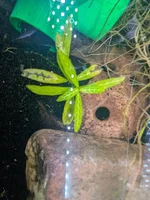
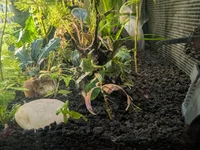
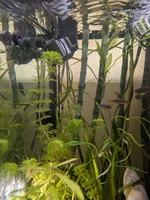
What's going on with my plants?

Both my tanks have plants that suffer from stem melt, burnt leaf ends and minor yellowing, and minor pinholes.
From what I read, the issue with my plants looks like a potassium deficiency yet my potassium looks kind of high. Maybe my test kit is wrong. Or is something causing it to not be absorbed by plants? I also see my Pogostemon Stellatus Octopus has leaf curling, which I read is magnesium deficiency.

Tap water Measurements:
  • Ammonia: 0ppm
  • Nitrite: 0ppm
  • Nitrate(Fluval/NT Labs){NO3-N (nitrate nitrogen)}: 0ppm
  • pH: 6.8-6.9pH
  • Phosphate: 4ppm
  • Calcium(Monitor) : 20ppm
  • Magnesium(Monitor) : 0ppm - turned green without titrate
  • GH - dGH: 1-2dGH
  • KH - dKH : 1dKH
  • Iron chalated: 0ppm
  • Potassium: 10ppm


Plants(in both tanks):
Bronze cabomba
Pogostemon Stellatus Octopus
Dwarf Sagittaria
Hygrophila Polysperma 'sunset' ('Rosanervig')
Red melon sword
Random Bucephalandra
Hygrophila cordata 'Red'
Val Asiatica Biwaensis
Vallisneria leopard
Duckweed
Salvinia minima
Some other random plants but not sure what's left


These parameters and pics are the 20 gallon long.
The next post will be my 75 gallon.

Light:
FZONE LED Aquarium Light 36W (Light 60)

Both set for Siesta lights off from 11:30 to 2:45ish.

Measurements:
  • Ammonia: 0ppm
  • Nitrite: 0ppm
  • Nitrate(Fluval/NT Labs){NO3-N (nitrate nitrogen)}: 10ppm so about 44ppm on API kit (10x4.4)
  • Phosphate: 3ppm
  • pH: 7.5pH
  • GH - dGH: 8dGH
  • KH - dKH: 2dKH
  • Potassium: 45ppm
  • Calcium(Monitor) : 60ppm
  • Magnesium(Monitor) : 36ppm
  • Iron: 0ppm
  • Iron (chelated) : 0.7ppm

Fertilizers:
GLA AIO/S -
20gal dosage at WC: 4ml and 3x/wk: 1ml
Guaranteed Analysis:
Total Nitrogen (N): 2.00%
Available Phosphate (P₂O₃): 1.00%
Soluble Potash (K₂O): 10.00%
Total Magnesium (Mg): 0.50%
0.50% Water Soluble Magnesium (Mg)
Total Iron (Fe): 0.14%
0.14% Chelated Iron (Fe)
Total Other Micronutrients: 0.09%
0.014% Boron (B)
0.07% Chelated Manganese (Mn)
0.0001% Molybdenum (Mo)
0.007% Chelated Zinc (Zn)
Derived From:
Potassium Nitrate, Monopotassium Phosphate, Sulfate of Potash, Magnesium Sulfate, Iron DTPA, Boric Acid, Manganese EDTA, Sodium Molybdate, Zinc EDTA


K2SO4 - 2ml pump = 1ppm K (2ml 4x/wk) per 20gal

Fe DTPA 11% - 1ml pump = 0.1ppm (1ml 4x/week) per 20gal

CaSO4 - 1.93g = ~30ppm at water change

MgSO4 - 1.92g = ~10ppm at water change

I use Fzone root fertilizer spikes also.
 

Attachments

  • PXL_20260119_161625804.MP.webp
    PXL_20260119_161625804.MP.webp
    132.1 KB · Views: 11
  • PXL_20260103_205942078.MP.webp
    PXL_20260103_205942078.MP.webp
    210.8 KB · Views: 11
  • PXL_20260117_214610145.MP.webp
    PXL_20260117_214610145.MP.webp
    243.4 KB · Views: 10
  • PXL_20260117_214623796.MP.webp
    PXL_20260117_214623796.MP.webp
    238 KB · Views: 10
  • PXL_20260119_161556447.MP.webp
    PXL_20260119_161556447.MP.webp
    159.1 KB · Views: 9
  • PXL_20260119_161600907.MP.webp
    PXL_20260119_161600907.MP.webp
    95.7 KB · Views: 9
  • PXL_20260119_161605264.MP.webp
    PXL_20260119_161605264.MP.webp
    168 KB · Views: 9
  • PXL_20260119_161615329.MP.webp
    PXL_20260119_161615329.MP.webp
    136.9 KB · Views: 9
Last edited:
Parameters and pics for my 75 gallon.

Lights:
Fluval Plant Spectrum LED 32 W (24"-34") and FZONE LED 24W (Light 45) - plants on Fluval side.

Measurements:
  • Ammonia: 0ppm
  • Nitrite: 0ppm
  • Nitrate(Fluval/NT Labs){NO3-N (nitrate nitrogen)}: 10ppm so about 44ppm on API test kit(10x4.4)
  • pH: 7.7pH
  • Phosphate: 8ppm
  • Calcium(Monitor) : 60ppm
  • Magnesium(Monitor) : 12ppm
  • GH - dGH: 8dGH
  • KH - dKH : 1dKH
  • Iron: 0ppm
  • Iron (chelated) : .8ppm
  • Potassium: 35ppm

Made by aquariumlog.app
Fertilizers:
GLA AIO/S -
dosage at WC: 15ml and 3x/wk: 5ml

K2SO4 - 2ml pump = 1ppm K - ~8ml per 75gal 4x/wk

Fe DTPA 11% - 1ml pump = 0.1ppm - 4ml 4x/wk per 75gal

CaSO4 - 15.4g = ~30ppm at water change

MgSO4 - 15.4g = ~10ppm at water change
 

Attachments

  • PXL_20260119_161423914.MP.webp
    PXL_20260119_161423914.MP.webp
    280.2 KB · Views: 7
  • PXL_20260119_161428945.MP.webp
    PXL_20260119_161428945.MP.webp
    228.3 KB · Views: 8
  • PXL_20251208_205658716.MP.webp
    PXL_20251208_205658716.MP.webp
    204.6 KB · Views: 5
  • PXL_20260119_161440567.MP.webp
    PXL_20260119_161440567.MP.webp
    207.5 KB · Views: 7
  • PXL_20260119_161433309.MP.webp
    PXL_20260119_161433309.MP.webp
    165.3 KB · Views: 6
  • PXL_20251208_205646630.MP.webp
    PXL_20251208_205646630.MP.webp
    91.5 KB · Views: 8
Last edited:
I can finally use my meme.
Potassium_Deficiency.webp

In short, no its not likely that you have a potassium deficiency given your scenario above.
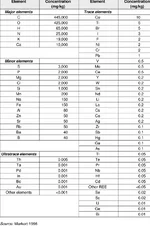
Plants use 10X more carbon than all nutrients combined.

You could estimate your Potassium levels at 10ppm. Do you have any estimation of your carbon (or CO2) levels ?
If you are not injecting CO2, most of your symptoms are likely to be caused by poor carbon availability, and not any other nutrient.
In non CO2 injected tanks, CO2 is usually the cause for plant issues, but folks rather blame elements that they can add easily.
But the math doesn't add up if you think about it.

More data on CO2 in non injected aquariums vs nature vs injected aquariums here:

Sample of plant dry mass analysis by element:
1768932266252.webp
 
My general rule of thumb for low tech tanks is that if you are dosing it, you probably aren't deficient in it*, so look elsewhere for the solution to your problem. In your case though, if you don't have any Mg in your tap water and you are just relying on your AIO for it, you are at homeopathic levels in the tank. If my math and reading are correct (and please double check me here, folks), that's like 0.47 ppm a week. That's nothin'. Add some epsom salt and see if that helps.

As always, there are a bunch of other factors to examine, and I do generally agree with Dennis that plant nutrients are pretty low on the list. Those deficiency symptom charts are hard to apply without a lot of experience, to the point of doing more harm than good in most cases.

*Iron availability may be an issue, depending on your pH and chelates, but below 7 with iron DPTA you should be ok.

If you are not injecting CO2, most of your symptoms are likely to be caused by poor carbon availability, and not any other nutrient.
In non CO2 injected tanks, CO2 is usually the cause for plant issues, but folks rather blame elements that they can add easily.
I have heard other people say this as well, but this phrasing makes it sound like there's nothing to be done short of adding an injection system. I don't look at low CO2 as being the problem itself so much as a mismatch between the naturally carbon-poor environment and other elements of the system. That puts the levers of control back into the hands of the aquarist.
 
Thanks for the replies! I realize that I didn't add my tank water parameters for some reason.🤦🏻‍♂️ It's been a rough couple of days and just trying to focus on something else in life. Anyway, I add them to the respective posts.
I am also dosing Calcium and magnesium since I've gotten away from Equilibrium. If I included the parameters, that would have been seen. 🤦🏻‍♂️ I will update that to the fertilizers I dose on water change.

Dennis, I'm not injecting co2 so that may be the issue. I have a few old regulators from my Homebrewing days so I may set up a small system to see if it helps.

Sorry for not including all the details.
 
Agreed—without CO₂, focus on just having some nutrients in the water column. A few things that can help: look for an all-in-one fertilizer that includes DTPA iron, try slightly increasing the light, and watch whether you can keep growth on the lower portions of the plants. You can also experiment with plant species that tend to thrive in conditions similar to yours.


I’m not seeing any algae, so you likely have some headroom to increase light—but keep in mind that higher light also increases CO₂ demand. Consider adding more Cryptocoryne species. Hygrophila varieties often do well too. Simple sword plants are another good option—stick with the common types, since they’re widely available at chain stores and local fish shops.


Also, @JuJuFish runs an excellent non-CO₂ tank that’s very full and lush. I’d recommend checking out his journal and asking her a few questions.


You might also try lowering the water temperature. Are you running close to 80°F?
 
Last edited:
Also, @JuJuFish runs an excellent non-CO₂ tank that’s very full and lush. I’d recommend checking out his journal

Her journal 😁

 
I don’t think I’m much help when trying to figure out what is going wrong with a tank. I’ve been able to solve most of my issues with small tweaks - lights or ferts. And following Joe’s advice to keep the tank clean, keep the plants clean.

It was really helpful when I started out to pick an easy plan and stick with it. I used AIO ferts for a while then switched to GLA PPS Pro. That way I didn’t have to juggle each individual salt while I tried to find my way. I just had to increase or decrease macros or micros which kept me out of trouble. I kept the light on the low end and slowly increased it as I went along. My fish and plants suffered with our tap water and it wasn’t until I switched to RO that everything really settled into a consistent routine.

Also, I know my limits and keep mostly easy plants! And read every word of advice from the real plant gurus here. 🙂
 
have heard other people say this as well, but this phrasing makes it sound like there's nothing to be done short of adding an injection system. I don't look at low CO2 as being the problem itself so much as a mismatch between the naturally carbon-poor environment and other elements of the system. That puts the levers of control back into the hands of the aquarist.

Folks assume wrongly that the set of low tech plants all work in tanks without CO2 injection because they don't need that much carbon. This is false. In low tech tanks, carbon is just as important. The variation of outcomes in low tech tanks is due to whether or not a particular low tech tank is good at generating carbon naturally. Low tech tanks that generate sufficient carbon naturally are ones where the plants do well, and the ones that do not generate sufficient carbon are the ones that fail. So low CO2 IS still the issue. You can't magic your way out of this by just having a perfect nutrient ratio. The solutions for natural carbon generation low tech tanks are not as clear, and hence the high variability of outcomes in low tech tanks.

Natural carbon generation can come from:
Soil/aquasoil substrates, decomposition & microbial action.
Matured filters, surfaces (thicker substrate?) - microbial respiration
Organic decomposition
Even fish to some extent

Its a difficult task to balance amount of organic waste vs generating carbon. Dumping compost into the tank will generate measurable CO2 level changes for example, but it also generates other by products that may not be desirable.

No different from high tech tanks, if I can't measure CO2 present in the water, chances are, the low tech tank will not do well. The scale is just lower, so its difficult for hobbyists without expensive tools to come to these conclusions themselves. Again, many of the numbers are on the CO2 article for those interested in the measurements.

Equilibrium with CO2 just from atmosphere is 0.6ppm. (i.e. CO2 in a standing glass of water) This will not work for any planted tank long term.

Measurements from some low tech tanks:

Fish tank CO2 level 1.webpOxyguard CO2.webp


Oxyguard 3.webp

For a simple tank like this, you would want to aim for 5-8ppm CO2 from over night. This dips to 0 within hours of lights coming on usually.
Low tech no reflec cropped v3.webp

Main difference is that CO2 injected levels are sustained for much longer window.

2hrAquaristDSCF5929 equipment CO2 analyzer par meter.webp
 
Last edited:
The variation of outcomes in low tech tanks is due to whether or not a particular low tech tank is good at generating carbon naturally. Low tech tanks that generate sufficient carbon naturally are ones where the plants do well, and the ones that do not generate sufficient carbon are the ones that fail.
I know carbon is important, and that low tech tanks have variable amounts of endogenous CO2 production and more is better. Of course.

But I'm curious about the low end here - you say in your article that many simpler species can survive on 1-2 ppm CO2, and given a certain amount of CO2 generation comes along with having livestock and a mature microbial community and the 0.6 ppm from the air it seems like pretty much any functional tank should be able to get to this very basic threshold without trouble. What kind of CO2 production have you documented in tanks that were very sensibly set up and failing due to inadequate CO2? I understand that having the easiest species surviving is a low bar, but is it not easily cleared?

For reference, I don't run CO2 at all and I haven't experienced the variability you describe. Every tank I've done hits its stride eventually and I don't feel like I'm doing all that much special. I've tried to increase the CO2 in the tank various ways, but I'm not sure it made any effect on growth. It's this immovable force in the system I can neither measure nor control.
 
I think "very sensibly setup" is something experienced folks take for granted that many folks may have a very different yardstick for. Many folks that set up fish tanks that are not plant focused have terrible outcomes with plants - at least until their filters/substrates mature (which, depending on their tap water and other environmental factors, may take much longer or never manifest). You can browse countless low tech planted tank forums and see endless examples of poor plant growth, principally due to a lack of carbon availability. These folks dose fertilizers religiously, but it isn't the impact factor at all.

On the flip side, deliberate planning for carbon generation yields pretty reliable outcomes.
For example, using soils do seem to generate enough carbon to grow carpets with high success rates (if a suitable soil was chosen correctly). And the health and density in such soil setups are also generally much better overall.

It is probably the reason why "dirted tanks" or the "Walstad method" is popular among the low tech crowd rather than just using inert aquarium sand.

Pygmy Forest_7a small.webp

1797_2013062621480600_20130626_214806.webp


DSCF3997-Optimized.webpDSCF3806-Optimized.webp
 
Agreed—without CO₂, focus on just having some nutrients in the water column. A few things that can help: look for an all-in-one fertilizer that includes DTPA iron, try slightly increasing the light, and watch whether you can keep growth on the lower portions of the plants. You can also experiment with plant species that tend to thrive in conditions similar to yours.


I’m not seeing any algae, so you likely have some headroom to increase light—but keep in mind that higher light also increases CO₂ demand. Consider adding more Cryptocoryne species. Hygrophila varieties often do well too. Simple sword plants are another good option—stick with the common types, since they’re widely available at chain stores and local fish shops.


Also, @JuJuFish runs an excellent non-CO₂ tank that’s very full and lush. I’d recommend checking out his journal and asking her a few questions.


You might also try lowering the water temperature. Are you running close to 80°F?
Thanks for the reply. I finally getting a change to read through everything.

I do use an AIO fertilizer that has DTPA iron(GLA AIO/S) plus I add extra DTPA iron.

I have many variety of Hygrophila but maybe will add some crypts. I had water wisteria growing really well then it just died off. Hygrophila Polysperma 'sunset' is doing well but the bottom lacks leaves so I've increased my light some. Limnophila sessiliflora is the best grower by far in my tanks. The random buce are doing better than I expected.

I keep my water temp around 78 deg F. I'll check to see what lowest my fish can take.
 
Dennis, ElleDee, and jujufish, I appreciate the replies and and conversation.
I do not have soil substrate so my co2 is probably pretty low. My 75gal has been up and running for a little over a year and the 20gal about 5 months. I did more the HOB filter from my 75 to the 20 when I set it up and have a canister filter on the 75 that has been going since I set it up.
 
Last edited:

Top 10 Trending Threads

Back
Top