Welcome to ScapeCrunch

We are ScapeCrunch, the place where planted aquarium hobbyists come to build relationships and support each other. When you're tired of doom scrolling, you've found your home here.

Flow meter

  • Thread starter Thread starter PBITAWA
  • Start date Start date
  • Tagged users Tagged users None
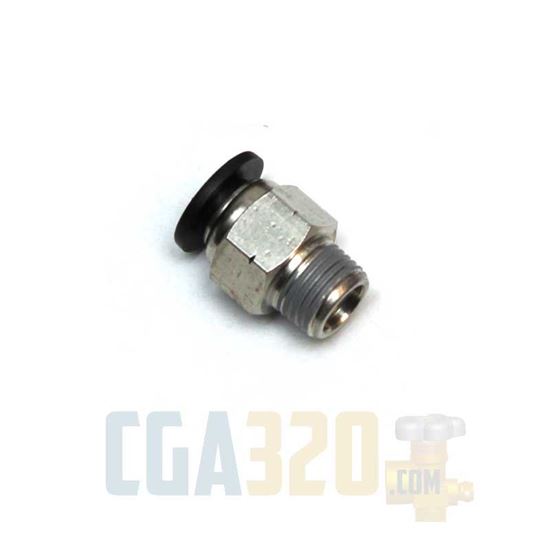
For the Dwyer flow meter all that you need is two of these and a check valve.

It's a 1/8 NPT to 3/16 ID hose barb. Be sue to use Teflon tape as you would with any pipe thread. I bought mine on Amazon. I have small clamps on the hose bard ends.

And like @Immortal1 said I use the valve on the flow meter to adjust flow and keep the needle valve open more than it needs to be.

1 8 NPT 3 16ID Hose barb.webp
 
For the Dwyer flow meter all that you need is two of these and a check valve.

It's a 1/8 NPT to 3/16 ID hose barb. Be sue to use Teflon tape as you would with any pipe thread. I bought mine on Amazon. I have small clamps on the hose bard ends.

And like @Immortal1 said I use the valve on the flow meter to adjust flow and keep the needle valve open more than it needs to be.

View attachment 1451
Thank you , I found these right by me

Are your clamps little gear clamps ??

Thanks
Casey
 
Thank you , I found these right by me

Are your clamps little gear clamps ??

Thanks
Casey
Yep little worm gear clamps. Simple works great.
 
For the Dwyer flow meter all that you need is two of these and a check valve.

It's a 1/8 NPT to 3/16 ID hose barb. Be sue to use Teflon tape as you would with any pipe thread. I bought mine on Amazon. I have small clamps on the hose bard ends.

And like @Immortal1 said I use the valve on the flow meter to adjust flow and keep the needle valve open more than it needs to be.

View attachment 1451
The flow meters just take two threaded ends for in and output?

Don't make it so easy for me to spend more money 😂
 
The flow meters just take two threaded ends for in and output?

Don't make it so easy for me to spend more money 😂
image.webp
I’m not sure these worm gear clamps will be correct . The smallest size they had may be too big . The co2 tubing fits on super tight !

We’ll eventually I’ll get this worked out just creeping along here as to make a nice plan .
 
For awhile, there were many hobbiest getting high precision flow meters off ebay (me included). One of the chuckles from a supplier - "I have had these for sale for like a year then suddenly everybody wants one and sold all 20-30".
The biggest issue with ebay is having to do the research to figure out if the flowmeter that is for sale has the correct range for our needs.
Here is a pic of some of the various ebay flow meters. The one on the far left is what I have.
xOEd98G.jpg
 
Are Dwyer meters generally considered the go to or are there other just as reliable options?
Here's the thing you need to keep in mind. In the scheme of flow meters we are measuring a VERY small amount of flow, typically in cubic centimeters per minute, so getting a meter with the right scale is key. Most tanks I have seen run from about 10 cc/min to 80 cc/min depending on the size of the tank.

When you start looking up flow meters you will see lots of them with different scales, but look closely at what you are buying. For instance you will see flow meters with a SCFH scale. That stands for Standard Cubic Feet per Hour. That is wildly more than we are measuring. One SCFH unit is equal to 472 cc/min.

Just saying when people start exploring flow meters the scale is VERY important.

There are two Dwyer's that are typically used.

The Dwyer RMA-151-SSV measures from 5-50 cc/min. The Dwyer RMA-150-SSV measures from 10-100 cc/min.

Which you use depends on the size of your tank. In my 120G I use the RMA-151-SSV, and my flow rate is about 45 cc/min. In retrospect I probably should have got the RMA-150-SSV, as I am near the limit of the 151's range. But when I bought mine there was no one using these, so I had no frame of reference for how much CO2 I would be using.

And like @Immortal1 showed above, there are lots of other brand flow meters out there as well. But again you have to be VERY careful that you understand what you are buying. Some of them are high end and are very costly, but can be found cheaper on a secondary market (ebay). With the Dwyer's they can be purchased new at a reasonable cost, the scale is known to be good, and that's why you see them more often.

I hope that helps.
 
Last edited:
Here's the thing you need to keep in mind. In the scheme of flow meters we are measuring a VERY small amount of flow, typically in cubic centimeters per minute, so getting a meter with the right scale is key. Most tanks I have seen run from about 10 cc/min to 80 cc/min depending on the size of the tank.

When you start looking up flow meters you will see lots of them with different scales, but look closely at what you are buying. For instance you will see flow meters with a SCFH scale. That stands for Standard Cubic Feet per Hour. That is wildly more than we are measuring. One SCFH unit is equal to 472 cc/min.

Just saying when people start exploring flow meters the scale is VERY important.

There are two Dwyer's that are typically used.

The Dwyer RMA-151-SSV measures from 5-50 cc/min. The Dwyer RMA-150-SSV measures from 10-100 cc/min.

Which you use depends on the size of your tank. In my 120G I use the RMA-151-SSV, and my flow rate is about 45 cc/min. In retrospect I probably should have got the RMA-150-SSV, as I am near the limit of the 151's range. But when I bought mine there was no one using these, so I had no frame of reference for how much CO2 I would be using.

And like @Immortal1 showed above, there are lots of other brand flow meters out there as well. But again you have to be VERY careful that you understand what you are buying. Some of them are high end and are very costly, but can be found cheaper on a secondary market (ebay). With the Dwyer's they can be purchased new at a reasonable cost, the scale is known to be good, and that's why you see them more often.

I hope that helps.
Helps a lot, probably stick with the Dwyer until I'm more familiar with what I'm working with or have more time to look into the scales on different models (that's next year Ryan's problem 👉😎👉)

I feel like if you're using an RMA-151-SSV on a 120gal with heavy agitation and periodic airstone bursts, I should be more than okay with it on a 75gal with heavy agitation.

@PBITAWA --does it have any mounting options or are we gonna have to get a little creative there?
 
@PBITAWA --does it have any mounting options or are we gonna have to get a little creative there?
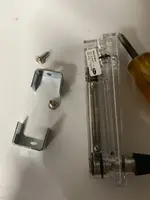
Yep get creative. Mine is mounted just inside my stand doors. So I can open the door and get a glance at any time.

It's not very elegant and hard to explain, but it works. I screwed it to a piece of wood, then mounted the wood inside the stand. Like I said I placed it so it's right behind the door and very visible when you open it.

Hope that helps.
20180729_172017.webp
20180729_151411.webp
 
Helps a lot, probably stick with the Dwyer until I'm more familiar with what I'm working with or have more time to look into the scales on different models (that's next year Ryan's problem 👉😎👉)

I feel like if you're using an RMA-151-SSV on a 120gal with heavy agitation and periodic airstone bursts, I should be more than okay with it on a 75gal with heavy agitation.

@PBITAWA --does it have any mounting options or are we gonna have to get a little creative there?
I ordered mine directly from the company . They provided mounting brackets although they might not work for all locations .

I’ll get some pictures of them and add to this thread. They are surface mount for directly behind the unit , then attach to the unit via side screws .image.webpimage.webp
 
Last edited:
@ immortal1 what do you think ?
I would guess either the DIYCO2Regulator brand or the Jegs brand would work just fine.
Me being a car guy, I am a little surprised you sourced something on Jegs site for our aquariums.
As for fitting, 1/8" pipe thread should be universal. They both appear to have thread sealant already on the NPT portion.
Kinda upset I didn't already think to use these...
 
Well diy co2 had only one in stock . Then I went to Amazon and saw plenty of random brands . Then I saw Jegs had one listed as for use with co2 and 1/4”/6mm tube so I went crazy 😜

The shipping cost put it way over budget lol but no one was looking so I pressed send .

Also the yellow matched my solenoid 🥹
 
Which you use depends on the size of your tank. In my 120G I use the RMA-151-SSV, and my flow rate is about 45 cc/min. In retrospect I probably should have got the RMA-150-SSV, as I am near the limit of the 151's range. But when I bought mine there was no one using these, so I had no frame of reference for how much CO2 I would be using.
I've seen a lot of people saying they run 20-30 cc/min on a 75 gallon, but I run 10 cc/min and that's about all I can get without the fish gasping by the end of the photoperiod. At 15 cc/min they start gasping fairly quickly. I think my aeration should be alright, I have good flow and run a surface skimmer 24/7. I have the RMA-151-SSV so I don't know what is so different about my setup that it seems to sip CO2.
 
I've seen a lot of people saying they run 20-30 cc/min on a 75 gallon, but I run 10 cc/min and that's about all I can get without the fish gasping by the end of the photoperiod. At 15 cc/min they start gasping fairly quickly. I think my aeration should be alright, I have good flow and run a surface skimmer 24/7. I have the RMA-151-SSV so I don't know what is so different about my setup that it seems to sip CO2.

If I were you, I would try to set aside a day to monitor your CO2 throughout the day. Time it with like… laundry day or something. Start by figuring out what your baseline pH is after letting your tank water sit out for at least a couple of days. Then, check your pH every half hour or so. If it doesn’t hit a plateau and stabilize there throughout the day, you need more surface agitation. Realistically, you should be getting your 1+ pt drop by the time the lights come on, and maintaining that level throughout the day. Here is a pH chart from my tank..


Capture.PNG

From the limited info here, I’m guessing that you’re not offgassing as much as you think. I'm saying this because of the bolded part of your statement above...

Check out this article from 2hr Aquarist for some more insight…

Surface agitation in CO2 injected planted tanks - The 2Hr Aquarist
 

Top 10 Trending Threads

Back
Top