Welcome to ScapeCrunch

We are ScapeCrunch, the place where planted aquarium hobbyists come to build relationships and support each other. When you're tired of doom scrolling, you've found your home here.

Co2 detector

Joined
Feb 1, 2023
Messages
1,330
Reaction score
2,028
Location
SC
I am not as technically inclined as some members on here, but for those who are, answer me this. Could you not attach tubing to the end of this device where the sensor/probe is and run it into the aquarium in a similar fashion in which the drop checker works? Instead of waiting for a color change you could get an actual PPM reading? Please let me know if I am completely off base and why, or if this could possibly be a rudimentary way of getting more accurate co2 concentrations at a fraction of the cost of some high end equipment designed for submerged readings.


 
These sensors use NDIR to measure co2 in air, they aren't intended to run at 100% humidity which would be present in the tube and the condensation that would occur would distort the readings and possibly foul the sensor.

Commercial sensors for co2 under water still use the same sensors, but they have a membrane that allows gas transfer without moisture transfer which keeps the sensors accurate. They also have the sensors close to the membrane as a long tube would mean hours to get to equilibrium to get a real reading.
 
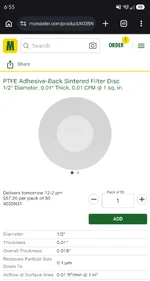
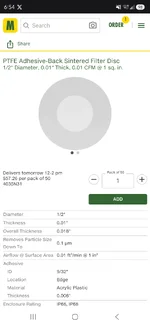
I was thinking more about this last night and one of those NDIR sensors along with a small resistive heater to prevent condensation in a small housing sealed with a ptfe filter would probably work.

Screenshot_20260720_065603_Chrome.webp

I have too many projects on the go right now, but maybe down the line might be worth a try or if someone else wants to pick it up, happy to support where I can.
 

Attachments

  • 47175.webp
    47175.webp
    59.3 KB · Views: 3
I was thinking more about this last night and one of those NDIR sensors along with a small resistive heater to prevent condensation in a small housing sealed with a ptfe filter would probably work.

View attachment 18654

I have too many projects on the go right now, but maybe down the line might be worth a try or if someone else wants to pick it up, happy to support where I can.
I like the idea, this may be a future project 😍
The amount of trial and error would be huge though and finding a way to reliably calibrate would be tough without buying an expensive meter.
 
I like the idea, this may be a future project 😍
The amount of trial and error would be huge though and finding a way to reliably calibrate would be tough without buying an expensive meter.
I didn’t think it was that simple. But if it was worth playing with to have something relatively reliable instead of thousands of dollars worth of equipment, I figured I’d float the idea.
 
I didn’t think it was that simple. But if it was worth playing with to have something relatively reliable instead of thousands of dollars worth of equipment, I figured I’d float the idea.
The idea is very good. Unfortunately (and I quote from the link you provided): "The CO2 meter provides precise readings of carbon dioxide levels up to 9999ppm". The 10k ppm in air comes down to roughly 14 ppm in water...
 
The idea is very good. Unfortunately (and I quote from the link you provided): "The CO2 meter provides precise readings of carbon dioxide levels up to 9999ppm". The 10k ppm in air comes down to roughly 14 ppm in water...
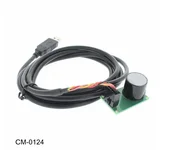
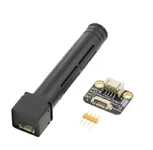
Yes, the cheaper sensors are low range, we'd need a wider range sensor for our purposes which unfortunately drives up the cost significantly. These are mostly used for CO2 incubators, and other industrial applications. This one looks ideal, but priced at $281 CAD. 50k ppm range. Expensive to prototype with, especially if you spring a leak in the housing.
1784573794086.webp

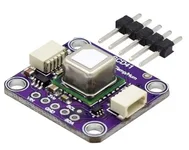
This one has the same range, only $89 CAD, but the physical footprint is huge so that means larger air pocket, and much slower readings.
1784573872888.webp
 

Top 10 Trending Threads

Back
Top