We are ScapeCrunch, the place where planted aquarium hobbyists come to build relationships and support each other. When you're tired of doom scrolling, you've found your home here.
It can be imported under the anubias species blanket, since anubias is already in the market there, could try suggesting it to local importers. Many south east asia funds produce it.
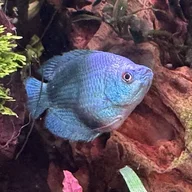
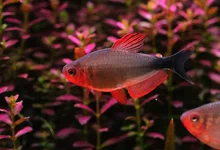
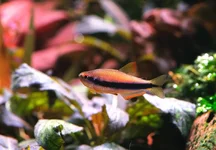
Imperial lapis tetras,
Not sure if these are hyphessobrycon cyanotaenia or melanostichos
This is the amount of build-up after a couple of weeks. Its not visible in zoomed out shots, but the dots are visible in macro photographs, so I will scrape the glass before the macro shots. If not it can appear as green dots like below.
I don't think every well planted tank reaches this stable point easily, though the few folks who have stable systems make it seem like it is the default state, that every well planted tank becomes automatically algae free - which is an extremely disingenuous assertion. Hence my long thesis on how algae in different tank types should be handled from a multi-pronged approach from having a leaner water column to light control depending on the style of tank and what difficulties the tank is currently facing:
Key steps in preventing algae in an aquarium. Discussion of the role of CO2, light, nutrients and biological filtration in managing algae in a planted tank.
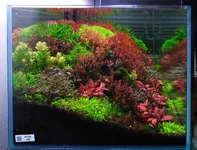
It's really quite incredible how little algae is on the glass after 2 weeks at that light level. Thank you for linking this great article. There are some good tips and tricks in there!
Fish getting fatter day by day ha
Slightly worried about the aggression between the fish, saw a couple of torn fins Hmm.
Thinking about restarting a series of parameter experiments with shrimp culls. Wondering if this would actually produce data that changes people's minds
You gotta* grow a tank in with your usual method and then stop dosing K entirely and document what an actual potassium deficiency looks like over multiple species.
*I mean I think it would be neat if you did, you don't have to obviously
You gotta* grow a tank in with your usual method and then stop dosing K entirely and document what an actual potassium deficiency looks like over multiple species.
*I mean I think it would be neat if you did, you don't have to obviously
haa this would actually be useful, but its so troublesome to isolate K entirely. Even my tap water has some K so I'd have to use RO for that specific tank. Hmm and if aquasoil contained some K, it might take really quite some time before I can document symptoms.
I forgot you aren't already using RO. I also have super soft tap water with a few ppm of K. Depending on how much K you are getting in your water, you may be able to push the rest of the tank hard and it would induce a K deficiency in species that are sensitive to it. Being able to identify a few indicator species would also be useful. But yeah, it's a deceptively complicated problem to sort out.
This site uses cookies to help personalise content, tailor your experience and to keep you logged in if you register.
By continuing to use this site, you are consenting to our use of cookies.