
Welcome to ScapeCrunch
We are ScapeCrunch, the place where planted aquarium hobbyists come to build relationships and support each other. When you're tired of doom scrolling, you've found your home here.
Social Feed

I Donated 2026
Expert in Residence
MOTM Winner
In last couple of years I was testing aquasoil compositions (amongst other things) and wanted to grow in tanks as quickly as possible. This is the method I used which could be helpful for folks starting new tanks or for folks wanting to solve problems (principally algae as its the main thing that hits new tanks) quickly. Its an approach that can work for folks with more time on their hands and wonder if they can "massage" out results more quickly.
These are the tanks that I grew in less than 8 weeks, with the fastest being just 4 weeks. These tanks have multiple usages - product testing is one, but they are also used for images for articles, marketing etc. Mainly plant focused as I don't have much time to sit down and craft hardscape (kinda miss doing this).


Starting out:
I started all tanks with aquasoils, these are typically soils that leech a lot of ammonia - 10+ppm on the first couple of days. On the first day fill the tank, which has aquasoil but no plants, then squeeze old filter media directly into the tank. Let the filter run and circulate for 1 day. Then do 100% water change and remove excess detritus from aquasoil surface. Then I'll start planting. The only plants I would avoid planting immediately are particularly sensitive species such as Hygrophila chai, certain Erios and UG.
While more density is nice, I try to plant at least 50% of the substrate if I don't have enough of the types of plants that I want on hand. However, i propagate these quickly once the opportunity arises, to fill the substrate area quickly. I think having a portion of easier to grow species that fill out space helps to stabilize the tank rather than a tank with just 100% picky plants.
Starting parameters:
CO2 injected and calibrated to at least 30+ppm. While many species can grow at lower levels, the growth boost at higher CO2 levels bring faster results and allow plants to outgrow algae problems (that will come).
Start out with very high light 150-200 umols PAR, 7 to 8 hours light. Only strategy is to outgrow algae - so high light is used to speed up growth speeds.
Fertilize from day 1 - new plants that have no established root systems can draw from water column.
I use tap water, but I remineralize to 5 dGH. My KH is between 0 to 1.
Routine:
I do 100% water changes (or as close to) every day for the first 8 or 9 days. Then drop to twice a week for the next 2 to 3 weeks. After a month or so, I can usually drop to weekly water changes. After doing 100% water change, I'll demineralize and re-dose fertilizers.
This removes algae spores, and seems to prevent melting, exposure to air also gives plants a boost.
Siphon away detritus and dead leaves/melting growth if any. Siphon away algae if possible.
If there is present algae that looks serious, I will dose algicide before the 100% water change. As I am doing a very large water change, I can afford to dose a heavier dosage of algicide - this works for algicides that work on contact.
Cut away leaves that are badly affected by algae. Replant new growth if there is enough new growth to replace the plant. This usually only happens on week 2 or week 3. Cutting away deteriorating leaves that attracts algae is a major factor I think that newer folks ignore. Cutting them away and allowing the plant to grow new adapted leaves is a faster way to get an algae-free environment.
Melt seems to be something that spreads (hormonal signaling ? or just pathogenic microbes spreading?) so if there is melt or deteriorating leaves I'll remove them. These are the action points that are time consuming but I think makes an impact in quickening the rate that the tank settles in.
Applying the Routine to established tanks:
This is where I realize that when I face a tank that has very bad algae issues, I can do the same routine as above as a way to quickly resolve the issues. The difference is that in mature tanks, a lot of actions taken involve replanting new shoots, and throwing away large portions of old/deteriorated growth. In matured tanks, there is also the angle of clearing away old substrate detritus, and adding new aquasoil/root tabs if I was dependent on substrate enrichment.
I wrote an article sometime back on this approach, but I may have missed out some points here while elaborating on some others

 www.2hraquarist.com
These are the tanks that I grew in less than 8 weeks, with the fastest being just 4 weeks. These tanks have multiple usages - product testing is one, but they are also used for images for articles, marketing etc. Mainly plant focused as I don't have much time to sit down and craft hardscape (kinda miss doing this).
Starting out:
I started all tanks with aquasoils, these are typically soils that leech a lot of ammonia - 10+ppm on the first couple of days. On the first day fill the tank, which has aquasoil but no plants, then squeeze old filter media directly into the tank. Let the filter run and circulate for 1 day. Then do 100% water change and remove excess detritus from aquasoil surface. Then I'll start planting. The only plants I would avoid planting immediately are particularly sensitive species such as Hygrophila chai, certain Erios and UG.
While more density is nice, I try to plant at least 50% of the substrate if I don't have enough of the types of plants that I want on hand. However, i propagate these quickly once the opportunity arises, to fill the substrate area quickly. I think having a portion of easier to grow species that fill out space helps to stabilize the tank rather than a tank with just 100% picky plants.
Starting parameters:
CO2 injected and calibrated to at least 30+ppm. While many species can grow at lower levels, the growth boost at higher CO2 levels bring faster results and allow plants to outgrow algae problems (that will come).
Start out with very high light 150-200 umols PAR, 7 to 8 hours light. Only strategy is to outgrow algae - so high light is used to speed up growth speeds.
Fertilize from day 1 - new plants that have no established root systems can draw from water column.
I use tap water, but I remineralize to 5 dGH. My KH is between 0 to 1.
Routine:
I do 100% water changes (or as close to) every day for the first 8 or 9 days. Then drop to twice a week for the next 2 to 3 weeks. After a month or so, I can usually drop to weekly water changes. After doing 100% water change, I'll demineralize and re-dose fertilizers.
This removes algae spores, and seems to prevent melting, exposure to air also gives plants a boost.
Siphon away detritus and dead leaves/melting growth if any. Siphon away algae if possible.
If there is present algae that looks serious, I will dose algicide before the 100% water change. As I am doing a very large water change, I can afford to dose a heavier dosage of algicide - this works for algicides that work on contact.
Cut away leaves that are badly affected by algae. Replant new growth if there is enough new growth to replace the plant. This usually only happens on week 2 or week 3. Cutting away deteriorating leaves that attracts algae is a major factor I think that newer folks ignore. Cutting them away and allowing the plant to grow new adapted leaves is a faster way to get an algae-free environment.
Melt seems to be something that spreads (hormonal signaling ? or just pathogenic microbes spreading?) so if there is melt or deteriorating leaves I'll remove them. These are the action points that are time consuming but I think makes an impact in quickening the rate that the tank settles in.
Applying the Routine to established tanks:
This is where I realize that when I face a tank that has very bad algae issues, I can do the same routine as above as a way to quickly resolve the issues. The difference is that in mature tanks, a lot of actions taken involve replanting new shoots, and throwing away large portions of old/deteriorated growth. In matured tanks, there is also the angle of clearing away old substrate detritus, and adding new aquasoil/root tabs if I was dependent on substrate enrichment.
I wrote an article sometime back on this approach, but I may have missed out some points here while elaborating on some others
How to stabilize a new planted tank
New planted aquariums that are not yet biologically matured present a volatile environment for plants and inhabitants. Accelerate the biological maturity of the tank by adding seed bacteria from matured filters or substrate. More large water changes remove organic detritus and algae spores.
www.2hraquarist.com
10 Replies
·
1894 views


Supporting
I Donated 2026
AquaGirls
I managed to acquire some Eriocaulon ratnagiricum. It should arrive early next week. I am pulling my 60U out of its extended dark start this weekend, and figured it would be an intriguing addition at the base of the large stones. (Not my image, this was from the seller):
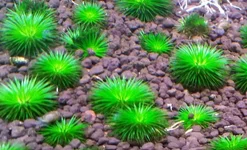
I did read Dennis Wong's 'how to grow' for this species, which was very helpful, and will add some APT Jazz in the areas that I plant it as it seems it wants a fairly rich soil. Tank is 0KH, remineralized RO with APT Sky initially to dGH 6 when I initiated the dark start.
However, despite being sold as 'inert', the Sensei stone I acquired from AFA is most definitely not proving to be entirely inert. I haven't drained the tank yet, but will this weekend when I start planting, but this morning KH is holding at 0, but dGH is currently sitting at 10! There is a vein of quartz-like crystal running through the largest stone, presumably calcite, as it is driving the GH up, and leaving KH unaffected. Calcite reportedly can run in some Magura/Sensei stone. I am already reconsidering the type of shrimp for this tank based on the higher GH level, but I am wondering if anyone has experience with this plant in a tank with higher GH? This Erio is KH sensitive, and the tank is ok there, but I am wondering if the excess calcium in the water column, pushing that higher GH, might be less than ideal for this Eriocaulon?
I did consider sealing the vein of calcite with cyanoacrylate glue, and covering it in riccardia to maybe slow the leaching/rise in GH, but I think most of the rocks have at least some of this material running through them to varying degree, and I am expecting that the leaching could increase once the CO2 is running, and the pH drops. Regardless, if anyone has experience growing this lovely little spiky Erio, please share!
I did read Dennis Wong's 'how to grow' for this species, which was very helpful, and will add some APT Jazz in the areas that I plant it as it seems it wants a fairly rich soil. Tank is 0KH, remineralized RO with APT Sky initially to dGH 6 when I initiated the dark start.
However, despite being sold as 'inert', the Sensei stone I acquired from AFA is most definitely not proving to be entirely inert. I haven't drained the tank yet, but will this weekend when I start planting, but this morning KH is holding at 0, but dGH is currently sitting at 10! There is a vein of quartz-like crystal running through the largest stone, presumably calcite, as it is driving the GH up, and leaving KH unaffected. Calcite reportedly can run in some Magura/Sensei stone. I am already reconsidering the type of shrimp for this tank based on the higher GH level, but I am wondering if anyone has experience with this plant in a tank with higher GH? This Erio is KH sensitive, and the tank is ok there, but I am wondering if the excess calcium in the water column, pushing that higher GH, might be less than ideal for this Eriocaulon?
I did consider sealing the vein of calcite with cyanoacrylate glue, and covering it in riccardia to maybe slow the leaching/rise in GH, but I think most of the rocks have at least some of this material running through them to varying degree, and I am expecting that the leaching could increase once the CO2 is running, and the pH drops. Regardless, if anyone has experience growing this lovely little spiky Erio, please share!
0 Replies
·
6 views

Staff member
I Donated 2026
Founding Member
Hello Welcome, Proff01
Welcome to ScapeCrunch, @Proff01!
We would love to get to know you. Please tell us about yourself. What tank do you have?
We would love to get to know you. Please tell us about yourself. What tank do you have?
0 Replies
·
3 views
Staff member
I Donated 2026
Founding Member
This is the future home for the announcements when someone obtains an achievement badge. Let the games begin!
2047 Replies
·
72444 views

Supporting
I Donated 2026
Rockstar
Journal Attempting a True Dutch
This tank was a Dutch-ish tank before we moved 2 months ago. This was one of its last pictures, very overgrown I know.

This time I want to make it a true Dutch, so anyone can chime in and help me.
After we moved, it ran low-tech with just a few tissue cultures until this week when I finally had time and materials to finish setting it up. This is what it looks like now:

I know there’s some bubbles showing in the vinyl cling. I’m having trouble reaching back there to smooth it out. I’ll have to think about how to fix that, although when the plants grow in it may not be visible anyway. I did read that you can have 1 rock in a Dutch scape, so I kept one. I may put Monte Carlo on it again, I haven’t decided.
So, details…
Tank: UNS 90U, 68 gallons
Light: Week Aqua P900 Pro, current settings R 40%, G 51%, B 20%, UV 0, Fan 100, Power 51%.
8 hours of light with 30 min ramp up/down
Par—no idea
Filtration: Fluval Fx4, currently running at 75%. Any higher blows the fish around. I expect to be able to increase it when the plants are grown in.
CO2: Yugang stainless steel reactor, 370 mm long, working really well. I had to turn down the CO2 a bit today because the drop was more than I expected (from degassed 7.4 to 5.9). I’ve already changed the end cap to the medium setting, but I think I’m just going to make further adjustments with the regulator. Call it laziness, but since there aren’t any double taps available for the Fx4 tubing that’s going to be easier for me. Anyway, I really like it. It’s completely silent and does its job well.
Substrate: Aqua Natural Galaxy sand, with a few Aquarium Coop root tabs.
Other: Oase CrystalSkim 350 skimmer, Kactoily 6-in-1 water quality monitor
Fertilizer: Until today I’ve just been using Easy Green. Today I installed the Chihiro’s dosing system with PPS-Pro, 6 ml macros and 3 ml micros daily. On water change day, I’ll add another 2 ml macros. I’m currently changing 20% of the water once a week. I’ll increase if necessary.
Parameters: Ammonia and Nitrite 0, Nitrate 10 ppm, gH 6, kH 2, TDS 222, 70-74 F
Plants (mostly from @Burr740 thanks!):
Leopard Val
Echinodorus Aflame
Hydrocotyle Tripartita (coming)
Penthorum Sedioides
Crypt Wendtii Sindoor
Lobelia cardinalis mini
Bacopa colorata
Rotala (? back left corner)
Limnophila wilsonii
Nymphae Peru Puerto Maldonade
Rotala macrandra Kochi
Nymphoides Taiwan
I’m not sure I like the Leopard Val in there. Should I put it in my 125 gallon instead, and move the Limnophila wilsonii to that spot?
Fish:
1 Honey Flame Gourami
4 Ember tetras
8 Otos
2 Pygmy sunfish
4 Red neon blue-eyed rainbowfish
9 Pygmy Cory catfish
9 male Lime Green Endlers
1 Leopard Danio (last of a group)
A few random Amano and Neocaridina shrimp and snails
The fish list will change as I get more tanks set up. I would like to end up with just the gourami, Otos, Rainbowfish (but more of them), and Pygmy Cories.
Well, that’s a start. Thanks for reading!
This time I want to make it a true Dutch, so anyone can chime in and help me.
After we moved, it ran low-tech with just a few tissue cultures until this week when I finally had time and materials to finish setting it up. This is what it looks like now:
I know there’s some bubbles showing in the vinyl cling. I’m having trouble reaching back there to smooth it out. I’ll have to think about how to fix that, although when the plants grow in it may not be visible anyway. I did read that you can have 1 rock in a Dutch scape, so I kept one. I may put Monte Carlo on it again, I haven’t decided.
So, details…
Tank: UNS 90U, 68 gallons
Light: Week Aqua P900 Pro, current settings R 40%, G 51%, B 20%, UV 0, Fan 100, Power 51%.
8 hours of light with 30 min ramp up/down
Par—no idea
Filtration: Fluval Fx4, currently running at 75%. Any higher blows the fish around. I expect to be able to increase it when the plants are grown in.
CO2: Yugang stainless steel reactor, 370 mm long, working really well. I had to turn down the CO2 a bit today because the drop was more than I expected (from degassed 7.4 to 5.9). I’ve already changed the end cap to the medium setting, but I think I’m just going to make further adjustments with the regulator. Call it laziness, but since there aren’t any double taps available for the Fx4 tubing that’s going to be easier for me. Anyway, I really like it. It’s completely silent and does its job well.
Substrate: Aqua Natural Galaxy sand, with a few Aquarium Coop root tabs.
Other: Oase CrystalSkim 350 skimmer, Kactoily 6-in-1 water quality monitor
Fertilizer: Until today I’ve just been using Easy Green. Today I installed the Chihiro’s dosing system with PPS-Pro, 6 ml macros and 3 ml micros daily. On water change day, I’ll add another 2 ml macros. I’m currently changing 20% of the water once a week. I’ll increase if necessary.
Parameters: Ammonia and Nitrite 0, Nitrate 10 ppm, gH 6, kH 2, TDS 222, 70-74 F
Plants (mostly from @Burr740 thanks!):
Leopard Val
Echinodorus Aflame
Hydrocotyle Tripartita (coming)
Penthorum Sedioides
Crypt Wendtii Sindoor
Lobelia cardinalis mini
Bacopa colorata
Rotala (? back left corner)
Limnophila wilsonii
Nymphae Peru Puerto Maldonade
Rotala macrandra Kochi
Nymphoides Taiwan
I’m not sure I like the Leopard Val in there. Should I put it in my 125 gallon instead, and move the Limnophila wilsonii to that spot?
Fish:
1 Honey Flame Gourami
4 Ember tetras
8 Otos
2 Pygmy sunfish
4 Red neon blue-eyed rainbowfish
9 Pygmy Cory catfish
9 male Lime Green Endlers
1 Leopard Danio (last of a group)
A few random Amano and Neocaridina shrimp and snails
The fish list will change as I get more tanks set up. I would like to end up with just the gourami, Otos, Rainbowfish (but more of them), and Pygmy Cories.
Well, that’s a start. Thanks for reading!
289 Replies
·
29968 views

This is going to be a weird doubt
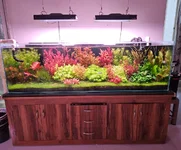
I don’t keep surface agitation very high in my tank , mainly because it has an overflow & I find the returns pointed downwards keep the substrate much cleaner than the returns pointed upwards
I have 2 returns
One on the front left & other other on the back right , both pointed downwards,
This dosent let any debris settle & pushes everything into the overflow
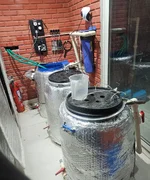
The overflow is connected to a DIY sump , kept outside the house , which is basically 3 HDPE barrels (120 ltrs /30 gallons each)
The way the sump is designed ., there is hardly any surface movement in the sump too , all the outlets of the barrels are pushed deep down the next barrel & split in such a way that even tho 6500 ltrs per hour (1700gph) is being pumped through the barrels there is absolutely no splashing at all
For oxygenation there is a large Air pump with 4 outlets in the 2nd barrel ( the bio barrel) which is on a timer & switches on after CO2 & remains on till Co2 starts
CO2 is supplied by 2 cerges type reactors , one on each return line , installed after the 3rd barrel)
I was wondering if anyone has ever experimented with injecting air in the said reactor rather than co 2, if Co2 can be dissolved I am sure so can air
All I have to do is drill an extra hole in reactor, connect a tubing to an air pump & start the same on a timer
This way I can keep the tank oxygenated probably much more that what surface agitation would do
I don’t keep surface agitation very high in my tank , mainly because it has an overflow & I find the returns pointed downwards keep the substrate much cleaner than the returns pointed upwards
I have 2 returns
One on the front left & other other on the back right , both pointed downwards,
This dosent let any debris settle & pushes everything into the overflow
The overflow is connected to a DIY sump , kept outside the house , which is basically 3 HDPE barrels (120 ltrs /30 gallons each)
The way the sump is designed ., there is hardly any surface movement in the sump too , all the outlets of the barrels are pushed deep down the next barrel & split in such a way that even tho 6500 ltrs per hour (1700gph) is being pumped through the barrels there is absolutely no splashing at all
For oxygenation there is a large Air pump with 4 outlets in the 2nd barrel ( the bio barrel) which is on a timer & switches on after CO2 & remains on till Co2 starts
CO2 is supplied by 2 cerges type reactors , one on each return line , installed after the 3rd barrel)
I was wondering if anyone has ever experimented with injecting air in the said reactor rather than co 2, if Co2 can be dissolved I am sure so can air
All I have to do is drill an extra hole in reactor, connect a tubing to an air pump & start the same on a timer
This way I can keep the tank oxygenated probably much more that what surface agitation would do
1 Replies
·
40 views
Staff member
I Donated 2026
Founding Member
Hello Welcome, mariagrace010
Welcome to ScapeCrunch, @mariagrace010!
We would love to get to know you. Please tell us about yourself. What tank do you have?
We would love to get to know you. Please tell us about yourself. What tank do you have?
0 Replies
·
7 views

Supporting
I Donated 2026
Rockstar
I hadn't seen it mentioned by others that attended Aquashella, but if you hadn't already heard about it or seen it in Aquashella videos, ADA has come out with Amazonia Pro. It's not a replacement for Version 2, but an addition. It is essentially Version 2 on steroids with higher nutrients and of course the negative side effect of potentially higher initial ammonia leaching and, if your not prepared and skilled, more chance of algae. That's even from the mouth of Homma-san himself. The scaping competitors were using it in the competition and AFA was selling 9l bags at the show. They said it would be available on the website within the next couple weeks.
22 Replies
·
332 views

Rockstar
Journal 22 gallon long bookshelf
Time to start a new thread.
I’ll fill in some details later, but I’m working on the hardscape now. Any and all criticism is appreciated. The vision is nothing more, and nothing less, than something appealing to the eye.
90cm x 30cm x 30cm Lifegard Aquatics ultra clear bookshelf tank. Buce and anubias on the hardscape, stems towards the back and center, mid to front carpet with some changes in shade and texture down to a flat grade on the right side of the tank.
Lily pipe inlet and skimmer will be in the back left corner with the outflow in the front left to hopefully achieve circular flow. I’ll be running an in-line diffuser. Light will be the P600 Pro that I regrettably did not upside to 900. Oh well. I’ll mount it high and hopefully it’ll have enough spread.
I have some dragon stone and red lava rock rubble I’ll use at the base to blend into the substrate, as well as some stratum I may or may not cap with.


I’ll fill in some details later, but I’m working on the hardscape now. Any and all criticism is appreciated. The vision is nothing more, and nothing less, than something appealing to the eye.
90cm x 30cm x 30cm Lifegard Aquatics ultra clear bookshelf tank. Buce and anubias on the hardscape, stems towards the back and center, mid to front carpet with some changes in shade and texture down to a flat grade on the right side of the tank.
Lily pipe inlet and skimmer will be in the back left corner with the outflow in the front left to hopefully achieve circular flow. I’ll be running an in-line diffuser. Light will be the P600 Pro that I regrettably did not upside to 900. Oh well. I’ll mount it high and hopefully it’ll have enough spread.
I have some dragon stone and red lava rock rubble I’ll use at the base to blend into the substrate, as well as some stratum I may or may not cap with.
281 Replies
·
32264 views
Staff member
I Donated 2026
Founding Member
Hello Welcome, Rachel Smith
Welcome to ScapeCrunch, @Rachel Smith!
We would love to get to know you. Please tell us about yourself. What tank do you have?
We would love to get to know you. Please tell us about yourself. What tank do you have?
1 Replies
·
38 views
I Donated 2026
Expert in Residence
MOTM Winner
I have always liked Rotala florida as plant due to its strongly colored leaves, but realized that I haven't actually aquascaped much with it - meaning to integrate it as part of a layout and not just growing a bunch of it in farm/collector style tank. Using plants in a layout in tighter bunches, and in competition with surrounding plants/hardscape is much harder than growing it farm style in a single patch - it also means be able to shape/trim the bushes to match the overall curves of the layout.
Back in 2016 or so when I first received Rotala florida samples from north america, I could only grow it in sparser bunches. It looked nice in macro photographs but I could not envision using it an bush that would show off well as part of a layout unless I can grow it much denser. In the recent years, there were two main discoveries that I found in my experimentation, the first is that it grows better in moderate GH (5 dGH+) compared to super soft water (say <3dGH), and that it grew better in certain soil mixes (I experimented with different garden soil mixes when engineering the composition of APT Feast). Eventually I integrated some of the soil data into APT Feast's composition, and paired with the higher power lights readily available today, I find that I could finally grow the plant the way I envisioned as part of overall layout. I could prune it dense, as the base stems were healthy enough to sprout dense side shoots after trimming - and the secondary/tertiary shoot tips were as fully colored and sized similar to a primary shoot tip that hasn't been subjected to topping yet.
As a midground stem, it works very well due to its slower growth rate vs other colored stem plants.
Against the deep purple of Rotala florida, I found that Golden white clouds worked quite well. So now they are the main inhabitants of the tank.
Tank this week (25/6/2025)


Tank started out like this:

A week or 2 after initial planting (5/5/2025). I reused old aquasoil from the previous scape, so I planted all plants up front rather than waiting more time for the tank to stabilize, with the idea that I could out-grow any algae issues. Initially wanted to add H. Chai but it really didn't fit the overall color scheme, and the bushes by the side were too invasive to be compatible with having a chai patch I think.
Since it was going to contain Rotala florida, I thought I might as well throw in other high demand troublesome species such as the Red Eriocaulon quinguangulare, blood vomit. I settled on Rotala tulunadensis for the background as I wanted something dense and shapeable.
Tank specs:
60x36x36cm
Filter: Oase biomaster 250, all sponge media
CO2 injected through inline atomizer
Substrate: APT Feast
Water column: APT Sky to raise GH to 5dGH, 2ml of APTe per day.

Light distance. Interestingly, not crazy high PAR - just around 200-250 umols PAR at the substrate level.

Trimming and shaping: Most bushes were shaped by cutting individual outlier shoots one by one. Only Rotala blood red and the Rotala tulunadensis was straight trimmed across the entire top once.

This is how the Rotala tulunadensis looked like after a straight trim on 29/5/2025. About 3 weeks from when the top picture at top of this page was taken. It took the plant a whole week + to show new shoots. It seems straight trimming slows down the plant quite a bit, but allows for a very dense & neat canopy afterwards.

There are some interesting plants stuffed here and there. Some Eriocaulon caulescens? bolivia? that local hobbyists passed on to me. Carved out a patch for Syngonanthus vichada - slow grower, but the couple of babies that came have doubled in size so I think they should be alright. I think I will move them to a larger tank with more space.


Only discovered the color combination with the Golden white clouds when the tank matured, but its one of my favourite fish-plant combinations now. I think that while some of the species are a bit picky about growth conditions, one thing I really like about this tank is that most things have moderate/slow growth rates, which makes maintenance with regards to removing excess growth less tedious.
Elatine triandra is used as a low growing green filler plant - it does this role well. As it does not root very deeply, I can easily cut and pull off excess growth easily. Its the fasting growing plant in the layout that requires frequent removal of excess growth.
Some more close-ups.


I'm trying to replicate concepts of this layout (slowing growing bushes) into my 4ft tank.
Back in 2016 or so when I first received Rotala florida samples from north america, I could only grow it in sparser bunches. It looked nice in macro photographs but I could not envision using it an bush that would show off well as part of a layout unless I can grow it much denser. In the recent years, there were two main discoveries that I found in my experimentation, the first is that it grows better in moderate GH (5 dGH+) compared to super soft water (say <3dGH), and that it grew better in certain soil mixes (I experimented with different garden soil mixes when engineering the composition of APT Feast). Eventually I integrated some of the soil data into APT Feast's composition, and paired with the higher power lights readily available today, I find that I could finally grow the plant the way I envisioned as part of overall layout. I could prune it dense, as the base stems were healthy enough to sprout dense side shoots after trimming - and the secondary/tertiary shoot tips were as fully colored and sized similar to a primary shoot tip that hasn't been subjected to topping yet.
As a midground stem, it works very well due to its slower growth rate vs other colored stem plants.
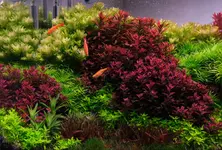
Against the deep purple of Rotala florida, I found that Golden white clouds worked quite well. So now they are the main inhabitants of the tank.
Tank this week (25/6/2025)
Tank started out like this:
A week or 2 after initial planting (5/5/2025). I reused old aquasoil from the previous scape, so I planted all plants up front rather than waiting more time for the tank to stabilize, with the idea that I could out-grow any algae issues. Initially wanted to add H. Chai but it really didn't fit the overall color scheme, and the bushes by the side were too invasive to be compatible with having a chai patch I think.
Since it was going to contain Rotala florida, I thought I might as well throw in other high demand troublesome species such as the Red Eriocaulon quinguangulare, blood vomit. I settled on Rotala tulunadensis for the background as I wanted something dense and shapeable.
Tank specs:
60x36x36cm
Filter: Oase biomaster 250, all sponge media
CO2 injected through inline atomizer
Substrate: APT Feast
Water column: APT Sky to raise GH to 5dGH, 2ml of APTe per day.
Light distance. Interestingly, not crazy high PAR - just around 200-250 umols PAR at the substrate level.
Trimming and shaping: Most bushes were shaped by cutting individual outlier shoots one by one. Only Rotala blood red and the Rotala tulunadensis was straight trimmed across the entire top once.
This is how the Rotala tulunadensis looked like after a straight trim on 29/5/2025. About 3 weeks from when the top picture at top of this page was taken. It took the plant a whole week + to show new shoots. It seems straight trimming slows down the plant quite a bit, but allows for a very dense & neat canopy afterwards.
There are some interesting plants stuffed here and there. Some Eriocaulon caulescens? bolivia? that local hobbyists passed on to me. Carved out a patch for Syngonanthus vichada - slow grower, but the couple of babies that came have doubled in size so I think they should be alright. I think I will move them to a larger tank with more space.
Only discovered the color combination with the Golden white clouds when the tank matured, but its one of my favourite fish-plant combinations now. I think that while some of the species are a bit picky about growth conditions, one thing I really like about this tank is that most things have moderate/slow growth rates, which makes maintenance with regards to removing excess growth less tedious.
Elatine triandra is used as a low growing green filler plant - it does this role well. As it does not root very deeply, I can easily cut and pull off excess growth easily. Its the fasting growing plant in the layout that requires frequent removal of excess growth.
Some more close-ups.
I'm trying to replicate concepts of this layout (slowing growing bushes) into my 4ft tank.
244 Replies
·
36643 views