Welcome to ScapeCrunch

We are ScapeCrunch, the place where planted aquarium hobbyists come to build relationships and support each other. When you're tired of doom scrolling, you've found your home here.

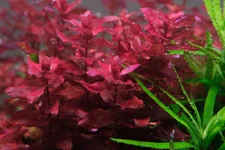
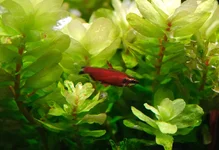
Journal 20 gallon Rotala florida tank

  • Thread starter Thread starter Dennis Wong
  • Start date Start date
  • Featured
  • Tagged users Tagged users None
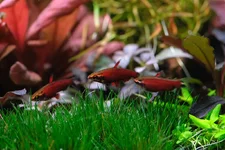
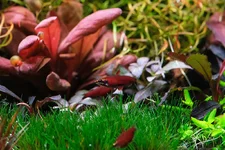
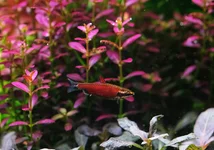
Some fish pics from the tank, I need to get bigger fish :LOL:2hrAquaristDSCF4940E pencil.webp
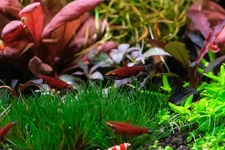
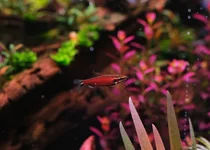
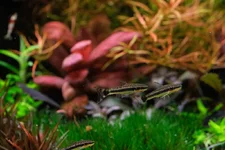
Amaya pencilfish

2hrAquaristDSCF494E3.webp

2hrAquaristDSCF4950E oto.webp
2hrAquaristDSCF4913E.webp
2hrAquaristDSCF4836E.webp
2hrAquaristDSCF4889E.webp
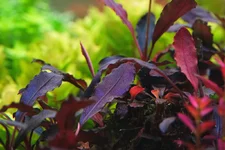
Mini macrandra type 4 red. The green takes pruning better. The red showcases well against background of greens.
 

Attachments

  • 2hrAquaristDSCF4920E.webp
    2hrAquaristDSCF4920E.webp
    79.4 KB · Views: 6
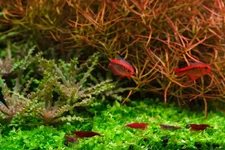
Some more Rio Amaya pencil fish photos. Current favourite fish of the moment, just hope they don't decimate the baby shrimp population.
2hrAquaristDSCF5026E pencilfish.webp
2hrAquaristDSCF5030E Pencil.webp
2hrAquaristDSCF5008E pencil.webp2hrAquaristDSCF5028E pencil.webp

2hrAquaristDSCF5068E.webp

Bucephalandra are marketed as low requirement plants, but I find that they grow so much faster in high light, high fert, high CO2 tanks. Downside of this is that they approach full size faster, requiring more frequent dividing of the rhizome if you want to force them to be smaller sized.
 
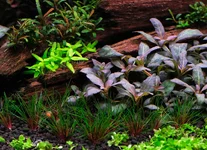
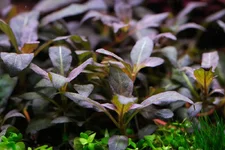
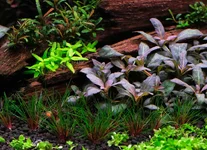
Spent a bit of time thinking about how to use Staurogyne purple effectively. While there are a ton of non-green plants for background. There are much fewer short colorful plant species suited for foreground, so any entry in this aspect is worth a bit more study. Staurogyne purple does eventually get larger, but at least at the start it seems to take trimming well enough that it can be kept low. It gets more purplish in its larger form, but the grey lilac of the young plants also serve as great contrast against other plants in a tank.

2hrAquaristDSCF5118E.webp

2hrAquaristDSCF5060E.webp
2hrAquaristDSCF5086E.webp

Took some more photos of fish in the tank, but it seems Rotala florida always steal the lime light in photos.

2hrAquaristDSCF5135E.webp

2hrAquaristDSCF5169E Amaya.webp
DSCF5148E Amaya.webp
 
What’s your maintenance schedule like on this tank Dennis? Is it tended to daily like glass cleaning etc and how often do you do WC with it?

I like to do small regular tasks rather than let work accumulate. For this tank it means trimming stem bushes opportunistically ( a few minutes per day) - I do less straight trimming nowadays (straight trimming means shearing off all the tops of plants at the same height all at once), but I do a lot of cutting of individual strands where they connect to the main stem. This allows me to thin out or shape bushes without affecting the overall look of the look of the bush. Only when I can't pick out individual strands then I resort to other methods (straight trimming, or replanting).

Most of my stem plant methods are in the stem plant article : How to grow stem plants

I have chosen slower growing species as a whole to reduce work: Rotala florida, sunset, Syngonanthus all grow at quite controlled rates, while stuff like Rotala blood red, Ludwigia arcuata can be pruned repeated without replanting. Since replanting is the part that takes the most work - anything that reduces this saves time.

Weekly water changes are between 50-80% depending on how much water I need to complete the tasks of cleaning/siphoning detritus from substrate and replanting (this takes an hour per week or so). Replanting uses water because I will siphon at the base of plants as I uproot them. replanting is done to move plants for arrangement purposes, but also to retain new growth and discard old growth. During replanting cycles, I will also clean the substrate area where plants are uprooted from, and also enrich the aquasoil by adding new aquasoil if I detect that the patch will benefit from new soil.

2hrAquaristDSCF5099E.webp
I add spoon ful of new aquasoil in this replanting cycle for the BV. The aquasoil is actually 1 year old aquasoil from the same tank a year ago, mixed with 15% new aquasoil from when I rescaped the tank this cycle. So periodical enrichment helps.

1755183412528.webp

Blood vomits are great because they never gain height nor spread. However, they get thick with time and gets algae when over-crowded, so they need to be uprooted and split every 4-8 weeks (depending on how large/small portion one replanted).
2hrAquaristDSCF5112E.webp

The glass doesn't get much algae, due to tank maturity and plant dominance setting in by now. I only scrutinize the glass when I need to take photos, else the amount of build-up within a week is slight - less than a min to wipe down. Plant dominance as method of deterring algae is described more in detail in this article: Algae Control 101: How to prevent algae in an aquarium?

Dosing wise, this tank uses EI (APTe 7ml a day), which is actually more troublesome to balance from a fine tuning perspective. The dosing schedule why and how is explained in the Rotala macrandra article How to grow Rotala macrandra & its varietals
 
I like to do small regular tasks rather than let work accumulate. For this tank it means trimming stem bushes opportunistically ( a few minutes per day) - I do less straight trimming nowadays (straight trimming means shearing off all the tops of plants at the same height all at once), but I do a lot of cutting of individual strands where they connect to the main stem. This allows me to thin out or shape bushes without affecting the overall look of the look of the bush. Only when I can't pick out individual strands then I resort to other methods (straight trimming, or replanting).

Most of my stem plant methods are in the stem plant article : How to grow stem plants

I have chosen slower growing species as a whole to reduce work: Rotala florida, sunset, Syngonanthus all grow at quite controlled rates, while stuff like Rotala blood red, Ludwigia arcuata can be pruned repeated without replanting. Since replanting is the part that takes the most work - anything that reduces this saves time.

Weekly water changes are between 50-80% depending on how much water I need to complete the tasks of cleaning/siphoning detritus from substrate and replanting (this takes an hour per week or so). Replanting uses water because I will siphon at the base of plants as I uproot them. replanting is done to move plants for arrangement purposes, but also to retain new growth and discard old growth. During replanting cycles, I will also clean the substrate area where plants are uprooted from, and also enrich the aquasoil by adding new aquasoil if I detect that the patch will benefit from new soil.

View attachment 9701
I add spoon ful of new aquasoil in this replanting cycle for the BV. The aquasoil is actually 1 year old aquasoil from the same tank a year ago, mixed with 15% new aquasoil from when I rescaped the tank this cycle. So periodical enrichment helps.

View attachment 9702

Blood vomits are great because they never gain height nor spread. However, they get thick with time and gets algae when over-crowded, so they need to be uprooted and split every 4-8 weeks (depending on how large/small portion one replanted).
View attachment 9700

The glass doesn't get much algae, due to tank maturity and plant dominance setting in by now. I only scrutinize the glass when I need to take photos, else the amount of build-up within a week is slight - less than a min to wipe down. Plant dominance as method of deterring algae is described more in detail in this article: Algae Control 101: How to prevent algae in an aquarium?

Dosing wise, this tank uses EI (APTe 7ml a day), which is actually more troublesome to balance from a fine tuning perspective. The dosing schedule why and how is explained in the Rotala macrandra article How to grow Rotala macrandra & its varietals
Could you use root tabs instead of replacing aquasoil ? what does one see to know that the aquasoil need to be replaced.
How do you decide between EI and APT 3? is this based on plant species or how much maintenance you want to do ?
Thank you
 
And this is what makes this forum so great. Thank you for providing so much detailed information @Dennis Wong.

Question; When adding fresh aquasoil to an established tank with livestock, what additional steps do you take to ensure livestock aren't impacted by an ammonia spike, or is that an issue with a small addition. I'm about to do some replanting now.
 
Could you use root tabs instead of replacing aquasoil ? what does one see to know that the aquasoil need to be replaced.
How do you decide between EI and APT 3? is this based on plant species or how much maintenance you want to do ?
Thank you
Root tabs are more localized while replacing aquasoil may be cheaper, but disturbs the area more. So for example if I have a rooted lotus or sword plant that I won't uproot for years, I'll use root tabs. But if I'm up rooting blood vomit every 6 weeks, then I'd rather use aquasoil since the uprooting will bring up the buried root tabs anyway.

Plant growth speed and form is the gauge of whether new aquasoil should be added. But you have to grow plants in rich soil, and experience the depletion to tell a difference. Some plants give more observable differences than others. Mixing new aquasoil with old gives the best of both worlds - the stability and maturity of an aged tank, with the boost in growth of new aquasoils.

Whether to use EI or APT3, interestingly the detailed answer is in Rotala macrandra link: How to grow Rotala macrandra & its varietals . It has to do whether I want to maintain a system that tends towards low/no residual NO3 in the water column vs a system that has elevated (high) NO3 levels.

And this is what makes this forum so great. Thank you for providing so much detailed information @Dennis Wong.

Question; When adding fresh aquasoil to an established tank with livestock, what additional steps do you take to ensure livestock aren't impacted by an ammonia spike, or is that an issue with a small addition. I'm about to do some replanting now.

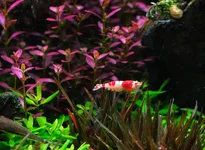
You could soak the aquasoil before briefly and rinse it to get rid of the dust particles and loose ammonia on the surface. A couple of cup fuls don't seem disruptive for existing tanks. It may well be that ammonia toxicity is negligible at such low pH levels? I have done this for years by now but I have not yet taken precise readings to see how much ammonia spike occurs if any. I have not observed any adverse reaction from livestock even in larger size renovations (but granted these were done on matured tanks).

2hrAquaristDSCF3783E (2).webp

2hrAquaristDSCF4831E.webp
I did test this with some shrimp in this cycle - when I did the rescape with 15% new aquasoil, I did not manage to remove all the shrimp in the tank before I adding the aquasoil. None the less they survived. I did do more water changes per week after the rescape - 2 to 3X weekly for 3 weeks thereabout until the plants settle in.
 
couple of cup fuls don't seem disruptive for existing tanks. It may well be that ammonia toxicity is negligible at such low pH levels?
I bet this is what you are seeing Dennis. I believe at 6.5 is when ammonia becomes ammonium which is much less toxic.

Some more Rio Amaya pencil fish photos. Current favourite fish of the moment, just hope they don't decimate the baby shrimp population.
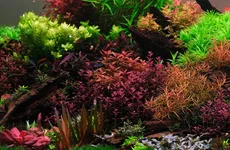
I believe pencil fish should be okay any fish will prey on some baby shrimp. If they are getting fed enough they may not have much interest plus the shrimp should be able to hide enough. Pencil fosh also have extremely small mouths so if you have a good popularion of shrimp I'd expect that you wont see reduced numbers. Also they normally tend to stay towards the upper third of the aquarium once settled.
 
2hrAquaristDSCF4904E2e.webp
This how the center cluster looks like, but already I'm rearranging some of the bushes.

This photo below is from 1 month ago there abouts, showing how big difference a month of tank maturity and care can make. I added some more wood at the higher area in the last couple of weeks.
2hrAquaristDSCF4015E.webp
 
More comparison photos of deep trim plus recovery 3 weeks later. Rotala rotundifolia variants are very resilient and even older deteriorated stems can recover from deep trimming sessions - but only if the plant has been grown in a robust manner previously, and if the tank is in a good upkeep state so that the deteriorated bottoms don't get attacked by algae.

Being able to trim the same bush repeatedly without requiring the replanting of fresh tops greatly reduces work. This blood red bush has not been replanted since April, though I think this is the last cycle. Next cycle I will replant fresh tops and discard the bottoms. Switched out some plants to get a slightly different layout, initially want to go with some reddish ammania species, but realize they are a bit big for this tank, so went with mini macrandra instead.


Comparison deep trim.webp
Comparison deep trimming 2.webp
 
A couple more close-ups of the week:
Tonina 'Lotus blossom'
2hrAquaristDSCF5320E.webp

More Sunset/Florida - from the 95gal tank rather than the 20 gallon. This means success is repeatable? The growth is a tad less dense in this tank for Florida. I wonder if its due to reusing 1 year old aquasoil (with only 15% new soil) or its due to the slightly lower PAR levels (closer to 200umols than 300)
2hrAquaristDSCF4977E florida sunset (2).webp

Small fish or big shrimp?
2hrAquaristDSCF496E5.webp

These fish take well to 50ppm of CO2
2hrAquaristDSCF5002E.webp
 
These fish take well to 50ppm of CO2
2hrAquaristDSCF5002E.webp
You've definitely gotten me interested in these guys for a future build.
 
@Dennis Wong - Would you be able to share more details about your sponge only filter approach? I have read your article "Guide to filter media in planted tanks" and "Filter media layout and sequence for planted tank", and I'm a bit confused because one suggests all sponge whereas the next suggests a mix of several types of media. The questions I still have after reading these articles are:
  • a more specific breakdown of what density foam you use in each stage of the Biomaster filter (including prefilter)
  • the frequency and method used for cleaning the sponges (i.e. I'd assume they're rinsed in aquarium water)
  • any other logic behind these decisions that may be helpful (i.e. how do you know you have enough or too much sponge)
This may be worth making into its own thread. I'm sure it would be useful to others for well known community members like yourself to share your approaches to filter media.

Finally, just wanted to say thanks for all the articles on your website as they've been an immensely helpful resource. (And thanks to Jeff Miotke for steering me to your site and sharing his knowledge as well)
 
Last edited:
Back
Top