
Welcome to ScapeCrunch
We are ScapeCrunch, the place where planted aquarium hobbyists come to build relationships and support each other. When you're tired of doom scrolling, you've found your home here.
Social Feed

I Donated 2026
Expert in Residence
MOTM Winner
Rockstar
I have good nutrient, CO2 and light levels, why do my plants still grow poorly
Many hobbyists spend time perfecting tank parameters, nutrient, light and CO2 levels, thinking that this automatically translates into optimal plant growth. While these factors are important, there are many other factors that affect plant growth.
For example above we have two groups of Lysimachia parvifolia growing side by side. Both groups have access to the same parameters, CO2, light, nutrients, substrate. However, the group on the right is growing poorly with darker, melting leaves and the group on the left is growing super vibrant red, with hardly a blemish.
This is not due to some arcane reason such as water flow hitting one group but not the other. The reason here is much simpler - the group on the right has been trimmed back repeatedly and allowed to grow in the same spot for a few months, while the group on the left was uprooted in the last month, divided and replanted. Overcrowding, both above and below the substrate, resulted in poorer quality new leaves being produced for the group of the right. This poor growth happened despite great growth parameters, a ton of CO2 and nutrients in the water column etc.
Different plants have different tolerances for overcrowding and aging. Some plant species regenerate well from repeated trimming cycles, others need replanting more frequently. Having great growth conditions delay deterioration of old growth, but most plants grow more optimally with regular replanting to clear congested rootzones and old growth.
Trimming and replanting cycles
The exact number of trimming cycles each species can regenerate from, and the time it takes for old growth and root zone congestion to take effect is different for each aquarium environment. Generally, if aquarium conditions are more spacious, and there is more substrate depth and stable growth conditions, plants can grow in one spot longer. Stressful growth conditions, poor nutrient/CO2 levels and even poor microbial balance accelerate deterioration of old growth.Interestingly, on the opposite end, overcrowding and root zone congestion also happens more quickly in fast growth aquariums. Hobbyists that throw a ton of nutrients and CO2 at their plants run headfirst into the brick wall that is overcrowding. This can be countered somewhat by using a portion of slower growing plants in an aquarium. The slower growing plants can be worked less often, while the fast growers are on a more regular replanting cycle.
Many aquascapers avoid stem plants because they require much more frequent replanting to grow well. Species such as Anubias, Bucephalandra and Cryptocoryne species on the other hand, have extremely long replanting cycles, and can grow for years without needing to be uprooted.

In this stem plant heavy aquascape that is around 7 months old, every single plant cluster has been replanted at least once. A sample of the replanting cycle for each species:
- Rotala blood red SG - every 4 months
- Rotala macrandra mini type 4 - every month
- Lysimachia parvifolia - every 2-3 months
- Xyris difformis - every 5-6 months
- Elatine triandra - every month
- Rotala florida - every 3-4 months
- Staurogyne purple - every 5 months

Uprooting, cleaning, replanting:

To refresh stem plant bushes, we will replant the fresh tops of the plants, while discarding the older bottom portions.
The first step is to uproot the entire stem plant bush. To control the mess when pulling up the soil, we recommend using a water siphon to vacuum the area when pulling up plants. The siphon should be held very close to the point where the plant is being pulled up to catch the soil debris.
We will try to remove as much of the old root system as possible and also remove any organic debris that has accumulated in the area. While organic debris contributes small amounts of nutrients through decomposition, a build-up of organic debris will interfere with root formation for more delicate plants and will also trigger algae. To stir up the organic debris, we use a turkey baster to spray jets of water onto the substrate while vacuuming with a siphon. The aquasoil should look clean before we start replanting.

The next step is to sort the uprooted stems and select only the healthiest heads for replanting. (A) is a middle portion and already has several branches. It is a poor choice as it will give rise to very uneven growth. (B) is a weak cutting- observe how thin the stem is, and the lack of colour. If replanted, it has a lower chance of success. (C) is ideal. A thick, singular healthy top with healthy new leaves.

Enriching the substrate with new aquasoil
When plants are uprooted, we can take the chance to enrich the substrate. There are two main ways to replenish depleted aqua soils. The first is to use nitrogen-rich root tabs. The second is to add fresh ammonia-rich aquasoil periodically. A good rate is adding 1% of new ammonia-rich aquasoil per month. For example, if you have 30kg of aquasoil in an aquarium, adding around 300 grams per month will work well. You can add new aquasoil during plant replanting cycles. Simply remove a portion of old aquasoil with a water siphon or spoon, then add and mix in the new aquasoil. This method may be cheaper than using root tabs in the long run

Replanting entire planted aquariums regularly is not feasible for most aquarists. So having an aquascape consisting solely of fast growing stem plants can be a nightmare when overcrowding and age sets in. Aquarists should plant a mix of slower growing species and species that do not need frequent trimming/replanting. Then the fast growing bunches can be replanted on a rotation basis - only one species is replanted during each weekly water change for example.Replanting work requires skill and dexterity. It is often difficult for beginners to manage, until some experience is gained. It becomes much easier with practice and time.
In this aquarium, Rotala florida, Xyris difformis, Syngonanthus species are all plants that can grow for months without replanting.

With consistent maintenance, aqua soils do not need to be replaced. The aqua soil in this aquarium is 1.5 years old APT Feast. Regular enrichment and clearing of detritus allows the substrate to perform like new. By renewing plant growth continually through replanting, and enrichment, planted aquariums also become more algae resistant.
This article is a slightly condensed version as I know folks don't like to be redirected, the full article can be found here:
Good parameters, Good CO2, Good light, Poor plant growth?
20 Replies
·
2201 views


Rockstar
Inspired by @gnatster 's Black Friday thread HERE. I'm curious what's on everyone's list this year. I need to come up with a list for the significant other aquarium or not. Not sure of much I want. I do want a small rectangle little tank to do a succulent garden and light like HERE, but I'm not sure which one to get. What are you asking for?
16 Replies
·
571 views

Supporting
I Donated 2026
Since these are starting, here's a thread.
Starbond, the makers of Cyanocrylate Adhesives, has a few items on sale. Black Friday Starts Early 2026 | Starbond. I'm a fan of their Clog Prevention Stoppers. There are some sanding discs on sale for the woodworkers in the crowd too.
Starbond, the makers of Cyanocrylate Adhesives, has a few items on sale. Black Friday Starts Early 2026 | Starbond. I'm a fan of their Clog Prevention Stoppers. There are some sanding discs on sale for the woodworkers in the crowd too.
12 Replies
·
987 views
I’m fairly nEw to aquascaping, but have had planted aquariums for about 7 years. I’m moving in a few days. I have four small and one larger aquarium to move, but it’s the heavily planted 75 g that I need some quick advice about. The fluval stratum, in mesh bags and capped with sand, has been in place for about 18 months. I’m not sure what to expect, but our aquarium moving/mntnce guy said it might be a sludge now.
My question is what is the best way to rebuild, without harming my 30 ish nano fish? Do I add fluval stratum and go through all the water changes and monitoring for two weeks until the ammonia issues settle, or use seachem fluorite and add root tabs moving forward? Does fluorite absorb and hold fertilizers and have a cation exchange capacity. I’ve only come across conflicting views.
Advice would be greatly appreciated. Anyone with long term experience and comparisons on each planted tank substrates would be very helpful. We’re moving Wednesday.
4 Replies
·
221 views
Supporting
I Donated 2026
Have my eye on a UNS 45SA, a shallow all-in-one, to house Mexican Orange Crayfish. I've been flipping between pictures of rocks, trying to imagine what would work well. My idea is a cascading wall of dark rock, with caves and epiphytes stuffed between the cracks. Leading to a foreground strewn with pebbles of the same rock over a base of a lighter colored sand, along with leaf litter and pods. The orange coloration of the crayfish ought to pop against the darker rock.
I've been trying to picture the layout with one of these:
Blue Rhino Stone
Manten Stone
North Black Stone
If I had my druthers, the stone is available from Buce Plant, where I'm sitting on a sizable credit.
Comments, suggestions, etc, all welcome.
I've been trying to picture the layout with one of these:
Blue Rhino Stone
Manten Stone
North Black Stone
If I had my druthers, the stone is available from Buce Plant, where I'm sitting on a sizable credit.
Comments, suggestions, etc, all welcome.
9 Replies
·
845 views

Staff member
I Donated 2026
Founding Member
This is the future home for the announcements when someone obtains an achievement badge. Let the games begin!
2063 Replies
·
82258 views

I Donated 2026
up until now I’ve been fastening my reactors to the aquarium stand using the screw holes provided but I believe I’ve noticed mention of folks using a hanger for support rather than screwing the reactor directly. Does anyone have a recommendation for a hanger?
9 Replies
·
116 views
Hi, not new to aquariums but I’ve been having some ideas that I’d like to discuss but I’m not sure where to put them.
I live in Barbados, which is a beautiful country built on limestone. My tap water chemistry has a high ph (8.6 - 9) and tds (300+). To get around the tds, I use collected rainwater and ac water, (tds 0 - 15). I am now wondering about reducing my ph. I wondered if I could add plain white vinegar to my stored water to bring the ph down to 7 or 7.5. I wonder if this could or would be detrimental to the livestock and how it would affect plant growth?
Any feedback would be appreciated.
10 Replies
·
187 views
I Donated 2026
Expert in Residence
MOTM Winner
Rockstar
I have always liked Rotala florida as plant due to its strongly colored leaves, but realized that I haven't actually aquascaped much with it - meaning to integrate it as part of a layout and not just growing a bunch of it in farm/collector style tank. Using plants in a layout in tighter bunches, and in competition with surrounding plants/hardscape is much harder than growing it farm style in a single patch - it also means be able to shape/trim the bushes to match the overall curves of the layout.
Back in 2016 or so when I first received Rotala florida samples from north america, I could only grow it in sparser bunches. It looked nice in macro photographs but I could not envision using it an bush that would show off well as part of a layout unless I can grow it much denser. In the recent years, there were two main discoveries that I found in my experimentation, the first is that it grows better in moderate GH (5 dGH+) compared to super soft water (say <3dGH), and that it grew better in certain soil mixes (I experimented with different garden soil mixes when engineering the composition of APT Feast). Eventually I integrated some of the soil data into APT Feast's composition, and paired with the higher power lights readily available today, I find that I could finally grow the plant the way I envisioned as part of overall layout. I could prune it dense, as the base stems were healthy enough to sprout dense side shoots after trimming - and the secondary/tertiary shoot tips were as fully colored and sized similar to a primary shoot tip that hasn't been subjected to topping yet.
As a midground stem, it works very well due to its slower growth rate vs other colored stem plants.
Against the deep purple of Rotala florida, I found that Golden white clouds worked quite well. So now they are the main inhabitants of the tank.
Tank this week (25/6/2025)


Tank started out like this:

A week or 2 after initial planting (5/5/2025). I reused old aquasoil from the previous scape, so I planted all plants up front rather than waiting more time for the tank to stabilize, with the idea that I could out-grow any algae issues. Initially wanted to add H. Chai but it really didn't fit the overall color scheme, and the bushes by the side were too invasive to be compatible with having a chai patch I think.
Since it was going to contain Rotala florida, I thought I might as well throw in other high demand troublesome species such as the Red Eriocaulon quinguangulare, blood vomit. I settled on Rotala tulunadensis for the background as I wanted something dense and shapeable.
Tank specs:
60x36x36cm
Filter: Oase biomaster 250, all sponge media
CO2 injected through inline atomizer
Substrate: APT Feast
Water column: APT Sky to raise GH to 5dGH, 2ml of APTe per day.

Light distance. Interestingly, not crazy high PAR - just around 200-250 umols PAR at the substrate level.

Trimming and shaping: Most bushes were shaped by cutting individual outlier shoots one by one. Only Rotala blood red and the Rotala tulunadensis was straight trimmed across the entire top once.

This is how the Rotala tulunadensis looked like after a straight trim on 29/5/2025. About 3 weeks from when the top picture at top of this page was taken. It took the plant a whole week + to show new shoots. It seems straight trimming slows down the plant quite a bit, but allows for a very dense & neat canopy afterwards.

There are some interesting plants stuffed here and there. Some Eriocaulon caulescens? bolivia? that local hobbyists passed on to me. Carved out a patch for Syngonanthus vichada - slow grower, but the couple of babies that came have doubled in size so I think they should be alright. I think I will move them to a larger tank with more space.


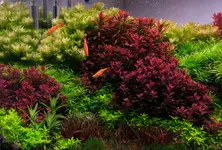
Only discovered the color combination with the Golden white clouds when the tank matured, but its one of my favourite fish-plant combinations now. I think that while some of the species are a bit picky about growth conditions, one thing I really like about this tank is that most things have moderate/slow growth rates, which makes maintenance with regards to removing excess growth less tedious.
Elatine triandra is used as a low growing green filler plant - it does this role well. As it does not root very deeply, I can easily cut and pull off excess growth easily. Its the fasting growing plant in the layout that requires frequent removal of excess growth.
Some more close-ups.


I'm trying to replicate concepts of this layout (slowing growing bushes) into my 4ft tank.
Back in 2016 or so when I first received Rotala florida samples from north america, I could only grow it in sparser bunches. It looked nice in macro photographs but I could not envision using it an bush that would show off well as part of a layout unless I can grow it much denser. In the recent years, there were two main discoveries that I found in my experimentation, the first is that it grows better in moderate GH (5 dGH+) compared to super soft water (say <3dGH), and that it grew better in certain soil mixes (I experimented with different garden soil mixes when engineering the composition of APT Feast). Eventually I integrated some of the soil data into APT Feast's composition, and paired with the higher power lights readily available today, I find that I could finally grow the plant the way I envisioned as part of overall layout. I could prune it dense, as the base stems were healthy enough to sprout dense side shoots after trimming - and the secondary/tertiary shoot tips were as fully colored and sized similar to a primary shoot tip that hasn't been subjected to topping yet.
As a midground stem, it works very well due to its slower growth rate vs other colored stem plants.
Against the deep purple of Rotala florida, I found that Golden white clouds worked quite well. So now they are the main inhabitants of the tank.
Tank this week (25/6/2025)
Tank started out like this:
A week or 2 after initial planting (5/5/2025). I reused old aquasoil from the previous scape, so I planted all plants up front rather than waiting more time for the tank to stabilize, with the idea that I could out-grow any algae issues. Initially wanted to add H. Chai but it really didn't fit the overall color scheme, and the bushes by the side were too invasive to be compatible with having a chai patch I think.
Since it was going to contain Rotala florida, I thought I might as well throw in other high demand troublesome species such as the Red Eriocaulon quinguangulare, blood vomit. I settled on Rotala tulunadensis for the background as I wanted something dense and shapeable.
Tank specs:
60x36x36cm
Filter: Oase biomaster 250, all sponge media
CO2 injected through inline atomizer
Substrate: APT Feast
Water column: APT Sky to raise GH to 5dGH, 2ml of APTe per day.
Light distance. Interestingly, not crazy high PAR - just around 200-250 umols PAR at the substrate level.
Trimming and shaping: Most bushes were shaped by cutting individual outlier shoots one by one. Only Rotala blood red and the Rotala tulunadensis was straight trimmed across the entire top once.
This is how the Rotala tulunadensis looked like after a straight trim on 29/5/2025. About 3 weeks from when the top picture at top of this page was taken. It took the plant a whole week + to show new shoots. It seems straight trimming slows down the plant quite a bit, but allows for a very dense & neat canopy afterwards.
There are some interesting plants stuffed here and there. Some Eriocaulon caulescens? bolivia? that local hobbyists passed on to me. Carved out a patch for Syngonanthus vichada - slow grower, but the couple of babies that came have doubled in size so I think they should be alright. I think I will move them to a larger tank with more space.
Only discovered the color combination with the Golden white clouds when the tank matured, but its one of my favourite fish-plant combinations now. I think that while some of the species are a bit picky about growth conditions, one thing I really like about this tank is that most things have moderate/slow growth rates, which makes maintenance with regards to removing excess growth less tedious.
Elatine triandra is used as a low growing green filler plant - it does this role well. As it does not root very deeply, I can easily cut and pull off excess growth easily. Its the fasting growing plant in the layout that requires frequent removal of excess growth.
Some more close-ups.
I'm trying to replicate concepts of this layout (slowing growing bushes) into my 4ft tank.
254 Replies
·
43753 views


Supporting
I Donated 2026
Rockstar
There are several threads discussing the new Aquael Hypermax 4500BT. I'm sure many would like some reports on it's performance over time. We have a thread discussing nano canister filters. We're all waiting for one of @Naturescapes_Rocco in depth write-ups discussing his filtration set-up. @Pepere and @*Ci* have unique set-ups as well, @Kwyet has used a matten filter, and we have several other members running sumps. That doesn't even include all those running sponge and HOB filters.
The idea is that we can consolidate a lot of filter information in one place making it easier to find rather than searching through so many threads. Maybe this won't work but I thought it was worth giving it a try. Perhaps it may be better listed as an article at some point.
I'm going to get things started by discussing factors I feel are most important to me when choosing a filter.
1) Filtration Performance: This goes without saying. The filter’s primary job is to keep our water clean and free of anything that harms the inhabitants. Of course, there are multiple factors that play into this. Some say flow is most critical, while others claim media volume is most important. Are there other factors? I still have limited experience, but my view, having done considerable reading, is that flow tends to be a bit overblown. You’ll see recommendations of anywhere from 4 to 10 times turnover rate with most leaning toward the higher end of that. I don’t think turnover rate is really the detail to be concerned about, at least with heavily planted tanks like are the norm here. I think the focus should be simply on ensuring flow achieves the goal of effectively moving water through the system to remove toxins/waste, delivering nutrients, and aiding gas (oxygen/CO2) transfer. If a turnover rate of 3 or 4 does that without dead spots in the tank, you should be good. After all, most of us here are plant focused and therefore, the fish we generally have are smaller community species that typically don’t care for high flow (there are, of course, exceptions).
I think there’s a simpler answer regarding media volume; more is better. Obviously, there must be a balance between internal volume and overall size of the filter. Real estate in and around our aquarium stands is precious. Filters like the Fluval FX6 and the newest Aquael Hypermax are huge. If you’re going for one of those, you’re likely putting it on a large tank with plenty of space underneath but again, it’s a matter of finding the right balance that provides the performance you need in a manageable size.
2) Reliability/Durability: This is where solid reviews come in handy and why getting feedback from users here is invaluable. Filtration performance becomes moot if the filter isn’t running, or worse yet, just flooded your house. Being able to easily source spare parts is also valuable, which is why sticking to the top well-known brands is often a safe route. It’s also why many aquarists place canister filters in protective containers, something else to consider when taking into account, size of filter. (this is something I should really do as I’ve had to clean up a few significant spills after filter maintenance and not getting the top secured in place properly )
3) Tie – Maintenance/Noise Level: These two factors are equally important to me. If the filter is a pain to maintain, I’m going to put it off, and that’s bad. It affects the performance. But equally important to me is how noisy it is. I tend to be sensitive to annoying little sounds regardless of where I am; at home, in the car, at work, you name it. If the aquarium is in a part of the house I spend a lot of time in, well then, it’s even more important.
I don’t know if Oase was first to do it, but the idea of the prefilter was, I think, a game changer for many. I imagine it was derived from people installing foam filters on the intake pipes. Having an easily removable section with foam filters that catch a lot of large particles before entering the primary filter chamber is a great idea, resulting in expanded intervals between main filter head removals for cleaning.
Another aspect of maintenance is ease of priming. This could also be an aspect of performance but I don’t think it is quite as important. I’m not sure there is a canister filter that is truly or consistently easy to prime. Some may start out that way, but over time, become less and less so. This is an area I’d really like to see product designers put more serious thought. My experience so far is with Oase and the Fluval 07 series. Hated the Fuval priming and I’m just so-so with the Oase. Let me know your experience with priming other brands.
As for noise, I don’t mind the slight hum of an impeller as long as it’s steady and consistent, much the same way some people, including myself when I was younger, like the smooth steady sound of a fan at night to help them sleep. It’s when the sound becomes inconsistent, I’m bothered. I also don’t care for the sound of splashing/trickling water while I’m focused on other things. Only when I’m camping near the banks of a creek or other body of water is this OK . This is one of the main reasons I’m not a fan of HOB filters. I’m also tweaking my CO2 reactor designs to minimize the bubble sounds of CO2 entering the reactor.
4) Cost: Let’s be clear, the cost doesn’t stop when you pay the retail price for the filter. There’s the cost of media and spare parts plus the cost of electricity. What’s the rated wattage of the filter. I see the Aquael filters claim to consume lower power and are therefore cheaper to run. What about special filter cartridges or foam. Is it easy to cut foam filters from inexpensive bulk material? How often are gasket replacements necessary, or are there common issues with parts failing over time. Of two Fluval 07 filters I’ve used, both needed replacement impeller shafts. Oase Biomaster filters seem to have an issue with the input/output head often needing replaced.
I admit cost isn’t a critical factor for me, but I know it is for many others, so this is another instance where finding the right balance is key, in this case, the balance between price and performance.
Share your thoughts. Do these factors seem to align with yours or do you think I’m way off base. Tell us what types and brands of filters you prefer and why.
The idea is that we can consolidate a lot of filter information in one place making it easier to find rather than searching through so many threads. Maybe this won't work but I thought it was worth giving it a try. Perhaps it may be better listed as an article at some point.
I'm going to get things started by discussing factors I feel are most important to me when choosing a filter.
1) Filtration Performance: This goes without saying. The filter’s primary job is to keep our water clean and free of anything that harms the inhabitants. Of course, there are multiple factors that play into this. Some say flow is most critical, while others claim media volume is most important. Are there other factors? I still have limited experience, but my view, having done considerable reading, is that flow tends to be a bit overblown. You’ll see recommendations of anywhere from 4 to 10 times turnover rate with most leaning toward the higher end of that. I don’t think turnover rate is really the detail to be concerned about, at least with heavily planted tanks like are the norm here. I think the focus should be simply on ensuring flow achieves the goal of effectively moving water through the system to remove toxins/waste, delivering nutrients, and aiding gas (oxygen/CO2) transfer. If a turnover rate of 3 or 4 does that without dead spots in the tank, you should be good. After all, most of us here are plant focused and therefore, the fish we generally have are smaller community species that typically don’t care for high flow (there are, of course, exceptions).
I think there’s a simpler answer regarding media volume; more is better. Obviously, there must be a balance between internal volume and overall size of the filter. Real estate in and around our aquarium stands is precious. Filters like the Fluval FX6 and the newest Aquael Hypermax are huge. If you’re going for one of those, you’re likely putting it on a large tank with plenty of space underneath but again, it’s a matter of finding the right balance that provides the performance you need in a manageable size.
2) Reliability/Durability: This is where solid reviews come in handy and why getting feedback from users here is invaluable. Filtration performance becomes moot if the filter isn’t running, or worse yet, just flooded your house. Being able to easily source spare parts is also valuable, which is why sticking to the top well-known brands is often a safe route. It’s also why many aquarists place canister filters in protective containers, something else to consider when taking into account, size of filter. (this is something I should really do as I’ve had to clean up a few significant spills after filter maintenance and not getting the top secured in place properly
)3) Tie – Maintenance/Noise Level: These two factors are equally important to me. If the filter is a pain to maintain, I’m going to put it off, and that’s bad. It affects the performance. But equally important to me is how noisy it is. I tend to be sensitive to annoying little sounds regardless of where I am; at home, in the car, at work, you name it. If the aquarium is in a part of the house I spend a lot of time in, well then, it’s even more important.
I don’t know if Oase was first to do it, but the idea of the prefilter was, I think, a game changer for many. I imagine it was derived from people installing foam filters on the intake pipes. Having an easily removable section with foam filters that catch a lot of large particles before entering the primary filter chamber is a great idea, resulting in expanded intervals between main filter head removals for cleaning.
Another aspect of maintenance is ease of priming. This could also be an aspect of performance but I don’t think it is quite as important. I’m not sure there is a canister filter that is truly or consistently easy to prime. Some may start out that way, but over time, become less and less so. This is an area I’d really like to see product designers put more serious thought. My experience so far is with Oase and the Fluval 07 series. Hated the Fuval priming and I’m just so-so with the Oase. Let me know your experience with priming other brands.
As for noise, I don’t mind the slight hum of an impeller as long as it’s steady and consistent, much the same way some people, including myself when I was younger, like the smooth steady sound of a fan at night to help them sleep. It’s when the sound becomes inconsistent, I’m bothered. I also don’t care for the sound of splashing/trickling water while I’m focused on other things. Only when I’m camping near the banks of a creek or other body of water is this OK
. This is one of the main reasons I’m not a fan of HOB filters. I’m also tweaking my CO2 reactor designs to minimize the bubble sounds of CO2 entering the reactor.4) Cost: Let’s be clear, the cost doesn’t stop when you pay the retail price for the filter. There’s the cost of media and spare parts plus the cost of electricity. What’s the rated wattage of the filter. I see the Aquael filters claim to consume lower power and are therefore cheaper to run. What about special filter cartridges or foam. Is it easy to cut foam filters from inexpensive bulk material? How often are gasket replacements necessary, or are there common issues with parts failing over time. Of two Fluval 07 filters I’ve used, both needed replacement impeller shafts. Oase Biomaster filters seem to have an issue with the input/output head often needing replaced.
I admit cost isn’t a critical factor for me, but I know it is for many others, so this is another instance where finding the right balance is key, in this case, the balance between price and performance.
Share your thoughts. Do these factors seem to align with yours or do you think I’m way off base. Tell us what types and brands of filters you prefer and why.
142 Replies
·
14655 views

Supporting
I Donated 2026
Rockstar
Article Contributor
Hi all,
I'm looking for the largest stem plants in the hobby.
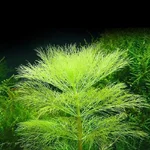
We're talking Limnophila aquatica:
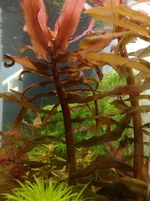
We're talking Ammania gracilis:
See what I mean?
Others I can think of are Hygrophila siamensis/corymbosa...
I'm curious if anyone has information or experience with BIG plants, both wide and tall.
Pogostemon kimberly? Pogostemon stellatus? Limnophila hippurpoides? Anyone use these or know of any other large stems?
I'm looking for the largest stem plants in the hobby.
We're talking Limnophila aquatica:
We're talking Ammania gracilis:
See what I mean?
Others I can think of are Hygrophila siamensis/corymbosa...
I'm curious if anyone has information or experience with BIG plants, both wide and tall.
Pogostemon kimberly? Pogostemon stellatus? Limnophila hippurpoides? Anyone use these or know of any other large stems?
14 Replies
·
212 views