
Welcome to ScapeCrunch
We are ScapeCrunch, the place where planted aquarium hobbyists come to build relationships and support each other. When you're tired of doom scrolling, you've found your home here.
Social Feed

Supporting
I Donated 2026
I'm currently using an FZONE Glass Mini Lily Pipes with a skimmer. I'd like to replace the filter intake with a stainless steel one. I can't find one that fits.
The measurements of the FZONE version that fits.
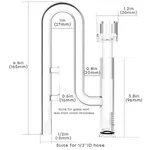
Does anyone know of one that has similar measurements?
The measurements of the FZONE version that fits.
Does anyone know of one that has similar measurements?
8 Replies
·
1081 views
Considering stand/cabinet options for the 90x60x40cm Miotke 57 gallon tank from Hydra Aquatics. Other than the Hydra Pro Series cabinet that is matched to this tank, what are options that accommodate the 60cm depth of this tank? It doesn't appear that any of the Archaea cabinets are that deep.
@Jeff Miotke What is the piece of furniture that you are using as a stand for this tank in your fish room?
@Jeff Miotke What is the piece of furniture that you are using as a stand for this tank in your fish room?
0 Replies
·
4 views
Both tanks contain a lot of bucephalandra stems I have recently melted by feeding my caridina tanks with mulberry leaves. I have no idea what the heck happened but all buces melted in those tanks heavily over 3 days with every other plant + shrimp being fine. Don't wanna risk the plants dying so I'm throwing them back into high tech for a few months to recover.
Set Up:
Both tanks uses heavy co2 misting
Horticulture LED lights (dimmed, so probably 25-30 watts?)
Will steadily increase light weekly if I see no issues, max is 40 watts.
Dual sponge filters. (Air bubbles help prevent co2 gassing, also seems to really help stabilize tank, so less algae)
1 Internal filter with an atomizer for misting.
Regime:
All tanks get a 30-50% water change, twice per week.
Micros dosed daily (unless I forget, which happens fairly often.)
Macros Front Loaded and only in new incoming water.
6 Gallon bucket water change:
~350tds (Using seachem equilibrium remineralizer)
~22ppm KNO3, using KNO3 + KH2PO4
~40-50 ppm Potassium due to remineralizer
~4-5GH
Buce Lottery Colors
Lots of buces, various names, collected over the years. A lot of them were ultra rare and I cannot buy them anymore. Most of the ultra rare I probably accidentally killed from trying to grow them in a "no filter, no co2" style tank. Either way, not much color in low tech, will see what lottery colors we pull once they get going with better colors in higher lights + co2.
Both tanks are planted tightly front to back with bucephalandra. Kinda hard to see it all with moss blocking the way, but my view will be your view.
Random Mosses
Some mosses I've collected as well, honestly I grow a lot of them free floating so they kinda look the same. We will find out how they look after I attach them to something.
15 Gallon, very aged sand + pebble tank.
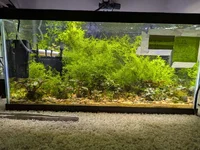
20 Gallon long, aged aquasoil I pulled from an existing caridina tank.

Wanted to take some macro shots, but does anyone know how to take an angle show on the glass without distortion? I have a DSLR long tube lens that works under water but color rendition is really bad.
Why so much moss?
Mostly to help stabilize the tank and to reduce light bleed. Less surface for algae to grow.
Set Up:
Both tanks uses heavy co2 misting
Horticulture LED lights (dimmed, so probably 25-30 watts?)
Will steadily increase light weekly if I see no issues, max is 40 watts.
Dual sponge filters. (Air bubbles help prevent co2 gassing, also seems to really help stabilize tank, so less algae)
1 Internal filter with an atomizer for misting.
Regime:
All tanks get a 30-50% water change, twice per week.
Micros dosed daily (unless I forget, which happens fairly often.)
Macros Front Loaded and only in new incoming water.
6 Gallon bucket water change:
~350tds (Using seachem equilibrium remineralizer)
~22ppm KNO3, using KNO3 + KH2PO4
~40-50 ppm Potassium due to remineralizer
~4-5GH
Buce Lottery Colors
Lots of buces, various names, collected over the years. A lot of them were ultra rare and I cannot buy them anymore. Most of the ultra rare I probably accidentally killed from trying to grow them in a "no filter, no co2" style tank. Either way, not much color in low tech, will see what lottery colors we pull once they get going with better colors in higher lights + co2.
Both tanks are planted tightly front to back with bucephalandra. Kinda hard to see it all with moss blocking the way, but my view will be your view.
Random Mosses
Some mosses I've collected as well, honestly I grow a lot of them free floating so they kinda look the same. We will find out how they look after I attach them to something.
15 Gallon, very aged sand + pebble tank.
20 Gallon long, aged aquasoil I pulled from an existing caridina tank.
Wanted to take some macro shots, but does anyone know how to take an angle show on the glass without distortion? I have a DSLR long tube lens that works under water but color rendition is really bad.
Why so much moss?
Mostly to help stabilize the tank and to reduce light bleed. Less surface for algae to grow.
22 Replies
·
1565 views


Supporting
I Donated 2026
Rockstar
Plant Nymphoides sp. Taiwan

CO2 injected 1.4 pH drop (50 ppm per Hanna test)
Light 50-60 par at substrate
PPS-pro ferts for high tech tanks
50% water change weekly
8 dgH
0-1 dkH
11 Replies
·
868 views


Supporting
I Donated 2026
Rockstar
Well...let's spend more money! I had thought about attending Aquashella - Chicago a few months ago but decided to pass this year. When I was thinking about it, they still didn't have the specific VIP guest list posted. Out of curiosity, I checked today and to my surprise, the man himself, Yusuke Homma, will be presenting the masterclass on Saturday. I can't pass that up when it's only an 8 hour drive. Ticket purchased, room booked. Anyone else attending?
2 Replies
·
110 views

Supporting
Trying a true journal format. Let me know if it's too much writing. My natural tendency is to bullet point everything.
The Mishap That Started It All
This whole project began at 6:30 a.m., courtesy of my Oase Biomaster Thermo 250 deciding to serenade me with impeller noise while I was trying to work from home. Biofilm on the impeller — nothing dramatic — but the sound was maddening, especially with an 8 a.m. call with our London office looming. So I did what any aquarist does under pressure: a lightning‑fast pre‑filter and impeller clean.That’s when the universe decided to intervene.
While disconnecting the hoses — the same routine I’ve done countless times — the lock failed. Suddenly a vacuum of water blasted across the floor of my upstairs alcove “office.” I yanked the intake and outflow from my 60U, stopping the torrent, but not before a solid gallon had soaked into the floorboards.
My wife woke up to the sound of chaos and the sight of me standing in a puddle. Understandably, she was not thrilled. The alcove has cathedral ceilings, so every noise echoes, and the massive 8‑foot cabinet we built with her dad years ago makes cleaning underneath nearly impossible. It’s not a space designed for aquariums, humidity, or early‑morning filter geysers.
As we cleaned, she admitted she hated having tanks and equipment out in the open upstairs. Fair enough. When we built the house, the plan was always for my “stuff” to live in the downstairs office while she had the rest of the house. But during COVID she needed privacy for patient calls, so I gave her the office and moved my stuff upstairs. Now her role has changed — two days in the hospital, one day from home — and the need for that arrangement is gone.
So I floated the idea: What if I moved everything back downstairs, consolidated the two smaller tanks into one larger, beautifully executed setup — something like the living room tank she actually likes? Less noise, less humidity upstairs, and I get a proper scaping space again.
To my mild shock, she was completely on board. From a mishap came opportunity.
Choosing the Tank
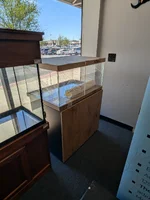
Once the idea settled, I had to pick the right aquarium. I landed on the AquaEl Ultrascaper 90 — the dimensions are perfect, and I’d been eyeing it ever since researching the Skylight Hyperspot and AquaEl’s filter lineup. The tank was designed with the scapers at AquaShow in Poland, and their sample layouts are right up there with ADA, ADG, and Green Aqua imo.Finding one in the U.S. was the next challenge. I reached out to the AquaEl rep, asked about the Hypermax for my living room tank, and inquired about Ultrascaper 90 availability. He pointed me to Fish Tanks Direct — and with a discount code in hand, I placed the order for the snow variant. My only quandy was to go for the cheaper one and get a Netlea AT5S to hang or try their newer attractive but inferior light option (RGB vs WBG). I chose to try their light as it looked interesting and the PAR on paper is more than enough.
Link for reference:https://fishtanksdirect.com/aquael-ultrascape-90-with-ultra-slim-snow-tank-light-cabinet/
Atlanta Weekend & Tank Comparisons
Right after ordering, we had a weekend trip to Atlanta for one of my wife’s appointments. On Friday we visited the botanical garden, grabbed food, and while she was at her appointment Saturday, I made the rounds to three local fish stores. The Aquarium was an option but a Saturday solo but spending roughly $100 to be around 10 million families sounded less enjoyable than exploring ATL suburbs and seeing the stores and their tanks.Premiere Aquatics had a beautiful setup UNS 90U and one for sale as well but at nearly $2,000 out the door it wasn't a great deal. Plus the tank is taller than I wanted, it wasn’t the right fit. I did pick up two gorgeous rose swords and a great piece of ghost wood.
I went to one store in Alpharetta but it was out of literally everything, not sure if they are doing poorly or just sell out fast and under order. I did buy a crinum there. Plus I liked driving from Premier to their.
Then I got lucky at Optimum Aquarium — they had an AquaEl Ultrascaper 90 in stock that had arrived that week, priced at a very respectable $1,000 (without the light). If the cabinet had been white, I would’ve bought it on the spot. They also had a wide range of tanks, which let me compare my choice to the Fluval Opti White 90 (a very reasonable $700) and several Aquatlantis rimless tanks I didn’t even know were available in the U.S. Their shallow 80 is especially cool — tank, stand, and light for $830, I would get a different color but I like the concept. They also had a bunch of healthy Dwarf Sag for $3 dollars so I bought a 4 bunches to use as I couldn't find dwarf chain swords easily online and heleiatium tenellum is a little too small.
My takeaways:
- Fluval Opti White 90: Nice tank but a bit small and too tall, the stand feels cheap and lightweight. Attractive for the price, but not my pick.
- Aquatlantis: Surprisingly impressive. I’d choose them over Fluval at similar price points.
- UNS 90U: The stands are unquestionably superior. The tank mitering is spectacular.
- AquaEl Ultrascaper 90:
- Stand: Best flat‑pack stand I’ve seen, though still a flat‑pack.
- Glass: Equal quality to UNS but no mitering.
- Dimensions: 90 × 60 × 45 — absolutely perfect.
- Incredible depth
- Lower height makes it ideal for seated viewing
- Easier to work in
- Better top‑down perspective



19 Replies
·
1516 views

Supporting
I Donated 2026
Journal 120P Nature Aquarium
Sharing my first 120P aquarium and hoping to obtain feedback and guidance as it progresses.
I purchased the ADA 120P tank, AFA stand, mat and ADA substrate set from AFA in San Francisco. The set cost approx $2,000 including shipping. The set arrived as a set of boxes on a pallet which was loaded into my garage by a local delivery service using a small fork lift. The delivery process took approximately 4 weeks.
The substrate set included one large bag of ADA power sand, the three ADA additives - bacter 100, tourmaline and super clear, five bags of Amazonia 2 regular, and two bags of Amazonia 2 powder.
The tank is 120 x 50 x 50 cm, so roughly 48” x 20” x 20” and holds approximately 80 gallons.
All items arrived in excellent condition. Helpers and I moved the items to the basement. The stand was easy to put together. Plywood based. Sturdy. I drilled some additional 4” holes in the left side and rear panels for access. I put down the mat, and added the tank.
I chose a chihiros 1200 wrgb2 pro light. I hung an IKEA adjustable rod holder over the tank to suspend the light from which has been working out well for my tanks.
For other mechanicals: these have evolved since initial setup
I’ve attempted to include some photos here but they don’t seem to be being pulled in.


The hardscape for the tank was selected collaboratively with the team at cuboid aquatics in Pipersville, PA. I became aware they carried a wide range of hardscape including the WIO product line and they were within driving distance (6 hours), so I drove down and spent the next day with them. They were well stocked and were incredible people! Their lead designer Maddie lead the effort. The design uses large WIO black venom and jade rocks to support a hefty set of Galapagos and WIO Centurian wood. I packed up the hardscape, brought it home and put together the current design. I chose the larger Galapagos pieces as I liked the dark highly contoured lines.
The design is a triangular layout as the tank will be viewed from the right side as well as the front and we wanted to keep that right side looking similar to the front.
The left side and rear are filled with the ADA substrate set. In two areas just in front of hardscape there are areas of substrate set where I intend to plant dwarf lilies and crypt spiralis tiger. The remainder of the front and right side uses WIO Everglades riverbed which includes tan sand, pebbles, twigs, leaves, and cones. I also added WIO black venom and jade pebbles and twigs.
My friend and I primarily used seachem epoxy to epoxy the hardscape together. It was easy to use. It does put off quite an odor. We also used a glue product call R6000 which seems to have worked out quite well. The tank has been in water for two weeks now. Some of the putty connected to wood has come loose. Best I can tell the R6000 joints are holding.
This is the current layout and you can see there is the normal whiteish “stuff” growing on some of the driftwood.
My friend and I filled the tank and started up the equipment to check for leaks and flow. We encountered a few small issues that were quickly resolved.
In 1-2 hours it was obvious there were loads of tannins in the water. I had read an article on cycling on 2hr that suggested turning off the equipment, letting the hardscape soak for 48 hours, draining, refilling and restarting, so this is what I did.
Once I had that new water……
Oh, water here comes from RO water normally remineralized with APT Sky up to a TDS of 100-120, however I had read that it’s best to make sure.KH is present to support the cycling process so this water was remineralized with APT Sky plus to a KH of 2-3.
To help boost the cycling process I started with Microbe-lift gel filter inoculation in both canisters, and Microbe-lift Nite-out and special blend products.
Water tests show that two weeks in I have high ammonia and nitrite. Tank is running with no light.
I did start up the co2 reactor as I’ve never used the horizontal yugang reactor and wanted to see what sort of co2 levels I could reach. I measured 40-50 ppm with the Hanna test set which is great and turned the co2 back off for now.
I will continue to monitor ammonia and nitrite near daily.
In the mean time I will be working on a planting plan.
Please get back to me with any comments, suggestions for sustainability, improvement, etc.
I purchased the ADA 120P tank, AFA stand, mat and ADA substrate set from AFA in San Francisco. The set cost approx $2,000 including shipping. The set arrived as a set of boxes on a pallet which was loaded into my garage by a local delivery service using a small fork lift. The delivery process took approximately 4 weeks.
The substrate set included one large bag of ADA power sand, the three ADA additives - bacter 100, tourmaline and super clear, five bags of Amazonia 2 regular, and two bags of Amazonia 2 powder.
The tank is 120 x 50 x 50 cm, so roughly 48” x 20” x 20” and holds approximately 80 gallons.
All items arrived in excellent condition. Helpers and I moved the items to the basement. The stand was easy to put together. Plywood based. Sturdy. I drilled some additional 4” holes in the left side and rear panels for access. I put down the mat, and added the tank.
I chose a chihiros 1200 wrgb2 pro light. I hung an IKEA adjustable rod holder over the tank to suspend the light from which has been working out well for my tanks.
For other mechanicals: these have evolved since initial setup
- Oase BIomaseter 2 thermo 350 canister filter loaded up with seachem matrix, seachem matrix carbon and seachem purigen.
- Cuboid aquatics UV disinfection unit.
- Oase Biomaster 2 850 canister filter loaded up similar to 350 and with all pre filter stuff (outer housing, center pipe, pads) removed
- Netlea pre filter
- ARC small acrylic yugang horizontal reactor
- five pound co2 tank
- CO2 Art pro CO2 regulator
- soft, gray silicone 16/22 hosing used throughout
- two sets of quick disconnects for the hosing
- Jardli glass Lily pipe outlets
- Hydra aquatics stainless steel inflow with skimmer
- some inexpensive motion sensing led panels for light within the cabinet
- two kasa smart plug strips
I’ve attempted to include some photos here but they don’t seem to be being pulled in.
The hardscape for the tank was selected collaboratively with the team at cuboid aquatics in Pipersville, PA. I became aware they carried a wide range of hardscape including the WIO product line and they were within driving distance (6 hours), so I drove down and spent the next day with them. They were well stocked and were incredible people! Their lead designer Maddie lead the effort. The design uses large WIO black venom and jade rocks to support a hefty set of Galapagos and WIO Centurian wood. I packed up the hardscape, brought it home and put together the current design. I chose the larger Galapagos pieces as I liked the dark highly contoured lines.
The design is a triangular layout as the tank will be viewed from the right side as well as the front and we wanted to keep that right side looking similar to the front.
The left side and rear are filled with the ADA substrate set. In two areas just in front of hardscape there are areas of substrate set where I intend to plant dwarf lilies and crypt spiralis tiger. The remainder of the front and right side uses WIO Everglades riverbed which includes tan sand, pebbles, twigs, leaves, and cones. I also added WIO black venom and jade pebbles and twigs.
My friend and I primarily used seachem epoxy to epoxy the hardscape together. It was easy to use. It does put off quite an odor. We also used a glue product call R6000 which seems to have worked out quite well. The tank has been in water for two weeks now. Some of the putty connected to wood has come loose. Best I can tell the R6000 joints are holding.
This is the current layout and you can see there is the normal whiteish “stuff” growing on some of the driftwood.
My friend and I filled the tank and started up the equipment to check for leaks and flow. We encountered a few small issues that were quickly resolved.
In 1-2 hours it was obvious there were loads of tannins in the water. I had read an article on cycling on 2hr that suggested turning off the equipment, letting the hardscape soak for 48 hours, draining, refilling and restarting, so this is what I did.
Once I had that new water……
Oh, water here comes from RO water normally remineralized with APT Sky up to a TDS of 100-120, however I had read that it’s best to make sure.KH is present to support the cycling process so this water was remineralized with APT Sky plus to a KH of 2-3.
To help boost the cycling process I started with Microbe-lift gel filter inoculation in both canisters, and Microbe-lift Nite-out and special blend products.
Water tests show that two weeks in I have high ammonia and nitrite. Tank is running with no light.
I did start up the co2 reactor as I’ve never used the horizontal yugang reactor and wanted to see what sort of co2 levels I could reach. I measured 40-50 ppm with the Hanna test set which is great and turned the co2 back off for now.
I will continue to monitor ammonia and nitrite near daily.
In the mean time I will be working on a planting plan.
Please get back to me with any comments, suggestions for sustainability, improvement, etc.
44 Replies
·
4498 views

Staff member
I Donated 2026
Founding Member

This is A River... Somewhere, the amazing IAPLC 2025 Grand Prize winning work of Josh Sim. I think this is a wonderful aquascape to use to start the Learning From Series. I hope you would agree.
The Learning From Series
I have no talent when it comes to aquascaping. If I'm honest, this is also true for almost all forms of art.... So, I am in awe of people like Josh, our friend @Jeff Miotke and @Naturescapes_Rocco, along with many others that we are privileged to count among our community. I am also so thankful that they have the talent and choose to share it with the rest of us.
The reality is that although I can't create these works of art, I can certainly appreciate them. My talents lie more in keen observation, critical thinking and curiosity. You know, stuff that will never make me a millionaire but that do come in handy when you're trying to learn something new.
As I'm in the back nine of life, I've decided that I want to take some time to appreciate and learn from aquascaping artists such as Josh. Thus, the idea for this series was born. I'm calling it the Learning From Series because that's exactly what it is. And, I'll be documenting my thought process and learnings here as a series of articles.
We are a community and sharing is part of the fun. So, I do hope you jump in and participate even if it's to tell me that I've completely missed something important. Maybe we learn together.
Finally, given that I have a day job (unfortunately, it's quite inconvenient when I'm trying to spend most of my time here), these articles will likely come in pieces. My MO is deconstructing the aquascape so that I can understand it. I'm a savor the wine type of guy rather than chug the beer.
Initial impressions of A River... Somewhere
This aquascape is multifaceted. It hits me with a lot of first impressions.
It's so real, almost biotopy. Yet, it is perfect. A lot to digest. For now though, dinner is calling. More tomorrow.
-- Update September 18, 2026
Observations continued
Amano used to say that the plants were the paint in an aquascape. I usually try to step back from the details and look at the forest, if you will. I focus on just color. This aquascape is very strongly skewed towards green. The green mostly rests on dark wood tones and black shades.
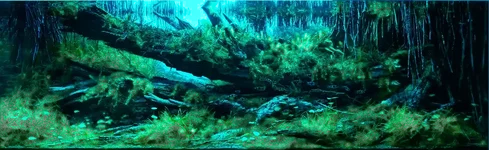
In this image above, I've blurred slightly and then punched up the greens to make them more obvious. Green is about 75% of the color, would you say?
This makes me think about focal point. Usually we are told to have a focal point in our aquascapes and this should be made quite obvious through the use of a pop of color (usually red) and/or different leaf texture or style of plant. Do you see that here?
Also, thinking compositionally again, the use of a "vanishing point" is also highly recommended. Do you see one here? I'm struggling to find it. There is certainly depth here making it seem like the river continues well beyond this image. But, how does Josh accomplish this without an obvious vanishing point?
I think his expert use of very clear foreground items versus smaller, blurred background items gives the impression of depth without needing a vanish point. This tricks our minds into thinking the things in the background a far away. This, it seems, is where details matter.
Another observation is just how natural this looks. I can truly believe that this could be a scene in "some river... somewhere." The downed tree rests very naturally and appears naturally weathered. Has a natural patina created by skillful trimming of moss and plants. Notice that the moss is not an even carpet of green. It's different shades and textures.
Nature doesn't create golf courses of green. Nature is wabi-sabi and does not favor only one species.
The hanging roots on either side also pull on my attention and constantly fight to pull me away from the center of the aquascape. There are more on the right side than on the left. Why is that? I think it will be more obvious when we analyze the composition.
Finally, what would you say is more dominant in this aquascape, if anything? Is this more plant-focused or hardscape-focused?
I will have more thoughts as I continue to deconstruct this wonderful aquascape in my mind. Again, this is really an intentional stream of consciousness, folks. And please don't misinterpret my breakdown as any sort of criticism. This is how I learn, by peeling the onion one layer at a time.
More tomorrow. Composition is next.
-- Update September 21, 2026
Composition
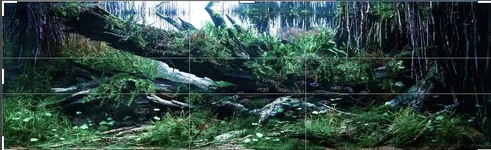
Here is the famous "golden ratio" superimposed onto the aquascape. Here are some of my initial thoughts but would love to hear what you see as well.
The idea of the golden ratio is to help you position focal points in a place that makes the overall composition seem more natural and pleasing. As you can see on the right side, the vertical line falls right on the pinky grouping of plants in the background. Interestingly, the fish grouping is also on that line. Do you think he did it on purpose?
You can also see balance by using the golden ratio. Here, the right 2/3 is definitely "fuller" or "heavy" compared to the left 1/3. I would say this aquascape is therefore "heavier" on the right side and "lighter" on the left. However, if I recall my "Amano", empty space is not necessarily lighter. Empty space can balance as much, if not more, than a completely planted area. Would you agree?
In this case, the left "emptier" side not only provides that needed empty space (called "Ma" in Japanese), but it also serves to create depth. You can see here how Josh uses the empty space to show those plants in the background that give that impression of a long distance behind the fallen tree.
Speaking of that fallen tree, it is drawing a diagonal across the entire aquascape. This creates a lower and higher triangle and again, one side is balancing the other well. Again, one is emptier with the other fuller.
Triangles are actually pleasing to our brains as it subconsciously provides a sense of order. It offers a subtle pattern that makes us comfortable. Do you think Josh knows this and has positioned that tree just so?
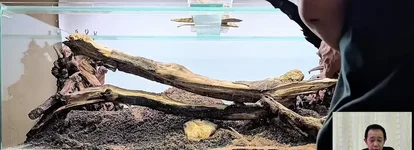
When you look at how Josh put this together, see the video linked in the posts below, it's amazing and should give you and me some hope that we too can eventually end up with something that looks great. It's hard to believe he went from the above to the final aquascape.
So, for me, the composition is the bones of the aquascape. I am trying hard to find a vanishing point and I don't see it still. I am learning that maybe this is not a requirement.
Next I will cover impressions which is really what aquascaping, and art, is about.
6 Replies
·
233 views
Supporting
I Donated 2026
Rockstar
Journal The Chronicles of Nano
So I've had this UNS 30C going for just over a month now and I understand why they say bigger tanks are easier. This has been a bit of a struggle. It was just my 2nd aquarium and was intended to be something simple and easy to care for. Thought I'd finally create a journal for it and chronical it's journey from the little nano that tried to hopefully, a shrimp paradise.

Tank: UNS 30C with a DIY stand.
Light: ONF Flat Nano
Original Filter: Oase Filtosmart 100 Thermo
Current Filter: Oase Biocompact 25
CO2: Fzone regulator on a Paintball CO2 tank. In-tank diffuser.
Substrate: UNS Controsoil (Fine) and ADA La Plata sand
Hardscape: Lava rock and unknown driftwood (probably spiderwood)
Testing out a cheap stainless steel skimmer I purchased off AliExpress
Plants
Multiple types of Anubias and Bucephalandra
Mini Bolbitis
AR mini (just added)
Staurogyne Repens (just added)
Pogostemon Helferi "Downoi" (just added)
Fauna
Sunkist Orange Shrimp
Planned on Chili Rasbora but that didn't go so well, so this will be a dedicated shrimp tank.

The first mistake I made with this was to plant immediately, rather than do a dark start as I did with my first scape. As you can still see in the current photo, I had a lot of Buce melt as a result of the high initial ammonia. I was hoping I would see more of a rebound by now but it's been a struggle. I also had different stem plants in the background and they struggled as well, even though they were already submersed grown plants. The current background plants were just placed in the last week and I've loaded the substrate up with more root tabs. They should be more durable but I may want to add something that gets a little taller. I also plan to fill in the melted Buce and some other bare areas with some additional Buce and Anubias. I'm dealing with some algae on the wood and the Anubias Nana Pinto, but nothing too serious.
I hoped that this would be home to Sunkist Orange shrimp and Chili Rasboras. Even though it's only 7 gallons, from previous experience with the Rasboras, I thought of school of 8 to 10 would be fine. I started with 8, but within 2 days, 5 decided to leave the tank (even with a lid covering 3/4 of the top). General water parameters were good, but I admit, CO2 may have been a little high. I moved the remaining Chilis to my larger tank were they are now happy and content. Hopefully the shrimp will begin breeding soon and I'll have plenty of tiny creatures to watch.

I generally don't like seeing equipment in the tank, so I started with a canister filter. Even adjusting valves to reduce flow, it was still too much and may even have been a contributing factor in the Chilis jumping out. Just this past weekend when replanting the background, I switched over to this tiny Oase Biocompact filter. It's only got a little course sponge wrapping a carbon sponge so the jury is still out on if it will provide enough filtration, but I imagine it will be fine with only plants and shrimp. I also added the in-tank heater (house can be a little cool in the winter) and switched from the inline CO2 diffuser to an in-tank diffuser. The skimmer is an experiment. I bought it on AliExpress to see how well it worked. My impression so far: Positive = I like the look and size, it seems to do a good job skimming, at least on this small tank. Negative = High pitched whine while running. I wouldn't run it all the time due to the sound, but if controlled to only run occasionally, it may work out well as long as it holds up.
I'll post updates as I add more plants and things mature.
Tank: UNS 30C with a DIY stand.
Light: ONF Flat Nano
Original Filter: Oase Filtosmart 100 Thermo
Current Filter: Oase Biocompact 25
CO2: Fzone regulator on a Paintball CO2 tank. In-tank diffuser.
Substrate: UNS Controsoil (Fine) and ADA La Plata sand
Hardscape: Lava rock and unknown driftwood (probably spiderwood)
Testing out a cheap stainless steel skimmer I purchased off AliExpress
Plants
Multiple types of Anubias and Bucephalandra
Mini Bolbitis
AR mini (just added)
Staurogyne Repens (just added)
Pogostemon Helferi "Downoi" (just added)
Fauna
Sunkist Orange Shrimp
Planned on Chili Rasbora but that didn't go so well, so this will be a dedicated shrimp tank.
The first mistake I made with this was to plant immediately, rather than do a dark start as I did with my first scape. As you can still see in the current photo, I had a lot of Buce melt as a result of the high initial ammonia. I was hoping I would see more of a rebound by now but it's been a struggle. I also had different stem plants in the background and they struggled as well, even though they were already submersed grown plants. The current background plants were just placed in the last week and I've loaded the substrate up with more root tabs. They should be more durable but I may want to add something that gets a little taller. I also plan to fill in the melted Buce and some other bare areas with some additional Buce and Anubias. I'm dealing with some algae on the wood and the Anubias Nana Pinto, but nothing too serious.
I hoped that this would be home to Sunkist Orange shrimp and Chili Rasboras. Even though it's only 7 gallons, from previous experience with the Rasboras, I thought of school of 8 to 10 would be fine. I started with 8, but within 2 days, 5 decided to leave the tank (even with a lid covering 3/4 of the top). General water parameters were good, but I admit, CO2 may have been a little high. I moved the remaining Chilis to my larger tank were they are now happy and content. Hopefully the shrimp will begin breeding soon and I'll have plenty of tiny creatures to watch.
I generally don't like seeing equipment in the tank, so I started with a canister filter. Even adjusting valves to reduce flow, it was still too much and may even have been a contributing factor in the Chilis jumping out. Just this past weekend when replanting the background, I switched over to this tiny Oase Biocompact filter. It's only got a little course sponge wrapping a carbon sponge so the jury is still out on if it will provide enough filtration, but I imagine it will be fine with only plants and shrimp. I also added the in-tank heater (house can be a little cool in the winter) and switched from the inline CO2 diffuser to an in-tank diffuser. The skimmer is an experiment. I bought it on AliExpress to see how well it worked. My impression so far: Positive = I like the look and size, it seems to do a good job skimming, at least on this small tank. Negative = High pitched whine while running. I wouldn't run it all the time due to the sound, but if controlled to only run occasionally, it may work out well as long as it holds up.
I'll post updates as I add more plants and things mature.

27 Replies
·
2714 views

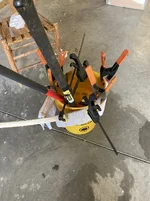
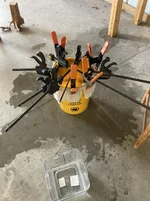
I have been inspired by everyone’s awesome planted fish bowls. I have been researching and toying around with the idea of setting one up. I was working on building a nano frag tank set up for my saltwater side and got the itch to try something. So I started building the pedestal for a fish bowl. Now down the rabbit hole, I am bending a piece of trim to wrap my 12” platform.
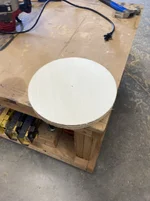
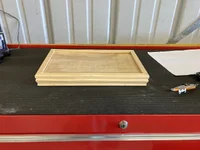
6 Replies
·
184 views

Staff member
I Donated 2026
Founding Member
Hello Welcome, Jan
Welcome to ScapeCrunch, @Jan!
We would love to get to know you. Please tell us about yourself. What tank do you have?
We would love to get to know you. Please tell us about yourself. What tank do you have?
0 Replies
·
13 views