
Welcome to ScapeCrunch
We are ScapeCrunch, the place where planted aquarium hobbyists come to build relationships and support each other. When you're tired of doom scrolling, you've found your home here.
Social Feed

Today, we all agree that the pH drop method is the best for estimating and profiling CO2 levels in our tanks.
However, I still to this day think that when we talk about a pH drop, there still isn't a universally agreed upon rule/practice for how we must all measure our starting pH.
This is despite it being extremely important for knowing our starting CO2 level. We need to have a good estimate for our starting CO2 concentration in order to know what our pH drop means.
Dennis Wong wrote the best guide on the topic. But he says to take a tank water sample, let it sit to degas, and assume it has 2-3 ppm (so the 1 pH drop from there is the rule of thumb). But is it really 2-3 from every tank? And is it 2 OR 3? How can I target specifically 20 versus 30 versus 40 ppm?
Some reputable aquarists (like Marian Sterian for example) don't even seem to use the pH drop method and simply recommend to aim for a lime green drop checker.
Other masters of the art, like Tom, Joe and Gregg just go for a 1.4 pH drop (1.2 for Joe if I remember correctly). I'm curious to know from what they measure the starting pH.
What we know for sure is that a 1 pH drop = roughly x10 times the starting CO2 concentration, as part of a logarithmic scale.
So:
Similarly, with a 1.4 pH drop:
1) The natural CO2 concentration in a biologically mature/active tank that is not CO2 injected can be anything from 2 ppm to 6 ppm (possibly more in tanks like Sudipta Shaw's, potentially as much as 10 ppm). So taking a reading directly from a non-CO2-injected tank is one thing.
2) Taking a reading directly from CO2-injected tank at night or right before CO2 kicks in: the tank has the above + possibly still has residual CO2 from the previous photoperiod's CO2 injection. How much exactly is impossible to guess. So it's even more hard to predict.
3) Taking a sample of water from the tank and letting it sit for a day or two is yet another thing, it will come closer to equilibrium with the air but I believe that it still contains active microbiology from the tank and will likely now have less CO2 than the source tank but more CO2 than water that is fully in equilibrium with the air. Do we really know how much this concentration typically is and whether it varies widely from one tank to another?
4) Taking a sample of water from from the tank and running an air stone or some kind of mechanical agitation long enough for it to be brought into equilibrium with the air (you'll know it has reached that point when its pH stops rising beyond a certain point no matter how long you keep the agitation going), is yet another thing. I'm assuming that this overrides any biologically-generated CO2 and fully degasses it.
I use method #4 and then use this calculator (using the recommended Millero 2002 method since it's more accurate for biologically active freshwater systems) to estimate the CO2 concentration of my fully degassed tank water sample: https://www.hamzasreef.com/Contents/Calculators/CO2LevelFresh.php
I then use an excel sheet calculator that I made to figure out my target pH drop to reach my desired CO2 concentration (it simply uses the principle of: 1 pH drop = x10 times the initial CO2). Here are the results for my own tank:

So starting from my 0.65 ppm CO2 fully degassed water, I need a 1.7 pH drop from there to achieve 33 ppm CO2, and a 1.8 drop to achieve 40 ppm.
Am I missing something or am I incorrect about anything?
What I'd love to know specifically is whether that supposition is true or false: Mechanically agitating the tank water sample until its pH no longer rises no matter how much you try to agitate it does bring it into full equilibrium with the air. Because I don't see why it shouldn't.
If this is indeed true, then my method here is correct. If it's not true, then estimating the starting CO2 concentration is damn near impossible. And statements like "I have 30 ppm CO2 in this tank" are meaningless.
As you can see, the whole CO2 thing isn't easy when we're seeking accuracy, especially as far as trying to make it more accessible to a complete newbie. (Certainly not drop checker color game easy, but certainly more accurate, or so I hope.) Even after doing all of this work, this is still "an estimation". Because Millero 2002 itself is an estimation, albeit the best we have so far.
However, I still to this day think that when we talk about a pH drop, there still isn't a universally agreed upon rule/practice for how we must all measure our starting pH.
This is despite it being extremely important for knowing our starting CO2 level. We need to have a good estimate for our starting CO2 concentration in order to know what our pH drop means.
Dennis Wong wrote the best guide on the topic. But he says to take a tank water sample, let it sit to degas, and assume it has 2-3 ppm (so the 1 pH drop from there is the rule of thumb). But is it really 2-3 from every tank? And is it 2 OR 3? How can I target specifically 20 versus 30 versus 40 ppm?
Some reputable aquarists (like Marian Sterian for example) don't even seem to use the pH drop method and simply recommend to aim for a lime green drop checker.
Other masters of the art, like Tom, Joe and Gregg just go for a 1.4 pH drop (1.2 for Joe if I remember correctly). I'm curious to know from what they measure the starting pH.
What we know for sure is that a 1 pH drop = roughly x10 times the starting CO2 concentration, as part of a logarithmic scale.
So:
- If your starting CO2 is 0.6 ppm, a 1 pH drop = 6 ppm CO2
- If your starting CO2 is 1 ppm, a 1 pH drop = 10 ppm CO2
- If your starting CO2 is 2 ppm, a 1 pH drop = 20 ppm CO2
- If your starting CO2 is 3 ppm, a 1 pH drop = 30 ppm CO2
Similarly, with a 1.4 pH drop:
- If your starting CO2 is 0.65 ppm, a 1.4 pH drop = 15 ppm CO2
- If your starting CO2 is 1 ppm, a 1.4 pH drop = 25 ppm CO2
- If your starting CO2 is 2 ppm, a 1.4 pH drop = 50 ppm CO2
- If your starting CO2 is 3 ppm, a 1.4 pH drop = 75 ppm CO2
1) The natural CO2 concentration in a biologically mature/active tank that is not CO2 injected can be anything from 2 ppm to 6 ppm (possibly more in tanks like Sudipta Shaw's, potentially as much as 10 ppm). So taking a reading directly from a non-CO2-injected tank is one thing.
2) Taking a reading directly from CO2-injected tank at night or right before CO2 kicks in: the tank has the above + possibly still has residual CO2 from the previous photoperiod's CO2 injection. How much exactly is impossible to guess. So it's even more hard to predict.
3) Taking a sample of water from the tank and letting it sit for a day or two is yet another thing, it will come closer to equilibrium with the air but I believe that it still contains active microbiology from the tank and will likely now have less CO2 than the source tank but more CO2 than water that is fully in equilibrium with the air. Do we really know how much this concentration typically is and whether it varies widely from one tank to another?
4) Taking a sample of water from from the tank and running an air stone or some kind of mechanical agitation long enough for it to be brought into equilibrium with the air (you'll know it has reached that point when its pH stops rising beyond a certain point no matter how long you keep the agitation going), is yet another thing. I'm assuming that this overrides any biologically-generated CO2 and fully degasses it.
I use method #4 and then use this calculator (using the recommended Millero 2002 method since it's more accurate for biologically active freshwater systems) to estimate the CO2 concentration of my fully degassed tank water sample: https://www.hamzasreef.com/Contents/Calculators/CO2LevelFresh.php
I then use an excel sheet calculator that I made to figure out my target pH drop to reach my desired CO2 concentration (it simply uses the principle of: 1 pH drop = x10 times the initial CO2). Here are the results for my own tank:
So starting from my 0.65 ppm CO2 fully degassed water, I need a 1.7 pH drop from there to achieve 33 ppm CO2, and a 1.8 drop to achieve 40 ppm.
Am I missing something or am I incorrect about anything?
What I'd love to know specifically is whether that supposition is true or false: Mechanically agitating the tank water sample until its pH no longer rises no matter how much you try to agitate it does bring it into full equilibrium with the air. Because I don't see why it shouldn't.
If this is indeed true, then my method here is correct. If it's not true, then estimating the starting CO2 concentration is damn near impossible. And statements like "I have 30 ppm CO2 in this tank" are meaningless.
As you can see, the whole CO2 thing isn't easy when we're seeking accuracy, especially as far as trying to make it more accessible to a complete newbie. (Certainly not drop checker color game easy, but certainly more accurate, or so I hope.) Even after doing all of this work, this is still "an estimation". Because Millero 2002 itself is an estimation, albeit the best we have so far.
When measuring your pH drop, how do you measure your starting pH?
14 votes total
18 Replies
·
5266 views


Journal Farmer D. Singh's journal
Ive reorganized the order of my tanks so I can better keep track of them ie. Tank 2 moss tank is now tank 3. This helps in any confusion I had when tracking tanks they are in a sort of order now. Rather than taking time editing my old journal id rather create a new thread. Pics will be current (for the most part) as they are posted. I am not aquascaping. I am just farming.
69 Replies
·
3897 views

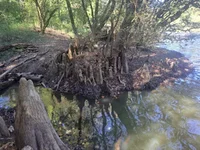
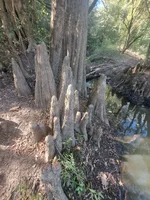
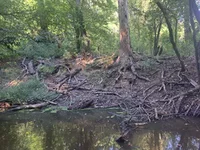
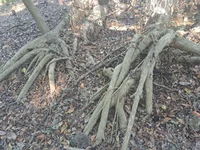
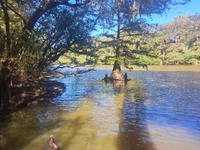
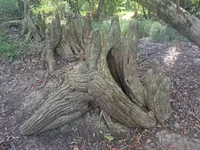
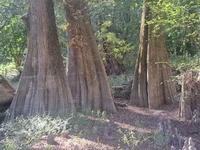
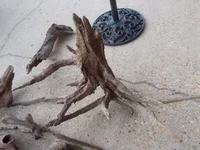
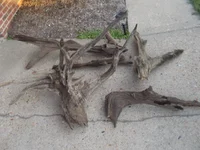
Went to a few local rivers for some ideas on scapes and got some good pics. Its a swamp down here but had nice weather today so no swamp ass or mosquito bites for once lol! some of the cypress trees are 5'+ wide at base, great ideas for sure looks like se Asia in some parts. Picked up some driftwood but not usable in tanks more for display, taxidermy or art piece still nice pieces smallest is 3' and largest over 5'. Ill find some cypress soon im sure its good in tanks long as its old and dead no more leaching. Fun day of riding around looking for plants and wood. Got a source of cypress knees all I want to cut down on private land.

3 Replies
·
39 views

Usually I mix them up a week or so before needing them…
But this time got away from me…
I figure hotter water will dissolve the salts faster..
Just wondering if any of the compounds would be deactivated by heating…
But this time got away from me…
I figure hotter water will dissolve the salts faster..
Just wondering if any of the compounds would be deactivated by heating…
5 Replies
·
49 views

Staff member
Supporting
I Donated 2026
Rockstar
Anyone familiar with these?

6 Replies
·
84 views

Staff member
I Donated 2026
Founding Member
This is the future home for the announcements when someone obtains an achievement badge. Let the games begin!
2045 Replies
·
68918 views
Staff member
I Donated 2026
Founding Member
Hello Welcome, Jacob D'angelo
Welcome to ScapeCrunch, @Jacob D'angelo!
We would love to get to know you. Please tell us about yourself. What tank do you have?
We would love to get to know you. Please tell us about yourself. What tank do you have?
6 Replies
·
98 views
Staff member
I Donated 2026
Founding Member
Hello Welcome, ajswinter
Welcome to ScapeCrunch, @ajswinter!
We would love to get to know you. Please tell us about yourself. What tank do you have?
We would love to get to know you. Please tell us about yourself. What tank do you have?
0 Replies
·
14 views

I Donated 2026
Expert in Residence
MOTM Winner
I have always liked Rotala florida as plant due to its strongly colored leaves, but realized that I haven't actually aquascaped much with it - meaning to integrate it as part of a layout and not just growing a bunch of it in farm/collector style tank. Using plants in a layout in tighter bunches, and in competition with surrounding plants/hardscape is much harder than growing it farm style in a single patch - it also means be able to shape/trim the bushes to match the overall curves of the layout.
Back in 2016 or so when I first received Rotala florida samples from north america, I could only grow it in sparser bunches. It looked nice in macro photographs but I could not envision using it an bush that would show off well as part of a layout unless I can grow it much denser. In the recent years, there were two main discoveries that I found in my experimentation, the first is that it grows better in moderate GH (5 dGH+) compared to super soft water (say <3dGH), and that it grew better in certain soil mixes (I experimented with different garden soil mixes when engineering the composition of APT Feast). Eventually I integrated some of the soil data into APT Feast's composition, and paired with the higher power lights readily available today, I find that I could finally grow the plant the way I envisioned as part of overall layout. I could prune it dense, as the base stems were healthy enough to sprout dense side shoots after trimming - and the secondary/tertiary shoot tips were as fully colored and sized similar to a primary shoot tip that hasn't been subjected to topping yet.
As a midground stem, it works very well due to its slower growth rate vs other colored stem plants.
Against the deep purple of Rotala florida, I found that Golden white clouds worked quite well. So now they are the main inhabitants of the tank.
Tank this week (25/6/2025)


Tank started out like this:

A week or 2 after initial planting (5/5/2025). I reused old aquasoil from the previous scape, so I planted all plants up front rather than waiting more time for the tank to stabilize, with the idea that I could out-grow any algae issues. Initially wanted to add H. Chai but it really didn't fit the overall color scheme, and the bushes by the side were too invasive to be compatible with having a chai patch I think.
Since it was going to contain Rotala florida, I thought I might as well throw in other high demand troublesome species such as the Red Eriocaulon quinguangulare, blood vomit. I settled on Rotala tulunadensis for the background as I wanted something dense and shapeable.
Tank specs:
60x36x36cm
Filter: Oase biomaster 250, all sponge media
CO2 injected through inline atomizer
Substrate: APT Feast
Water column: APT Sky to raise GH to 5dGH, 2ml of APTe per day.

Light distance. Interestingly, not crazy high PAR - just around 200-250 umols PAR at the substrate level.

Trimming and shaping: Most bushes were shaped by cutting individual outlier shoots one by one. Only Rotala blood red and the Rotala tulunadensis was straight trimmed across the entire top once.

This is how the Rotala tulunadensis looked like after a straight trim on 29/5/2025. About 3 weeks from when the top picture at top of this page was taken. It took the plant a whole week + to show new shoots. It seems straight trimming slows down the plant quite a bit, but allows for a very dense & neat canopy afterwards.

There are some interesting plants stuffed here and there. Some Eriocaulon caulescens? bolivia? that local hobbyists passed on to me. Carved out a patch for Syngonanthus vichada - slow grower, but the couple of babies that came have doubled in size so I think they should be alright. I think I will move them to a larger tank with more space.


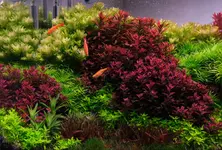
Only discovered the color combination with the Golden white clouds when the tank matured, but its one of my favourite fish-plant combinations now. I think that while some of the species are a bit picky about growth conditions, one thing I really like about this tank is that most things have moderate/slow growth rates, which makes maintenance with regards to removing excess growth less tedious.
Elatine triandra is used as a low growing green filler plant - it does this role well. As it does not root very deeply, I can easily cut and pull off excess growth easily. Its the fasting growing plant in the layout that requires frequent removal of excess growth.
Some more close-ups.


I'm trying to replicate concepts of this layout (slowing growing bushes) into my 4ft tank.
Back in 2016 or so when I first received Rotala florida samples from north america, I could only grow it in sparser bunches. It looked nice in macro photographs but I could not envision using it an bush that would show off well as part of a layout unless I can grow it much denser. In the recent years, there were two main discoveries that I found in my experimentation, the first is that it grows better in moderate GH (5 dGH+) compared to super soft water (say <3dGH), and that it grew better in certain soil mixes (I experimented with different garden soil mixes when engineering the composition of APT Feast). Eventually I integrated some of the soil data into APT Feast's composition, and paired with the higher power lights readily available today, I find that I could finally grow the plant the way I envisioned as part of overall layout. I could prune it dense, as the base stems were healthy enough to sprout dense side shoots after trimming - and the secondary/tertiary shoot tips were as fully colored and sized similar to a primary shoot tip that hasn't been subjected to topping yet.
As a midground stem, it works very well due to its slower growth rate vs other colored stem plants.
Against the deep purple of Rotala florida, I found that Golden white clouds worked quite well. So now they are the main inhabitants of the tank.
Tank this week (25/6/2025)
Tank started out like this:
A week or 2 after initial planting (5/5/2025). I reused old aquasoil from the previous scape, so I planted all plants up front rather than waiting more time for the tank to stabilize, with the idea that I could out-grow any algae issues. Initially wanted to add H. Chai but it really didn't fit the overall color scheme, and the bushes by the side were too invasive to be compatible with having a chai patch I think.
Since it was going to contain Rotala florida, I thought I might as well throw in other high demand troublesome species such as the Red Eriocaulon quinguangulare, blood vomit. I settled on Rotala tulunadensis for the background as I wanted something dense and shapeable.
Tank specs:
60x36x36cm
Filter: Oase biomaster 250, all sponge media
CO2 injected through inline atomizer
Substrate: APT Feast
Water column: APT Sky to raise GH to 5dGH, 2ml of APTe per day.
Light distance. Interestingly, not crazy high PAR - just around 200-250 umols PAR at the substrate level.
Trimming and shaping: Most bushes were shaped by cutting individual outlier shoots one by one. Only Rotala blood red and the Rotala tulunadensis was straight trimmed across the entire top once.
This is how the Rotala tulunadensis looked like after a straight trim on 29/5/2025. About 3 weeks from when the top picture at top of this page was taken. It took the plant a whole week + to show new shoots. It seems straight trimming slows down the plant quite a bit, but allows for a very dense & neat canopy afterwards.
There are some interesting plants stuffed here and there. Some Eriocaulon caulescens? bolivia? that local hobbyists passed on to me. Carved out a patch for Syngonanthus vichada - slow grower, but the couple of babies that came have doubled in size so I think they should be alright. I think I will move them to a larger tank with more space.
Only discovered the color combination with the Golden white clouds when the tank matured, but its one of my favourite fish-plant combinations now. I think that while some of the species are a bit picky about growth conditions, one thing I really like about this tank is that most things have moderate/slow growth rates, which makes maintenance with regards to removing excess growth less tedious.
Elatine triandra is used as a low growing green filler plant - it does this role well. As it does not root very deeply, I can easily cut and pull off excess growth easily. Its the fasting growing plant in the layout that requires frequent removal of excess growth.
Some more close-ups.
I'm trying to replicate concepts of this layout (slowing growing bushes) into my 4ft tank.
241 Replies
·
35214 views


Supporting
I'm looking for recommendations for neocaridina retailers. I'd like to order them at the end of October, and have them shipped to Asheville NC.
Any recommendations?
Any recommendations?
14 Replies
·
267 views
So I've somehow used up my gallon of metricide for excel, now I think you need a business license to purchase it on amazon.
I want to go back and try hydrogen peroxide again since its so easy and cheap to buy.
What ratios are you guys using to get rid of algae on plants such as BBA that are still somewhat safe for more delicate mosses?
Or should the mosses just be avoided for this?
1/2 peroxide + 1/2 water into a spray bottle for treating outside the tank?
I want to go back and try hydrogen peroxide again since its so easy and cheap to buy.
What ratios are you guys using to get rid of algae on plants such as BBA that are still somewhat safe for more delicate mosses?
Or should the mosses just be avoided for this?
1/2 peroxide + 1/2 water into a spray bottle for treating outside the tank?
10 Replies
·
411 views