Welcome to ScapeCrunch

We are ScapeCrunch, the place where planted aquarium hobbyists come to build relationships and support each other. When you're tired of doom scrolling, you've found your home here.

Journal Greggz 120G Rainbow Fish Tank - Part Deux!

  • Thread starter Thread starter GreggZ
  • Start date Start date
  • Tagged users Tagged users None
I have always been terrible at this 💯💯 this app is helping 👍


Interesting I will have to take a look at that.

For me it's just been good old fashioned spreadsheets.

But however someone can do it they should do it. Or they could be destined to make the same mistakes over and over.

And funny thing is most people try to fix things with changes in dosing. Reality is most times the issues have nothing at all to do with dosing. It's everything else.
 
Thanks Gregg,
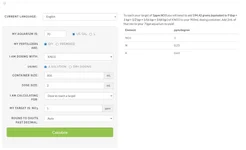
Another question if I may. Isn't the colour chart for the P04 at a low range? I'm curious if you dilute the sample at all, because if I remember correctly you dose P04 well above the levels displayed on the colour chart.
Yep exactly I dilute the sample. It's the same thing they do with salt vs fresh water kits. Same ingredients just more/less water/regents. And of course a calibrated solution goes a long way to trusting what you see.
 
Yep exactly I dilute the sample. It's the same thing they do with salt vs fresh water kits. Same ingredients just more/less water/regents. And of course a calibrated solution goes a long way to trusting what you see.
Hope you don't mind all the questions on this topic.

So, do you also dilute the calibrated solutions?

Then, dilute the tank water sample?

Then use your testing kit on the tank sample and the various calibrated solutions, and then you compare the colours?
 
Hope you don't mind all the questions on this topic.

So, do you also dilute the calibrated solutions?

Then, dilute the tank water sample?

Then use your testing kit on the tank sample and the various calibrated solutions, and then you compare the colours?
There's two ways to dilute the readings. You can dilute the tank water, which then in turn you would dilute the calibrated solution.

Or you can also use less water with the kit which does the same thing. I've done it both ways and they both work fine.

Remember you are trying to train your eye as to what the various calibrated solutions look like. I've actually done three samples at once and taken pictures of them to look back on later.

All that being said I really don't measure these things that often. But when I am trying to solve a problem or improve things I want to be sure that if I do take the time to test things that the results are valid.

Like I've said with the API kits you can get wildly different readings than a calibrated solution, which has no value.
 
The UI is crazy unintuitive 🤦🤦 takes more than a little to figure out where all of the features are buried, but once you do it's actually super functional 💯💯
Agree that it's a challenge to learn, but the app developer is really quick to fix bugs, and implement new features. I focus only on the diary and tracking test measurements.
 
I’ve been using this one for years. It’s simple, but useful.
 
Next I added a dosing pump for micros. When the tank was in my den on the first floor I would wander over there with a cup of coffee in the morning and dose micros. Now that it is in the basement I only remembered less than half the time. So I searched around and ended going with a Kamoer X1 Pro 2 WiFi Bluetooth Dosing Pump. I found an open box unit on ebay for $50 and figured it was worth a shot. Set up and calibration was super easy, and it’s been running flawlessly. It’s something I should have done a long time ago but just never got around to it.
You should consider doing something similar for your macros, even if just front loading! Measuring dry KNO3/KH2PO4 powders once, to make a super concentrated solution that will last for 4 months worth of water changes, and pressing 2-3 buttons after water change to add the desired front-loaded Macros dose, has been game changing for me.

As little effort as possible has become my motto! I still don't mind dry dosing, but after making concentrated solutions and letting my auto dosers do the work, I'll not likely go back!
 
You should consider doing something similar for your macros, even if just front loading! Measuring dry KNO3/KH2PO4 powders once, to make a super concentrated solution that will last for 4 months worth of water changes, and pressing 2-3 buttons after water change to add the desired front-loaded Macros dose, has been game changing for me.

As little effort as possible has become my motto! I still don't mind dry dosing, but after making concentrated solutions and letting my auto dosers do the work, I'll not likely go back!
Interesting and something I have thought about but have not got around to doing.

A few questions.

Do you also add Ca & Mg? What size container? Do you run into solubility limits?

I have not done the math but figure I would need a pretty good size container if I went that route.
 
Do you also add Ca & Mg?
I do, but I dry dose those due to solubility issues. Since I have to dry dose those, I take the time to measure a month or two worth in advance, in little marked containers, so I don't have to weigh powders every week. I also include K2SO4 powder with these remineralizers to help hit my target K for the week, since it also has poor solubility in a macros solution. Measure these "remineralizers" out once every few months into separate little containers.

The macros solution is just KNO3 and KH2PO4, both of which are insanely soluble. You can dissolve up to 320g of KNO3 in 1,000mL of water. KH2PO4 isn't an issue, since we use so little of it comparatively. The solution I make aims for 1/0.3/0.75 as NO3/PO4/K per 1mL, which also makes it easy to use the auto doser to deliver (and easy to remember! 1mL=1ppm NO3).
What size container?
1,000mL Pyrex Slim Line bottles, with a tube-tight hole drilled in the lid, and a tiny secondary hole for air to enter the bottle:
1774362086852.webp
Less points of failure than, say, the chihiros pumps. I stopped seeing air bubbles in these lines once I switched to having the dosing lines directly through the lid of the containers.

Do you run into solubility limits?
Yes, but I always make sure to work around them -- and since KNO3/KH2PO4 are both soooo soluble, it's not a problem for longevity.

For example, for a tank this size (~40Gal), I make the solution so concentrated that 1mL = 1ppm NO3/0.3ppm PO4 /0.75ppm K. For your tank size, you'd have to go up to 2ml = 1ppm NO3.

I have not done the math but figure I would need a pretty good size container if I went that route.

For you to dose your incoming 70Gal of RO water with KNO3 solution:
1774362575593.webp
If your goal was to raise the PPM of the incoming 70 Gal of water to 25ppm, it would take 50mL of this 1000mL solution.

For accuracy, I always use this graduated cylinder. I fill to ~700mL, add my powders, mix until dissolved, then top off to exactly 1000mL so I know it's accurate:
1774363210895.webp


If your bottle holds 1000mL, that's 20 weeks (~5 months) worth of water changes in this one 1L glass bottle alone for macros! You could always go bigger in bottle sizes, but it's nice to keep the lifespan of the bottles reasonable in case of mold issues.

My weekly process has been this:
  1. Trim plants, start water removal.
  2. Add fresh RO water back in. While water adds, mix little container of remineralizers in a bit of tank water to "pre-dissolve". Pour remineralizers into incoming water.
  3. Open dosing pump app on my phone, tell it to add x mL of front-loaded macros (where 2mL = 1ppm NO3) while the water is being added.
  4. Once full fresh water is in, start filter system again. Wait 20 minutes (set a timer if necessary).
  5. Open dosing pump app on my phone, tell it to add 0.2ppm Fe-worth of front-loaded micros.
I only have to bust out my powders and scales once every few months to refill my little "remineralizer" cups. For me, since my experiment tank is only 34 gal of actual water, I can make a solution that is 1mL=1ppm NO3 / 0.3ppm PO4 / 0.75ppm K. Couldn't be easier, and 1000mL lasts me about 33 weeks at a time. 33 weeks! I can't believe I was weighing/measuring dry powders every week before this setup.


As a bonus, since you already have a macros-solution doser set up, you could slightly reduce your front-load, and dose some of the solution daily for added stability.

Front loading 28ppm NO3 weekly with no daily dosing:
1774362891776.webp


Slight reduced front-load, with daily dosing, totaling to 28ppm weekly:
1774362869325.webp


These are all just examples of what I've been doing with macros for the last 5-6 months. It's changed the game for me! The less work I have to do, the better, and this has taken the weekly load off my shoulders by a lot. Plants also seem healthier and more consistent, too.
 

Attachments

  • 1774362052033.webp
    1774362052033.webp
    23.2 KB · Views: 2
I do, but I dry dose those due to solubility issues. Since I have to dry dose those, I take the time to measure a month or two worth in advance, in little marked containers, so I don't have to weigh powders every week. I also include K2SO4 powder with these remineralizers to help hit my target K for the week, since it also has poor solubility in a macros solution. Measure these "remineralizers" out once every few months into separate little containers.

The macros solution is just KNO3 and KH2PO4, both of which are insanely soluble. You can dissolve up to 320g of KNO3 in 1,000mL of water. KH2PO4 isn't an issue, since we use so little of it comparatively. The solution I make aims for 1/0.3/0.75 as NO3/PO4/K per 1mL, which also makes it easy to use the auto doser to deliver (and easy to remember! 1mL=1ppm NO3).

1,000mL Pyrex Slim Line bottles, with a tube-tight hole drilled in the lid, and a tiny secondary hole for air to enter the bottle:
View attachment 15413
Less points of failure than, say, the chihiros pumps. I stopped seeing air bubbles in these lines once I switched to having the dosing lines directly through the lid of the containers.


Yes, but I always make sure to work around them -- and since KNO3/KH2PO4 are both soooo soluble, it's not a problem for longevity.

For example, for a tank this size (~40Gal), I make the solution so concentrated that 1mL = 1ppm NO3/0.3ppm PO4 /0.75ppm K. For your tank size, you'd have to go up to 2ml = 1ppm NO3.


For you to dose your incoming 70Gal of RO water with KNO3 solution:
View attachment 15414
If your goal was to raise the PPM of the incoming 70 Gal of water to 25ppm, it would take 50mL of this 1000mL solution.

For accuracy, I always use this graduated cylinder. I fill to ~700mL, add my powders, mix until dissolved, then top off to exactly 1000mL so I know it's accurate:
View attachment 15417


If your bottle holds 1000mL, that's 20 weeks (~5 months) worth of water changes in this one 1L glass bottle alone for macros! You could always go bigger in bottle sizes, but it's nice to keep the lifespan of the bottles reasonable in case of mold issues.

My weekly process has been this:
  1. Trim plants, start water removal.
  2. Add fresh RO water back in. While water adds, mix little container of remineralizers in a bit of tank water to "pre-dissolve". Pour remineralizers into incoming water.
  3. Open dosing pump app on my phone, tell it to add x mL of front-loaded macros (where 2mL = 1ppm NO3) while the water is being added.
  4. Once full fresh water is in, start filter system again. Wait 20 minutes (set a timer if necessary).
  5. Open dosing pump app on my phone, tell it to add 0.2ppm Fe-worth of front-loaded micros.
I only have to bust out my powders and scales once every few months to refill my little "remineralizer" cups. For me, since my experiment tank is only 34 gal of actual water, I can make a solution that is 1mL=1ppm NO3 / 0.3ppm PO4 / 0.75ppm K. Couldn't be easier, and 1000mL lasts me about 33 weeks at a time. 33 weeks! I can't believe I was weighing/measuring dry powders every week before this setup.


As a bonus, since you already have a macros-solution doser set up, you could slightly reduce your front-load, and dose some of the solution daily for added stability.

Front loading 28ppm NO3 weekly with no daily dosing:
View attachment 15416


Slight reduced front-load, with daily dosing, totaling to 28ppm weekly:
View attachment 15415


These are all just examples of what I've been doing with macros for the last 5-6 months. It's changed the game for me! The less work I have to do, the better, and this has taken the weekly load off my shoulders by a lot. Plants also seem healthier and more consistent, too.
Rocco this post brings me back to a time about a decade ago when we were having this same discussion about accumulation and stability in my long running journal on another forum.

While I know that nutrient stability has become a hot topic recently, it is something we were exploring even back in the day. So for what it’s worth I’ll give you my take and how things began to change back then.

At the time many people with high tech high light tanks were blindly following EI dosing. If you recall that method called for dosing every other day, then a day of “rest”, then a 50% water change. As I started looking more closely at the method it occurred to me that the EI dosing scheme was leading to wide variations of nutrients during the week.

Basically after a water change you had little nutrients, then as the week progressed accumulation led to more elevated levels by the end of the week.

I spent a lot of time discussing things like this with Joe at the time. We both noticed that many plants seemed to peak right before a water change. Which made sense as nutrient levels would peak at the same time.

Our new thought was that nutrient stability was something that was under discussed. I made the point many times that most tanks could get by on a fairly wide range of dosing if levels were kept stable. Plants will adapt to the level, and program themselves to make the best of what is available. Sometimes they may change form, but once they settle in they will remain healthy.

So at the time I put together a nutrient accumulation calculator, much like you have done. It was really to demonstrate the effect all of these variables had on a planted tank.

When I first brought it up a lot of people thought I was over complicating things. At the time no one was really discussing accumulation or understood how it works. And no one was talking about how water change percentage affects accumulation.

So you would have people copying someone’s dosing, but their water change percentage was different. And their plant mass was different, and their fish load was different. And they didn’t get the same results. Well all those variables means a completely different level of accumulation over time.

A quick formula is helpful to understand why. There is something we would refer to as the theoretical max accumulation. This would not take into account nutrients generated by the tank, or the plant uptake of nutrients. Purely theoretical with no other variables. But it helps to begin to understand accumulation.

It’s a simple formula. The max accumulation is equal to the dosing divided by the water change percentage.
So let’s take someone who says they are dosing 20 ppm of NO3 per week. Here’s what that could mean.

20ppm NO3 with 25% water change = 80 ppm Max
20ppm NO3 with 50% water change = 40 ppm Max
20ppm NO3 with 75% water change = 26.66 ppm Max

So you see if someone is not following the same water change schedule, accumulated nutrients will be wildly different.
But our tanks are not theoretical. The tank both generates nutrients (i.e. fish load) and the plants uptake nutrients. These are the wild cards in every tank. And they can change over time. More plant mass means more available nutrients. Less plant mass means less available nutrients. More fish/feeding more nutrients are generated. Less fish/feeding less nutrients generated.

Another thing that Joe and I always noticed was that right after a massive trim the tank seemed to spring to life and plants peaked. Most likely had to do with less competition and more nutrient availability.

This is the point in many of those conversations that some had to crawl onto a couch with a cold compress on their head for an hour or so! But if you’re still with me I will go on.

So back to the calculator. Here’s an example of my tank with my current NO3 dosing and 70% water change. The first example is if I dosed using the old EI standard schedule. Notice for the time being that I have no entries for tank generated nutrients or plant uptake. The NO3 dosing is 7 ppm every other day. The number to focus on is the daily NO3 level. Notice it starts at 16 ppm and reaches 30 ppm by weeks end.

Chart 1.webp

But what if it’s a tank with a heavy fish load and very lightly planted. Well that could look like this. NO3 goes from 24 ppm to 50 ppm during the week. So you see fish load and nutrient uptake have a large effect on accumulation and actual nutrient levels.

Chart 2.webp

Now back to my tank. Here is what I think is pretty much happening. I believe my tank generated NO3 is very close to my plant uptake of NO3. But keep in mind I have a pretty large fish load compared to many planted tanks. Notice for me that front end loading keeps my NO3 levels very stable. And I have confirmed this over the years by testing the tank every other day. The readings look almost exactly the same any day of the week. So that is a good thing.

Chart 3.webp

But now let’s look at my PO4 numbers. I haven’t looked at them in a long time but with all of this talk about stability led me to do some testing recently. And what I found is that my PO4 level was steadily dropping during the week. So I believe my numbers could have looked something like this, but really it’s more of a guess or estimation.

Chart 4.webp

So I added some PO4 to my daily micro dosing and I think it’s now more like this. And so far testing is confirming that the level is much more stable.

Chart 5.webp

You know it’s great to have a guy like you around. You remind me a lot of me! :ROFLMAO: Not sure if that is a good thing or not? Back in the day we had seriously long discussions about every aspect of a planted tank. Once in a while it’s good to revisit these old topics. Not just for our benefit, but hopefully these types of discussion help some people out there.
 
Last edited:
You remind me a lot of me! :ROFLMAO: Not sure if that is a good thing or not?
I'm honored to remind you of you! I swear, Scape Crunch is the only place online where these things are actually discussed at the level that we do. I'm glad to be a part of it, as info like you've shared is what genuinely helped me understand this hobby so much better!
 
I'm honored to remind you of you! I swear, Scape Crunch is the only place online where these things are actually discussed at the level that we do. I'm glad to be a part of it, as info like you've shared is what genuinely helped me understand this hobby so much better!
So much this. While I am not even close to the level of most of this board, I always appreciate the insight from the experienced and talented. It is also extremely refreshing to see how freely people share their ideas and hard won knowledge, while taking such a large amount of time to explain things rather than just pure advice. It’s how the collective knowledge of this hobby will grow and allows for proven ideas to be built upon and progress made.
 
So much this. While I am not even close to the level of most of this board, I always appreciate the insight from the experienced and talented. It is also extremely refreshing to see how freely people share their ideas and hard won knowledge, while taking such a large amount of time to explain things rather than just pure advice. It’s how the collective knowledge of this hobby will grow and allows for proven ideas to be built upon and progress made.
I have been in this hobby for quite a while now. And I have interacted with hundreds if not thousands of people over the years. I have found the planted tank community in general to be some of the most generous and kind people you can find. They freely share ideas and root for each others success.

I remember back in the day when I was just getting started one of the first to respond to my journal thread was Joe Harvey. I reached out and he was more than willing to share his thoughts and advice with me. Then I started reaching out to people like Vin Kutty, Tom Barr, etc. Once again they surprised me with how thoughtful their responses were and how they freely shared their thoughts with someone they really didn't know yet.

So for me I remember that and try to pay it forward when I can. Many times a kind word, a little encouragement, and a bit of advice can go a long way in helping someone progress in the hobby. And I feel like collectively the group here does that exceptionally well.

So for people new to the hobby, or just new to the forum, don't be afraid to reach out and ask questions. You've got to crawl before you can walk and the hobby has a learning curve. Take advantage of the collective knowledge here. You won't find a better more accomplished group of people anywhere else that is so willing to help if you ask.
 
Back
Top