Hi all,
I also had a question regarding the Cation Exchange Capacity (CEC ) of aquasoil that might fit this thread.
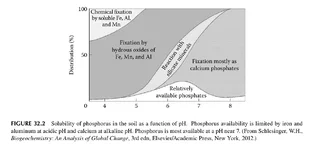
The CEC is sometimes described as a 'nutrient magnet' to make it simpeler to understand. I was wondering how this relates to the buffering capacity of the peat in the soil with regards to KH or that this is more related to the clay particles. For instance, new aquasoil absorbs some of the available PO4 from the water column. This seems related to the CEC of aquasoil, where the aquasoil could apparently become saturated over time. When this happens, does that also mean that the buffering capacity of the aquasoil/peat to absorb carbonates (KH) is lost? If so, does this also happen vice versa?
The reason why I am asking is that I use RO water and could technically chose to keep the KH above 0 (for instance 2 or 3). This means that the peat will react with the available carbonates. However, if this means that the CEC of the aquasoil is also more negatively affected over time, then I might be more reluctant to do that and rather keep the CEC for actual nutrition absorption.
Also, if the aqua soil is saturated with PO4 does that mean it cannot absorb other nutrients such as ammoniacal nitrogen?
Last edited: