
Welcome to ScapeCrunch
We are ScapeCrunch, the place where planted aquarium hobbyists come to build relationships and support each other. When you're tired of doom scrolling, you've found your home here.
Social Feed

I Donated 2026
Has anyone had much experience with this plant?
A local shop has just received stock of this version of bacopa, and I’m struggling to find many reports of people’s experiences growing it.

 schoolofscape.com.au
I’m a bit gun shy when it comes to white variants of plants that seem new to the hobby, and it’s not cheap so hoping to hear from someone whose grown it before I take the plunge!
schoolofscape.com.au
I’m a bit gun shy when it comes to white variants of plants that seem new to the hobby, and it’s not cheap so hoping to hear from someone whose grown it before I take the plunge!
Does it hold it’s white form? How much more sensitive than regular bacopa is it?
A local shop has just received stock of this version of bacopa, and I’m struggling to find many reports of people’s experiences growing it.
Bacopa Monnieri 'White'
Enhance your aquascape with Bacopa Monnieri ‘White’. A rare and stunning aquatic plant. Delivered anywhere in Australia.
schoolofscape.com.au
Does it hold it’s white form? How much more sensitive than regular bacopa is it?
19 Replies
·
914 views

I asked this question in a recent thread but it received no traction, so maybe it deserves its own thread. .........
When planting newly received emersed growth stem plants could it not be beneficial to leave the leaves on the stem of the section to be buried ? Yes these leaves will rot but could this not be possibly providing a useful ammonia source for the newly introduced plant and promote root development etc ? What evidence do we actually have of the pros and cons of doing this ? I must admit that do trim as Naturescapes_Rocco has suggested in another thread, by removing all leaves apart from a small top section but every time I do, it always makes me wonder about this factor.
I can see all the benefits of not leaving any excess emersed growth leaves on the exposed part of the stem but on the actual buried part of the stem could it possibly be even beneficial ??
When planting newly received emersed growth stem plants could it not be beneficial to leave the leaves on the stem of the section to be buried ? Yes these leaves will rot but could this not be possibly providing a useful ammonia source for the newly introduced plant and promote root development etc ? What evidence do we actually have of the pros and cons of doing this ? I must admit that do trim as Naturescapes_Rocco has suggested in another thread, by removing all leaves apart from a small top section but every time I do, it always makes me wonder about this factor.
I can see all the benefits of not leaving any excess emersed growth leaves on the exposed part of the stem but on the actual buried part of the stem could it possibly be even beneficial ??
7 Replies
·
115 views


Supporting
I Donated 2026
Rockstar
Edit: Newest tank starts here: Journal - Kwyet’s 125 / now 140G Nature Tank
——
This was one of the first tanks I set back up when we moved into our new house. As such, it was done very quickly so I could get it re-cycled and the fish in ASAP. Surprisingly, even though the filter sponges were just kept damp in plastic bags for 4 days, cycling took less than a week. I was NOT going to try to catch the pictus catfishes again, so I just lowered the water level in their holding tubs and poured them in. These guys are vocal when annoyed, so I assure you that I could hear them cussing at me, lol!
Here’s one of the last pictures of the tank before moving:

And here is what it looked like after the move in August 2024:

It left a lot to be desired, and while the painted blue background looked fine with my blue walls in Florida, it doesn’t look as good here with beige walls. I wasn’t going to move it out and scrape away the paint though, so it is what it is.
At this point I believe it had 1 angelfish (kept because it swims off-kilter), 1 Denison barb (kept because of a small white growth on chin since it was a baby), 2 old bronze Cory cats (because of age), and 3 Spotted Pictus catfish (because they were hard to acquire), 2 Super Red Bristlenose Plecos and 1 Glo-fish Rainbow shark (just because, lol!).
More to come.
——
This was one of the first tanks I set back up when we moved into our new house. As such, it was done very quickly so I could get it re-cycled and the fish in ASAP. Surprisingly, even though the filter sponges were just kept damp in plastic bags for 4 days, cycling took less than a week. I was NOT going to try to catch the pictus catfishes again, so I just lowered the water level in their holding tubs and poured them in. These guys are vocal when annoyed, so I assure you that I could hear them cussing at me, lol!
Here’s one of the last pictures of the tank before moving:
And here is what it looked like after the move in August 2024:
It left a lot to be desired, and while the painted blue background looked fine with my blue walls in Florida, it doesn’t look as good here with beige walls. I wasn’t going to move it out and scrape away the paint though, so it is what it is.
At this point I believe it had 1 angelfish (kept because it swims off-kilter), 1 Denison barb (kept because of a small white growth on chin since it was a baby), 2 old bronze Cory cats (because of age), and 3 Spotted Pictus catfish (because they were hard to acquire), 2 Super Red Bristlenose Plecos and 1 Glo-fish Rainbow shark (just because, lol!).
More to come.
79 Replies
·
7385 views

Supporting
I Donated 2026
Rockstar
So I was pondering fish food because, as I've mentioned before, I have no life. I see there was a post a few years back about feeding tetras but only a couple replies.
It seems, since we are primarily an aquatic plant enthusiast community, we tend to keep smaller species of fish. That's not to say some of us don't have big Cichlid tanks we don't discuss here much, but in general I think most of us are keeping fish in the sub 4" range. So what foods do you feed your smaller fish, especially the sub 2" species?
My primary go-to for my tetras, rasboras, dwarf gouramis, and platys, is Xtreme Nano pellets, Once a week I give them some frozen baby brine shrimp and/or daphnia. I do have a baby brine shrimp hatchery kit and have used it a few times, but I don't know that the fish really care if its live or frozen because their reaction to it is the same. I also go with Xtreme Community Peewee pellets occasionally but at sub 2", they seem to take the Nano pellets more easily. The shop I bought my first fish, told me they feed their smaller fish the Xtreme Nano so that's why I initially went with it. I've also tried various flakes including Bug Bites, but my fish don't seem to care for it as much and it just pollutes the tank.
Interested to hear what works well for others as I'd like to experiment and see if there's something else the fish might like even more. I imagine the responses for someone keeping the smaller cichlid species might be much different but interested to hear that as well since I might look into some of those species, like rams or even angelfish, on future larger tanks.
It seems, since we are primarily an aquatic plant enthusiast community, we tend to keep smaller species of fish. That's not to say some of us don't have big Cichlid tanks we don't discuss here much, but in general I think most of us are keeping fish in the sub 4" range. So what foods do you feed your smaller fish, especially the sub 2" species?
My primary go-to for my tetras, rasboras, dwarf gouramis, and platys, is Xtreme Nano pellets, Once a week I give them some frozen baby brine shrimp and/or daphnia. I do have a baby brine shrimp hatchery kit and have used it a few times, but I don't know that the fish really care if its live or frozen because their reaction to it is the same. I also go with Xtreme Community Peewee pellets occasionally but at sub 2", they seem to take the Nano pellets more easily. The shop I bought my first fish, told me they feed their smaller fish the Xtreme Nano so that's why I initially went with it. I've also tried various flakes including Bug Bites, but my fish don't seem to care for it as much and it just pollutes the tank.
Interested to hear what works well for others as I'd like to experiment and see if there's something else the fish might like even more. I imagine the responses for someone keeping the smaller cichlid species might be much different but interested to hear that as well since I might look into some of those species, like rams or even angelfish, on future larger tanks.
10 Replies
·
97 views

Journal 22 gallon long bookshelf
Time to start a new thread.
I’ll fill in some details later, but I’m working on the hardscape now. Any and all criticism is appreciated. The vision is nothing more, and nothing less, than something appealing to the eye.
90cm x 30cm x 30cm Lifegard Aquatics ultra clear bookshelf tank. Buce and anubias on the hardscape, stems towards the back and center, mid to front carpet with some changes in shade and texture down to a flat grade on the right side of the tank.
Lily pipe inlet and skimmer will be in the back left corner with the outflow in the front left to hopefully achieve circular flow. I’ll be running an in-line diffuser. Light will be the P600 Pro that I regrettably did not upside to 900. Oh well. I’ll mount it high and hopefully it’ll have enough spread.
I have some dragon stone and red lava rock rubble I’ll use at the base to blend into the substrate, as well as some stratum I may or may not cap with.


I’ll fill in some details later, but I’m working on the hardscape now. Any and all criticism is appreciated. The vision is nothing more, and nothing less, than something appealing to the eye.
90cm x 30cm x 30cm Lifegard Aquatics ultra clear bookshelf tank. Buce and anubias on the hardscape, stems towards the back and center, mid to front carpet with some changes in shade and texture down to a flat grade on the right side of the tank.
Lily pipe inlet and skimmer will be in the back left corner with the outflow in the front left to hopefully achieve circular flow. I’ll be running an in-line diffuser. Light will be the P600 Pro that I regrettably did not upside to 900. Oh well. I’ll mount it high and hopefully it’ll have enough spread.
I have some dragon stone and red lava rock rubble I’ll use at the base to blend into the substrate, as well as some stratum I may or may not cap with.
242 Replies
·
26625 views

Supporting
I Donated 2026
MTS creeps into your home, one 2 tanks at a time. This one is a UNS 45SA. I don't have firm plans for it yet, but I have some ideas. All the bits have finally arrived. Today is a "where will this fit and let's see how it runs next to the sink in case there is an issue" day.
I have some ideas of where I may want to go. Hillstream Loach / Goby with epiphytes is one direction. Submersed Buce growout idea is floating around in my head, too. Once I figure it out, I'll start a journal that will probably be updated a lot at first, then languish until I get Art's automated reminder email to post.
Hardware
UNS 45SA AIO /w Lid and Intake Screen
Hygger Submersible Heater 50 Watt
FZone Solo Series Nano LED
N-Fill Smart ATO
The ATO has a funny story. I'm using the Tunze Osmolater 3 Nano on the 6 and 10-gallon tanks, but the sensor is large, out of scale for this smaller tank. Plus, the green light is obnoxious at night. A BRS video on the N-Fill Smart ATO popped into my feed. For 70 bucks, I'd give it a try. The ATO arrived with 2 power plugs, no pump. Called BRS, who have real live people in their offices in Minnesota that you can speak to, amazing, I know. The agent had a good laugh. Earlier in the day, they had a caller with 2 pumps, no power plug. They said they'd ship another, keep the one I have. A few days later, an email letting me know it was back-ordered arrived. A quick call to the helpful BRS folks informed that it would be about 2 weeks before a new shipment would arrive. In the meantime, I went on the N-Fill site and saw they had them in stock, with free shipping and 10% signup for email discount. Asked BRS for a refund; the money was back in my account before I hung up. Ordered the ATO from N-Fill and wrote with my tale of woo, asking to purchase a pump. They sent a link to the hidden spare parts page and ordered a pump, $20 shipped. Wrote them back and asked that they make it one shipment. Their support wrote me back, apologizing for the missing pump and refunded the pump price. To be clear, I did tell them that BRS let me keep, at no charge, the unit with all the bits, sans pump. They even sent it with 2-day shipping.
The Blank Slate

A cramped AIO section.
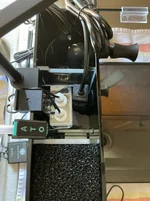
I have some ideas of where I may want to go. Hillstream Loach / Goby with epiphytes is one direction. Submersed Buce growout idea is floating around in my head, too. Once I figure it out, I'll start a journal that will probably be updated a lot at first, then languish until I get Art's automated reminder email to post.
Hardware
UNS 45SA AIO /w Lid and Intake Screen
Hygger Submersible Heater 50 Watt
FZone Solo Series Nano LED
N-Fill Smart ATO
The ATO has a funny story. I'm using the Tunze Osmolater 3 Nano on the 6 and 10-gallon tanks, but the sensor is large, out of scale for this smaller tank. Plus, the green light is obnoxious at night. A BRS video on the N-Fill Smart ATO popped into my feed. For 70 bucks, I'd give it a try. The ATO arrived with 2 power plugs, no pump. Called BRS, who have real live people in their offices in Minnesota that you can speak to, amazing, I know. The agent had a good laugh. Earlier in the day, they had a caller with 2 pumps, no power plug. They said they'd ship another, keep the one I have. A few days later, an email letting me know it was back-ordered arrived. A quick call to the helpful BRS folks informed that it would be about 2 weeks before a new shipment would arrive. In the meantime, I went on the N-Fill site and saw they had them in stock, with free shipping and 10% signup for email discount. Asked BRS for a refund; the money was back in my account before I hung up. Ordered the ATO from N-Fill and wrote with my tale of woo, asking to purchase a pump. They sent a link to the hidden spare parts page and ordered a pump, $20 shipped. Wrote them back and asked that they make it one shipment. Their support wrote me back, apologizing for the missing pump and refunded the pump price. To be clear, I did tell them that BRS let me keep, at no charge, the unit with all the bits, sans pump. They even sent it with 2-day shipping.
The Blank Slate
A cramped AIO section.
11 Replies
·
704 views


Staff member
I Donated 2026
Founding Member
The theme for this month's contest is: Shades of Green
Please take a picture of shades of green in your aquarium. Be as artistic and creative as you like.
The rules:
A $25 store credit from BurrAqua thanks to @Burr740!

Good Luck!
Please take a picture of shades of green in your aquarium. Be as artistic and creative as you like.
The rules:
- Submissions are allowed between August 16 and August 23.
- Voting will start on August 23 at 12:01 am Eastern time.
- Voting will end on August 30 at 11:30 pm Eastern time.
A $25 store credit from BurrAqua thanks to @Burr740!
Good Luck!
4 Replies
·
230 views
I’m often out and about working in the field and stumble upon breathtaking examples of often overlooked and under appreciated slices of nature that Florida has to offer.
My neck of the woods is filled with marsh/wetlands ripe with both native and invasive wildlife of all flavors; I want to start a thread where I can document and share.
I’ll update this thread whenever I capture something noteworthy. Much of what catches my eye is aquatic flora, but I try and document anything captivating. I hope you find this as beautiful and fascinating as I do.


My neck of the woods is filled with marsh/wetlands ripe with both native and invasive wildlife of all flavors; I want to start a thread where I can document and share.
I’ll update this thread whenever I capture something noteworthy. Much of what catches my eye is aquatic flora, but I try and document anything captivating. I hope you find this as beautiful and fascinating as I do.
119 Replies
·
7942 views

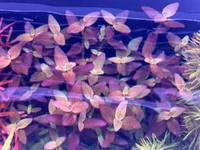
Hello guys what could be the cause of pale new growth?

1 Replies
·
56 views
Following @Dennis Wong advise to hold growth variables as steady as possible to avoid transition stress has been my single greatest tool to aquatic plant success.
I am fortunate to have Tap Water that is consistent all season with 6 ppm Ca, 1 ppm Mg day in day out all year. It is consistent because the water utility adds most of the Calcium and Magnesium in it.. the source water is extremely soft. The head of the water department has told me it never gets close to their target. They continually test and adjust the feed to hit target.
It is simple enough for me to just add gypsum and epsom salt to boost it to what I want.
Helping a fellow member here who is starting a 75 gallon tank in an apartment. Ro unit is simply not an option for him in the apartment for now. schlepping bottles of RO for a 75 gallon would also be a hardship. It is a tank just for family enjoyment and not intended to be a competition tank. He will be dosing diy ferts, high light and co2.
His public water supply has an average DGH of 8 with reasonable calcium magnesium balance. But the Seasonal variation is between 4.5 DGH and 11.2 DGH…
In the situation where RO is not currently an option what would peoples responses be?
At 8 DGH steady throughout the year, I would probably just go with it.
It would be easy enough to test tap water DGH before doing a water change. It would be easy enough to create a table to alter how much to-adjust gypsum and epsom salts as tap water hardness decreases with seasonal shifts down to 4.5. But the question is for the times it hops upwards to high end of range.
One could schlepp bottles for those weeks and hope those weeks are outliers…
Or one could simply target a higher DGH all of the time in the interest of stability..
So I understand the potential issues, but not enough of what numbers matter…
Am I overthinking? I know @Dennis Wong has said the Carbonate hardness has a bigger impact on plant health than General Hardness,
Is ranging General Hardness less of a concern?
Water report indicates 3.5 DKH with no report regarding seasonal variation..
I am fortunate to have Tap Water that is consistent all season with 6 ppm Ca, 1 ppm Mg day in day out all year. It is consistent because the water utility adds most of the Calcium and Magnesium in it.. the source water is extremely soft. The head of the water department has told me it never gets close to their target. They continually test and adjust the feed to hit target.
It is simple enough for me to just add gypsum and epsom salt to boost it to what I want.
Helping a fellow member here who is starting a 75 gallon tank in an apartment. Ro unit is simply not an option for him in the apartment for now. schlepping bottles of RO for a 75 gallon would also be a hardship. It is a tank just for family enjoyment and not intended to be a competition tank. He will be dosing diy ferts, high light and co2.
His public water supply has an average DGH of 8 with reasonable calcium magnesium balance. But the Seasonal variation is between 4.5 DGH and 11.2 DGH…
In the situation where RO is not currently an option what would peoples responses be?
At 8 DGH steady throughout the year, I would probably just go with it.
It would be easy enough to test tap water DGH before doing a water change. It would be easy enough to create a table to alter how much to-adjust gypsum and epsom salts as tap water hardness decreases with seasonal shifts down to 4.5. But the question is for the times it hops upwards to high end of range.
One could schlepp bottles for those weeks and hope those weeks are outliers…
Or one could simply target a higher DGH all of the time in the interest of stability..
So I understand the potential issues, but not enough of what numbers matter…
Am I overthinking? I know @Dennis Wong has said the Carbonate hardness has a bigger impact on plant health than General Hardness,
Is ranging General Hardness less of a concern?
Water report indicates 3.5 DKH with no report regarding seasonal variation..
16 Replies
·
221 views
Journal transitioning 75g to high energy
After a couple years of disappointing plant growth as a low energy tank, I've decided to add CO2 and get serious. I'm a long time aquarist (20 years), but never CO2, so would appreciate help and feedback on my plan.
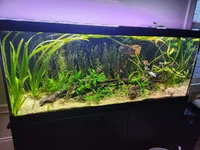
Current setup:
standard 75g marineland aquarium
fzone LED
biomaster thermo 350
corner matten filter driven by a DC pump
Sand
fertilization with APT3, Fe, K, fzone root tabs.
Fauna:
Flora:
add a yugang reactor inline with the filter.
Current setup:
standard 75g marineland aquarium
fzone LED
biomaster thermo 350
corner matten filter driven by a DC pump
Sand
fertilization with APT3, Fe, K, fzone root tabs.
Fauna:
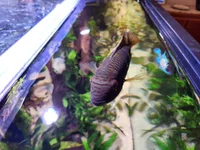
- Brutus, the royal acara Aequidens diadema
- An electric blue acara Andinoacara pulcher
- A T-bar cichlid Amatitlania sajica
- 5 melon barbs Haludaria fasciata
Flora:
- Windelov Java fern Microsorum pteropus
- Valisneria Americana
- Cryptocoryne wendtii
- Rotala sp.
- Amazon sword Echinodorus amazonicus
- Hygrophila angustifolia
- cichlids love tearing up the plants and digging
- occasional bouts of cyano
- general poor growth of the plants (except for the Valisneria)
add a yugang reactor inline with the filter.
- Aquarocks Colorado small acrylic yugang ($95) Yugang Horizontal CO2 Reactor - Acrylic
- 10lbs CO2 tank. (~$120 + $65 to fill) https://www.amazon.com/VEVOR-Aluminum-Cylinder-Adjustable-Dispensing/dp/B0DWMXPR8V?th=1
- how much are people paying for CO2 tanks and refills? the only places near me charge $65+ to refill a 10 lbs tank.
- Regulator. undecided. Any suggestions?
- Aquarocks Colorado ($160) ARC Premium Dual Stage CO2 Regulator
- CO2Art ($150) https://www.co2art.us/collections/c...dual-stage-regulator-with-integrated-solenoid
- Fzone ($136) https://fzaqua.com/products/fzone-pro-series-aquarium-co2-regulator
- Archea ($110) https://aquaforestaquarium.com/coll...ual-gauge-co2-regulator-fits-cga-320-cylinder
- others?
- CO2 tubing ($10) Silicone CO2 Tubing
14 Replies
·
210 views
