JayP
Valuable Member




I was going to use DOH! instead of STOP! in the title, because I can't believe this didn't occur to me earlier.
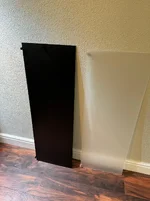
Three of my 5 active aquariums have black backgrounds. I like the way the black makes colors pop. For my first scape, I went back and forth on leaving it clear, going with frosted, or black. I read lots of pros and cons for the various options and decided to go with clear initially. That only lasted about a week when I decided to switch to black (painted). At the time I hadn't really put much thought into measuring PAR in my tank. Photone was not yet a thing for Android, and even if it were, it would have been very difficult to take readings in that tank. Then my farm tank came along, also with a painted black background. My PAR readings in that tank showed considerable variation with a 90cm Week Aqua M series light. I blamed the light. I then changed to an L series. Same issues, so I blamed Week Aqua again as a design issue or poor manufacturing consistency.
And here we are today and I've measured PAR in my new garden tank which has a Week Aqua 120cm L series. Nice consistent PAR across the front glass, 110 to 115 PAR at the substrate. Measuring the length of the tank down the center where I would expect a little higher, the numbers fall off a bit. But measuring along the back wall (also painted black) the numbers drop way off to 79 to 83. I tried removing the light shades, no difference. That's when it hit me (or should I say the light bulb came on). Could the black background be effecting light levels? Well, duh! The black back glass is absorbing light rather than reflecting it like the clear front. A quick google search confirmed. In fact, BRS has and old video discussing it and providing actual data of the effect. Why didn't I ever see this brought up in all the discussions about choosing tank backgrounds? Interestingly, even white/frosted backgrounds result in slightly lower numbers than clear per BRS testing. Something to think about for the next builds. My apologies to Week Aqua for blaming them when it was actually a physics problem.
Three of my 5 active aquariums have black backgrounds. I like the way the black makes colors pop. For my first scape, I went back and forth on leaving it clear, going with frosted, or black. I read lots of pros and cons for the various options and decided to go with clear initially. That only lasted about a week when I decided to switch to black (painted). At the time I hadn't really put much thought into measuring PAR in my tank. Photone was not yet a thing for Android, and even if it were, it would have been very difficult to take readings in that tank. Then my farm tank came along, also with a painted black background. My PAR readings in that tank showed considerable variation with a 90cm Week Aqua M series light. I blamed the light. I then changed to an L series. Same issues, so I blamed Week Aqua again as a design issue or poor manufacturing consistency.
And here we are today and I've measured PAR in my new garden tank which has a Week Aqua 120cm L series. Nice consistent PAR across the front glass, 110 to 115 PAR at the substrate. Measuring the length of the tank down the center where I would expect a little higher, the numbers fall off a bit. But measuring along the back wall (also painted black) the numbers drop way off to 79 to 83. I tried removing the light shades, no difference. That's when it hit me (or should I say the light bulb came on). Could the black background be effecting light levels? Well, duh! The black back glass is absorbing light rather than reflecting it like the clear front. A quick google search confirmed. In fact, BRS has and old video discussing it and providing actual data of the effect. Why didn't I ever see this brought up in all the discussions about choosing tank backgrounds? Interestingly, even white/frosted backgrounds result in slightly lower numbers than clear per BRS testing. Something to think about for the next builds. My apologies to Week Aqua for blaming them when it was actually a physics problem.