Welcome to ScapeCrunch

We are ScapeCrunch, the place where planted aquarium hobbyists come to build relationships and support each other. When you're tired of doom scrolling, you've found your home here.

Eriocaulon truncatum

Joined
Nov 1, 2022
Messages
1,040
Reaction score
1,591
Location
Raleigh, NC US
I mention this plant on occasion, but no one ever comments. So I thought I'd make a post for others and me for future reference.
It is my favorite Erio. It is a darker green, doesn't get too big, and for me it has never sent up any seed stalks.

I find it easy to grow. I have high light but nothing crazy at 124PAR and high CO2, 50+ppm. It gets about max 3-4" and makes side daughter plants when large. I'm not sure my dosing scheme is. Sort of an EI daily dosing kind of thing.

What gets me is every autumn, it starts to melt. I'm not sure how it knows it's autumn with consistent light and a heater, but it must get a little cooler in the tank or something. The plant starts to turn brown and sends up (I'm not sure of the correct term) vegetative stalks with little plantlets on the ends. I've found you can plant these stalks into the substrate with the plantlet on top, and it will grow into a new plant. They've been easy to grow. This is the third year this has happened to me.
Pic of plantlets below. I'll try to get a better one sometime. All I had time for tonight was a crappy phone pic.

This year I divided one of the mother plants in hopes that it wouldn't fully melt and would regrow. That is still in progress.

Anyone else's experiences are welcome.
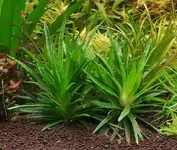
DSC09694a.webp

This plant is the same plant as the one on the right above.
20261006_182513a.webp
 
It is my understanding that many Erios are naturally short-lived, and 12=18 months might be what we could hope to expect for submerged grown plants. I know the E. cinereum I just planted considered to be short-lived. It flowers, spends its remaining energy on reproduction, and dies. Mine was actually flowering in the TC cup, so not sure how this planting round will go, but I did remove the flower stalks, and have the CO2 pretty hot so we'll see if it settles in. I presume your E. truncatum is behaving more like an annual plant. So the main parent plant melting every autumn is actually undergoing a pre-programmed senescence or cell death post reproduction, and just to be expected, as Dennis states here: "However, some species flower under water as a sign of the end of their life cycle (E. polaris, cinereum). Such species should be divided before the end of their life cycle to ensure a constant supply of new baby plants." That it is more related to timing, rather than tank conditions (temp etc). The fact it is producing plantlets on stalks, more like Eleocharis vivipara, is interesting. Does it ever produces plantlets lateral to the crowns? I am starting to find this genus quite fascinating!
 
It is my understanding that many Erios are naturally short-lived, and 12=18 months might be what we could hope to expect for submerged grown plants.

with splitting and replanting smaller plants like the erio Vietnam do new plants have the new 12 month shelf life. I thought they were like blyxa grow split and get more didn't know they melted off later. Is that just certain plants and not all?
 
with splitting and replanting smaller plants like the erio Vietnam do new plants have the new 12 month shelf life. I thought they were like blyxa grow split and get more didn't know they melted off later. Is that just certain plants and not all?
My erio Vietnam hasn't exhibited any kind of "shelf life". It just grows and grows and grows.
 
My erio Vietnam hasn't exhibited any kind of "shelf life". It just grows and grows and grows.
My Vietnam hasn't melted either, but it has also never flowered. I don't think all Erio's are created equal. Some seem more likely to produce daughter plants lateral to the main plant, reproducing via splitting their crowns, like E. ratnagiricum, and behave more as perennial plants under water. Whereas others are monocarpic, and readily send up flower stalks, prior to the parent plant melting away. Erio Vietnam seems to behave more like an aquatic perennial submerged, and reproduces by crown splitting, rather than blooming/seed production. I think the species more prone to flowering under water, like E. cinereum, behave more as annuals in the aquarium, and melt after blooming.
 
How deep are the roots ?do you go the full year without needing to uproot and replant ? The erios that I see on Dennis’s site seems so deep that it would make a mess of the foreground if uprooted.
The roots are pretty deep. I could have gone a year without uprooting, but I wish I had divided it before it started to melt to see if it would not melt. I wouldn't consider this a foreground plant. It's a bit large for that.
 
Ben what happens to the original after the melt phase, does it ever live or possibly be salvaged? Like others said I believe its just a normal end of its life phase. I had it briefly some years ago. Thought it was gonna be like a bigger vietnam, turned out more like a twin sister with severe emotional issues lol

My Vietnam hasn't melted either, but it has also never flowered. I don't think all Erio's are created equal. Some seem more likely to produce daughter plants lateral to the main plant, reproducing via splitting their crowns, like E. ratnagiricum, and behave more as perennial plants under water. Whereas others are monocarpic, and readily send up flower stalks, prior to the parent plant melting away. Erio Vietnam seems to behave more like an aquatic perennial submerged, and reproduces by crown splitting, rather than blooming/seed production. I think the species more prone to flowering under water, like E. cinereum, behave more as annuals in the aquarium, and melt after blooming.

Thats a good summarization

Vietnam is awesome, one of the most underated plants in the hobby for scaping with imo
 
I commend you for being able to keep the plant for a year long. The plant is very hard to grow like the la lindosa ;). If things arent right it can have a drastic swing. For me I introduced the plant in April. BTW I liked how Winston propagated it. The structure looked different. So I introduced it in April and for the longest time it grew super slow. Just left it alone for months. Late pasts months it started making daughters. Then last month I setup my pure erio tank. And i decided to transfer it to that tank. Daughters weren't fully developed yet but I decided to split it anyways and into 3 plants it went. The plants dont look good but no melting or at least not much. Theyre beginning to shoot flower stalks with adventitious plantlets which i think is great as I wasnt multiplying this plant for a long ass time. Question: have any of your adventitious plantlets melted? Mine have. Right now i got two good plantlets so will do what you said as soon as theyre big enough, pull the stalk and plant it that way. Time will tell whether the adult/daughter melt away but for you 1 year is a very long time for plants. My statement in my thread about needing an established tank is now false as my erio tank is new so that leads me to accuse co2...Joe commented right its like vietnams twin sister...size is similar the truncatum is just way more picky.
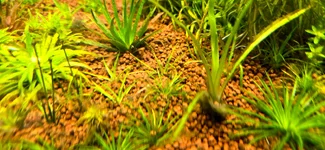
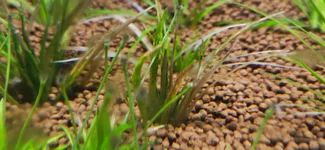
There it is in May top slight left and pictures following current, 2 daughters and the base plant. You can see each daughter formed x1 plantlet. I dont know if you can see any melting adventitious plants. I dont have more in between timeframe pics or maybe? I dont feel like scrolling my camera roll hehe


20260518_221002.webp


20261009_194151.webp20261009_194154.webp20261009_194200.webp
I know they dont look like much but from what im seeing I dont think theyre gonna melt away
 
Ben what happens to the original after the melt phase, does it ever live or possibly be salvaged? Like others said I believe its just a normal end of its life phase. I had it briefly some years ago. Thought it was gonna be like a bigger vietnam, turned out more like a twin sister with severe emotional issues lol
This is the first year I've had a couple big healthy plants when they started melting. Last year I was fighting algae and just glad I didn't lose it. I had 2-3 big ones when they started melting. One I divided in hope it would stop melting. So far the daughters haven't continued to melt. The one in the pic with the little plantlets is mostly melted but not completely. We'll see if it completely goes. I pulled some plantlets off yesterday and put them in the soil. They are tiny. Will be hard to keep track of to regrow. I need to get a pic for everyone. The third plant might have just been part of the first one that had already melted. It was a big mass, so it's hard to say. I need to set a calendar reminder for next August to divide the trucnatums before they start to melt to see if that avoids the process all together. They might be like Centrolepis drummoniana that doesn't do as well once they reach a critical mass.

Vietnam is awesome, one of the most underated plants in the hobby for scaping with imo
I've never grown vietnam. In pics it appears to have a very twisty non-uniform growth pattern whereas the truncatum has very uniform whorls and layers. Again, based only on pics I've seen of the vietnam. I like the look of the truncatum much better, but something that doesn't try to die every year would be an improvement.

As far as the other Erios, my cuspidatum has never melted, and I've had it 2+ years. I want to be rid of it, but it was so $$ I feel obligated to keep it. Also my Parkeri has never melted. Quinguangulare never melted on me, but it's tough to grow. I have that again now. I want to try to grow it well now that I'm not struggling with the algae. My cinereum never melted, but I tossed it it last time I had it so maybe it never reached that point. I have it again now because I missed it, but I haven't had it very long. The jury is still out.
 
Not the best pic. I'll try to get a better one, but there's a lot going on here (with the plants and in my real life), and I wanted to get something to show the different stages. What's happening with the different groups seems more clear now.

AB & C are the 3 parts of the plant I divided and D is the plant I didn't divide.

@Burr740 asked "Ben what happens to the original after the melt phase, does it ever live or possibly be salvaged?" You can see in D that all the plant has either melted and only vegetative stalks with the little plantlets on the ends remains. I'm sure my terminology for these parts is wrong. I'm going to phone a friend to correct me..... calling @HardeeParty ? Do you know? Anyway, I don't know if in nature the plant falls apart, the plantlets separate from the mother, and take up root elsewhere, or if the planlets grow to the point their weight settles them onto the substrate, and it all becomes a big mass? Maybe the the planlets separate and the mother plant grows back, but it is looking pretty dead to me. D Division has gone from having leaves to melted plant and all vegatitive stalks pretty quickly. It's been interesting.

In the front you can see where I planted a few of the stalks. The plantlets perked up quickly after I did it.

C Division appears to be turning into all vegetative stalks.
B Division isn't all vegetative stalks, but has a couple. Maybe it will all convert to all vegetative stalks?
A Division has no vegetative stalks.

So the jury is still out on if I had divided this earlier, would the plants have kept growing without melting. If A regrows without making the plantlets, I'm going to guess, yes.

20261013_185215b.webp
 
Not the best pic. I'll try to get a better one, but there's a lot going on here (with the plants and in my real life), and I wanted to get something to show the different stages. What's happening with the different groups seems more clear now.

AB & C are the 3 parts of the plant I divided and D is the plant I didn't divide.

@Burr740 asked "Ben what happens to the original after the melt phase, does it ever live or possibly be salvaged?" You can see in D that all the plant has either melted and only vegetative stalks with the little plantlets on the ends remains. I'm sure my terminology for these parts is wrong. I'm going to phone a friend to correct me..... calling @HardeeParty ? Do you know? Anyway, I don't know if in nature the plant falls apart, the plantlets separate from the mother, and take up root elsewhere, or if the planlets grow to the point their weight settles them onto the substrate, and it all becomes a big mass? Maybe the the planlets separate and the mother plant grows back, but it is looking pretty dead to me. D Division has gone from having leaves to melted plant and all vegatitive stalks pretty quickly. It's been interesting.

In the front you can see where I planted a few of the stalks. The plantlets perked up quickly after I did it.

C Division appears to be turning into all vegetative stalks.
B Division isn't all vegetative stalks, but has a couple. Maybe it will all convert to all vegetative stalks?
A Division has no vegetative stalks.

So the jury is still out on if I had divided this earlier, would the plants have kept growing without melting. If A regrows without making the plantlets, I'm going to guess, yes.

View attachment 20830

The plantlets on the end of the spike are vegetative clones of the mother plant, produced when it switches hormones from sexual to asexual reproduction. The process is vivipary. It’s brought on by conditions that trigger the plant to abandon production of dormant seeds. There’s obviously a lot of variation within the genus, but if I had to guess, it has a lot to do with the seasonal rainfall and extent of inundation in situ of the mother plant.

I’ll can think of three species I’ve spent a lot of time observing. All three are native to Florida wetlands. Im not drawing any conclusions, rather, I’m putting my field observations out there as part of the discussion.

Eriocaulon decangulare.
Eriocaulon compressum
Eriocaulon ravenelii

Decangulare and compressum are almost always found cohabitating. Both grow in ecosystems that see huge seasonal water line swings, spending nearly half the year submerged and half entirely emersed in a substrate comprised primarily of decaying organic matter. Both experience a high degree of vivipary, and the distribution seems to favor this method based, to some extent, on observed clustering.

Decangulare is substantially larger and seems to favor the areas furthest from the high water line. Plants grow close but not on top of each others. Each plant has their own independent root system that rarely intertwines with another. I very seldom see this plant “melt” it’s vegetative growth cyclically, and the same plants will persist perennially through multiple seasons. Vivipary is most frequently observed during the drier season. The plantlets probably break off the spike and land further away than they would if they were underwater which seems consistent with their growth pattern. When cultivated in aquaria, they behave as observed in situ. They continue to grow solitary, do not flower underwater, and do not melt back at any point. I have never tried to split them, but I would guess it’s possible given a large enough plant.

Compressum covers the midground and spends more time under water. I have observed it flower with the entire plant submerged annd only the spike breaking the water surface. Vivipary is most frequently observed under these inundated conditions, consistent with a more successful asexual reproductive method. They differ from decangulare in their root system, which consistently grows together into a thick rhizome that can easily be split into separate plants. I’m not sure of the rhizome is a result of plants falling down and taking root, or the stalk dissolving away and the weight of the plant settling down in its footprint. They experience a cyclical vegetative melt in both natural habitat and in cultivation, but the rhizome always persists and quickly bounces back with larger, more robust plants. I have never observed compressum flower in cultivation, but it still goes through a mild melt cycle without ever flowering. Not sure why. This is all just data at this point.

Ravenelii is the odd duck (in this bunch at lesst). It’s definitely an annual, and grows seasonally in primarily sandy loamy substrate only after they’ve seen extensive flooding. They are solitary plants with individual root systems and flower prolifically both submerged and emersed. They are small (1-2” maximum diameter), delicate, and exhibit vegetative growth most consistent with the delicate hobby species. I have never observed vivipary in ravenelli. It seems like they are locked into sexual reproduction, as apparent from the substrate seed bank exploding with new plants every rainy season. They are consistent with hobby plants that melt away entirely after flowering, but are different in their method of reproduction.

Anyway, Ben, there’s way more information than you asked for, but I’m grateful for the opportunity to get all that out of my head. Let me know if there’s any utility to that data dump. I’m trying to find some correlation, and possibly even causation, that could help establish better cultivation methods in the genus so more time is spent on fundamentally viable plants for the hobby.
 
The plantlets on the end of the spike are vegetative clones of the mother plant,

Anyway, Ben, there’s way more information than you asked for
That was awesome. Sorry for the delay in replying, but I wanted to wait until I had the time to read it thoroughly.

So it's not totally wrong of me to describe the little stalks as vegetative stalks.

I'd say E truncatum reproduces mostly closely to E decangulare per your description, but I realize I've not grown them in shallow water or in just damp soil. So I shouldn't make assumptions. It seems strange it would grow the little plantlets and then cast them off. You'd think they would be prone to blowing away or some other kind of failure. Blowing away to spread the species might be the plan though. I guess it works.

Thanks for the thoughtful reply. While I love this plant, the yearly melting is a bit of a pain. However, of the one I divided, one portion seems to be growing back and not producing the stalks. Maybe that's a strategy for keeping the plant long term. My E Polaris just keeps growing, but it doesn't have the thick dark leaves. They're fun to grow. They all seem to have their pros and cons.
 
Back
Top