Thanks for your reply Dennis.
I have a question about the selective trim and replanting, this can be done if you already have the bush and you want to refine it, right?
If for example, I have just bought a plant, I have 2-5 stems of such plant, i should try to create density trimming often and replanting every head right?
When I think that I have enough density, then I should trim using selective trimming and follow your guidelines, right
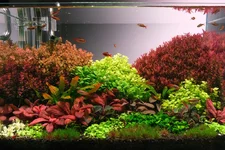
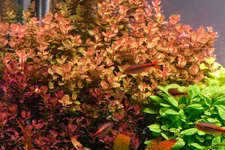
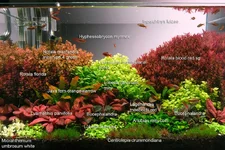
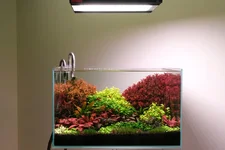
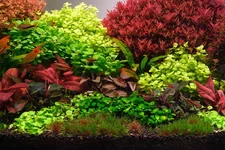
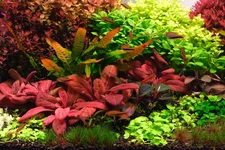
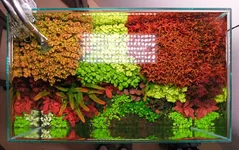
There are a few angles to this. Firstly, not all species branch equally well, so not all species form dense bushes easily. For example, Myriophyllum roraima and Ludwigia pantanal branch then trimmed, but produces too few side shoots at one time to form dense bushes, you need a very large clump to get a good bush. Pealweed, Rotala rotundifolia species, Ludwigia arcuata, and most of the species you see me using in my tanks branch a lot more profusely naturally. These will form nice canopy/dense bushes more easily.
For species that branch naturally, they branch more under the following conditions:
1. Richer dosing/more nitrogen availability, ammonicial nitrogen in substrate is a plus
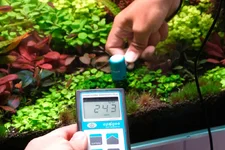
2. Higher light levels. Most of the tanks I run around 150-200umols at the substrate, so learning good algae management is also key to all these.
3. sufficient CO2 levels
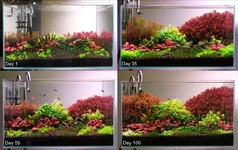
From the initial planting the bushes will start branching even without trimming. However, some may gain height faster than they gain density, that's where trimming come in. Trimming also induces more branching. For stuff that grows vertical slowly, like Syngonanthus, you don't have to do any trimming for the canopy to be formed, the trimming is more to just have things at matching height. So Syngonanthus, I'll just pick away the tallest tops, throw them away, and let the rest of the bush even out over time. If you start with very few stems, you'll be doing quite a bit more replanting.
For say Rotala blood red, and arcuata, they gain height fast. So trimming is done more often to keep the overall canopy from getting too tall fast. I only replant tops if the initial planting is very sparse. As the canopy thickens, one should do selective trimming preventively - too dense a canopy will mean that bottom stems deteriorate faster as well.